

Ukraine’s Urban Recovery beyond Reconstruction: An Interview on the UN4UkrainianCities Project
The reconstruction of Ukraine is one of the most complex urban recovery efforts of our time. While images of damaged infrastructure often dominate the headlines, rebuilding the country goes beyond repairing buildings, it requires rethinking cities, institutions, institutions, and policies for the future.
In this context, the UN4UkrainianCities Initiative of the United Nations Economic Commission for Europe (UNECE) is supporting the revitalization and modernization of the Ukrainian cities such as Kharkiv and Mykolaiv. It does so by adopting a comprehensive approach that encompasses diverse components, including pilot project implementation, support for national policy frameworks, and capacity-building efforts. The project combines strategic urban planning, policy reform, and the development of pilot projects that demonstrate new approaches to reconstruction.
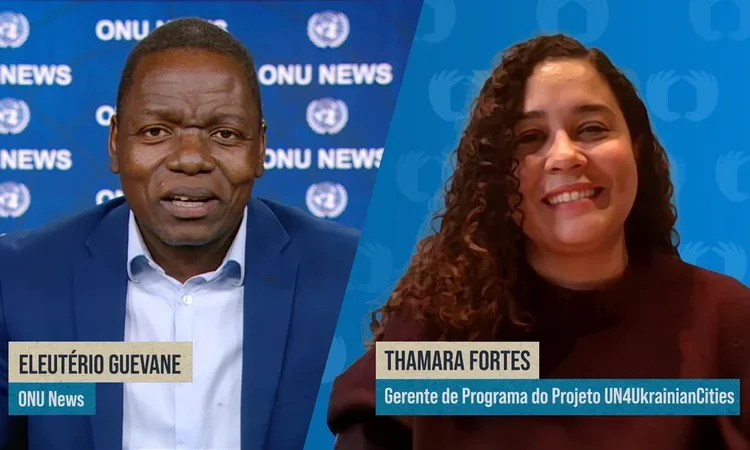
In a recent interview with UN News conducted in Portuguese, Ms. Thamara Fortes, Programme Manager of the UN4UkrainianCities, reflected on how urban planning and legislative reforms are shaping Ukraine’s recovery.
According to Ms. Fortes, reconstruction in Ukraine must be understood as a broad transformation process.
““Reconstruction is not only physical; it is institutional, economic and social. Ukraine is simultaneously rebuilding cities, reforming its housing legislation, aligning with European standards, and preparing its municipalities to attract large-scale investments.””
Cities at the Frontline of Recovery
Local governments are at the center of Ukraine’s recovery. Cities such as Kharkiv and Mykolaiv, both heavily affected by the war, are not only rebuilding infrastructure but also redefining how their urban systems function. Through the UN4UkrainianCities initiative, UNECE works closely with national authorities and municipalities to support this process.
In Kharkiv, the initiative supports projects such as the Science Neighborhood, designed to foster innovation, research, and sustainable urban development. In Mykolaiv, planning efforts focus on new green corridors and strategic areas that can stimulate economic recovery and improve the quality of life.
These pilot projects aim to show how reconstruction can move beyond emergency rebuilding toward long-term urban transformation.
Strengthening Housing Policy and Urban Legislation
Alongside city-level initiatives, national policy reforms are also underway. Indeed, Ukraine is currently modernizing its housing policy framework, introducing new legislation and strategies that will guide reconstruction and ensure access to adequate housing. These reforms seek to align the country’s housing system with European standards and international best practices.
Through UN4UkrainianCities, UNECE provides technical expertise and facilitates dialogue between Ukrainian institutions and international partners to support this reform process. By linking legislative reform with urban planning and project development, the initiative helps ensure that reconstruction is more sustainable, resilient, and inclusive.
Rebuilding Communities, not only Infrastructure
Beyond physical damage, the war has profoundly affected communities across Ukraine. Millions of people have been displaced internally, and entire neighborhoods have been transformed.
For this reason, as Ms. Fortes stated, reconstruction must address not only buildings and infrastructure but also the social and psychological dimensions of urban recovery.