

Ukraine’s Urban Recovery beyond Reconstruction: An Interview on the UN4UkrainianCities Project
The reconstruction of Ukraine is one of the most complex urban recovery efforts of our time. While images of damaged infrastructure often dominate the headlines, rebuilding the country goes beyond repairing buildings, it requires rethinking cities, institutions, institutions, and policies for the future.
In this context, the UN4UkrainianCities Initiative of the United Nations Economic Commission for Europe (UNECE) is supporting the revitalization and modernization of the Ukrainian cities such as Kharkiv and Mykolaiv. It does so by adopting a comprehensive approach that encompasses diverse components, including pilot project implementation, support for national policy frameworks, and capacity-building efforts. The project combines strategic urban planning, policy reform, and the development of pilot projects that demonstrate new approaches to reconstruction.
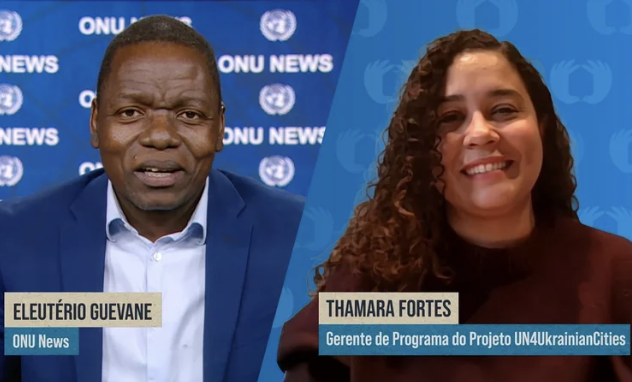
In a recent interview with UN News conducted in Portuguese, Ms. Thamara Fortes, Programme Manager of the UN4UkrainianCities, reflected on how urban planning and legislative reforms are shaping Ukraine’s recovery.
According to Ms. Fortes, reconstruction in Ukraine must be understood as a broad transformation process.
“Reconstruction is not only physical; it is institutional, economic and social. Ukraine is simultaneously rebuilding cities, reforming its housing legislation, aligning with European standards, and preparing its municipalities to attract large-scale investments.”
In Kharkiv, the initiative supports projects such as the Science Neighborhood, designed to foster innovation, research, and sustainable urban development. In Mykolaiv, planning efforts focus on new green corridors and strategic areas that can stimulate economic recovery and improve the quality of life.
These pilot projects aim to show how reconstruction can move beyond emergency rebuilding toward long-term urban transformation.
Strengthening Housing Policy and Urban Legislation
Alongside city-level initiatives, national policy reforms are also underway. Indeed, Ukraine is currently modernizing its housing policy framework, introducing new legislation and strategies that will guide reconstruction and ensure access to adequate housing. These reforms seek to align the country’s housing system with European standards and international best practices.
Through UN4UkrainianCities, UNECE provides technical expertise and facilitates dialogue between Ukrainian institutions and international partners to support this reform process. By linking legislative reform with urban planning and project development, the initiative helps ensure that reconstruction is more sustainable, resilient, and inclusive.
Rebuilding Communities, not only Infrastructure
Beyond physical damage, the war has profoundly affected communities across Ukraine. Millions of people have been displaced internally, and entire neighborhoods have been transformed.
For this reason, as Ms. Fortes stated, reconstruction must address not only buildings and infrastructure but also the social and psychological dimensions of urban recovery.
“Reconstruction must respond to the collective trauma, the massive internal displacement and the loss of homes. It is not only about rebuilding buildings, but about rebuilding trust, urban identity and a vision for the future.”
Planning for Recovery Today
One of the key lessons emerging from Ukraine’s experience is that reconstruction planning cannot wait until the war ends. Preparing urban strategies, legislative frameworks and investment-ready projects in the current phase allows cities to accelerate recovery when conditions permit. It also helps ensure that reconstruction resources are directed toward projects that support long-term development.
For Ukraine, the reconstruction effort represents a historic opportunity: not only to rebuild what was lost, but also to shape a new generation of cities that are more resilient, inclusive, and prepared for the challenges of the future.
Achievements since the Launch of the Initiative
Since its launch in 2022, the UN4UkrainianCities initiative has supported a range of activities aimed at strengthening Ukraine’s urban recovery framework at both national and local levels. Working in close cooperation with the Ministry for Development of Communities and Territories of Ukraine, municipalities, universities, and international partners, the initiative has contributed to the development of new housing policy frameworks, supported pilot urban projects in cities such as Kharkiv and Mykolaiv, and facilitated technical dialogue between Ukrainian institutions and international experts.
A major milestone was reached in January 2026, when the Law of Ukraine “On the Fundamental Principles of Housing Policy” was adopted. The law establishes the foundation for a new housing system in Ukraine, introducing modern principles for housing governance, social housing development, and housing stock management, while aligning the country’s housing framework with European standards and international best practices.
Alongside legislative reform, the initiative has supported the development of concept masterplans and feasibility studies for strategic urban areas, and organized capacity-building workshops, international webinars, and knowledge-sharing study tours. These activities help Ukrainian cities prepare investment-ready projects while strengthening local capacities for sustainable and inclusive reconstruction.