Mykolaiv
Located in southern Ukraine with access to the Black Sea, Mykolaiv is an important transportation hub of Ukraine.
UN4UkrainianCities is working with the city government to develop a new concept masterplan that will guide the city’s recovery and growth in the coming years, focusing on sustainable mobility, affordable housing, and innovative public spaces. The project engages local stakeholders and international experts to create a resilient and inclusive vision for Mykolaiv’s future.

Guiding Principles
Industry and Innovation
Review the pre- and post-conflict economic situation to sustainably integrate medium to large enterprises into the urban fabric of the city, boost industrial capabilities, create jobs, and support the local economy.
1
Affordable Housing
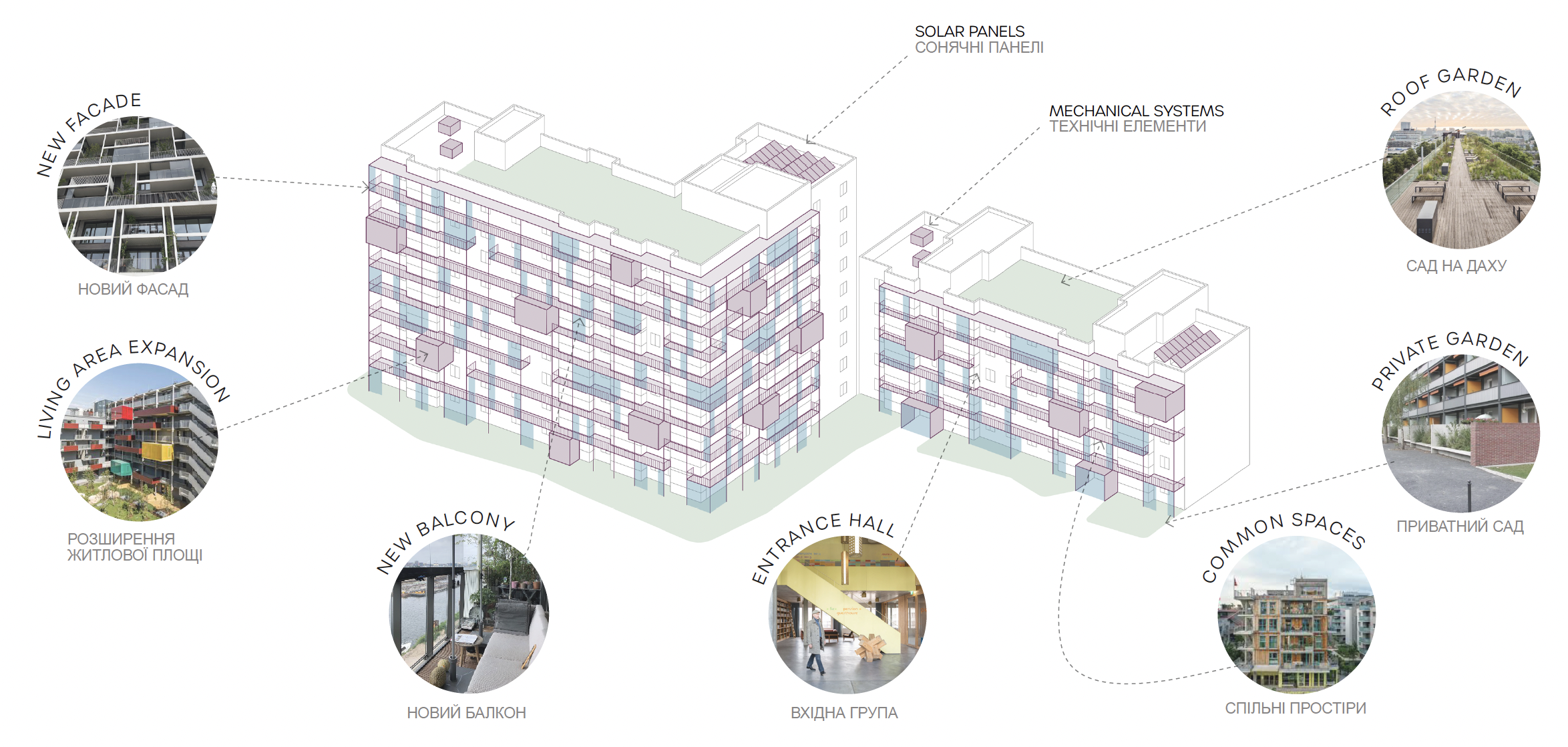
Promote affordable and sustainable housing through the refurbishment of existing buildings and introduction of new elements using modern methods of construction.
2
Sustainable Mobility
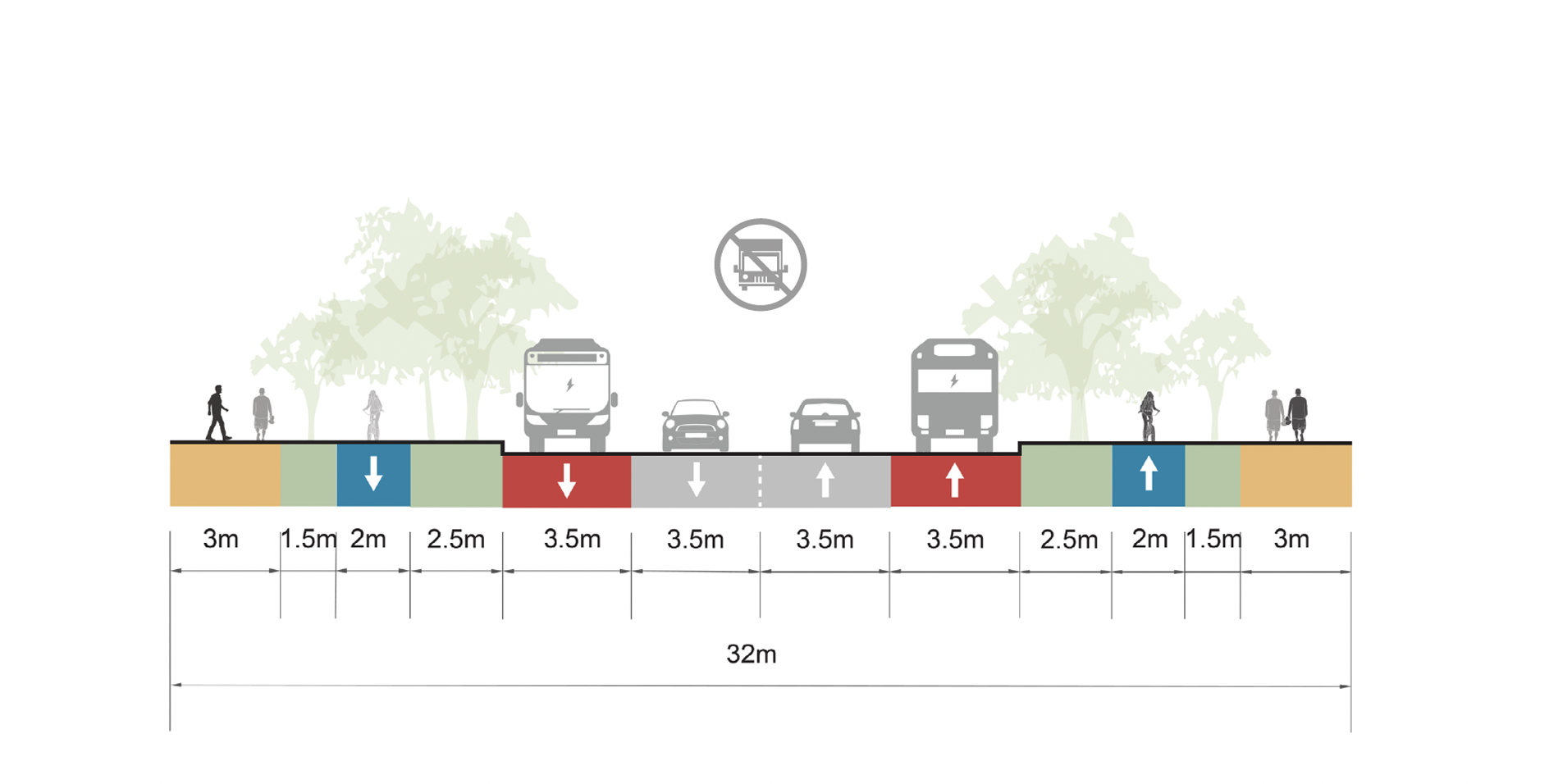
Introduce a hierarchized electric transport network supported by a strong non-motorized transport and trail network to increase accessibility and reduce car dependency and carbon emissions.
3
Governance
Build local capacity through collaboration among public and private stakeholders and coordination across city departments to shape a shared, sustainable vision for Mykolaiv’s future.
4
Green Networks
Strengthen green networks through green belts in the city center and by connecting landscapes and water to preserve the natural ecosystem, enhance resident wellness, and reduce heat islands.
5
Community Engagement
Embed public participation in the city’s planning framework through transparent, accountable and accessible processes that consistently inform decisions and advance shared strategic goals.
6
"This concept masterplan should focus on attracting people to live in Mykolaiv. As we recover and rebuild, we must address the crucial question: what will make people choose Mykolaiv as their home?."
Mr. Oleksandr Syenkevych, Mayor of MykolaivPilot Projects
Based on the concept masterplan, under the UN4UkrainianCities project, One Works Foundation is leading a team of international experts to design selected pilot projects. This work is paving the road for “building back better” and supporting the municipality in addressing criticalities as well exploiting opportunities, while engaging with the local community.
Concept City-wide Masterplan
1
DESCRIPTION
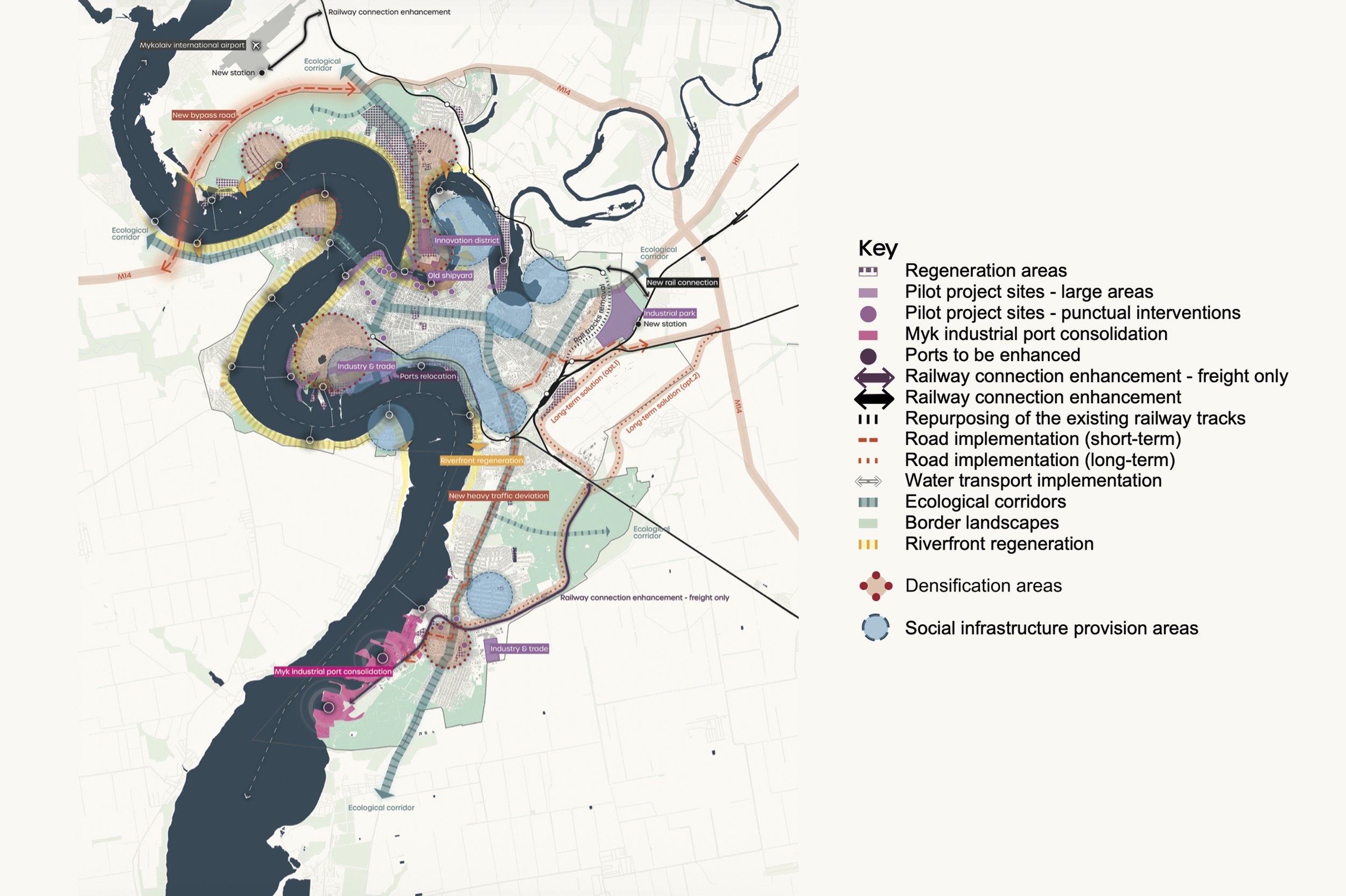
The Mykolaiv Concept Masterplan provides a long-term framework for the city’s recovery and transformation. Developed by the One Works Foundation-led team in close collaboration with Mykolaiv City Council, local experts and the community, it translates extensive analysis and public engagement into a strategic vision for a more sustainable, resilient and attractive city. Its ambition is not simply to reconstruct what was lost, but to use recovery as an opportunity to diversify Mykolaiv’s economy, improve quality of life and build on the city’s distinctive industrial, cultural and natural assets.
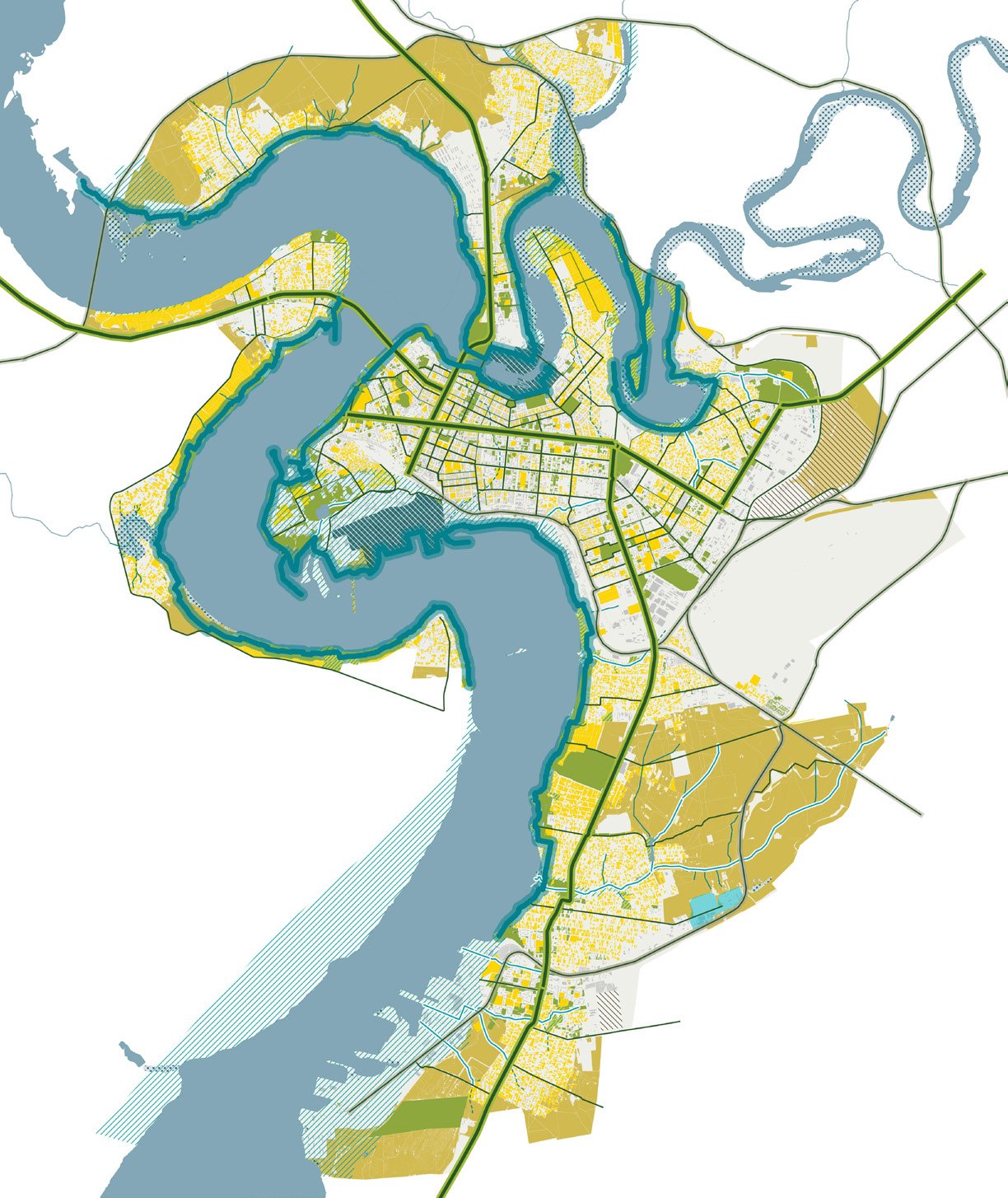
The strategy was built on a detailed understanding of the city — including war damage, land use, infrastructure, transport, public space and environmental conditions — together with studies of demographic change and possible post-war scenarios. These investigations informed an integrated set of urban design, landscape and mobility strategies for Mykolaiv’s future development.
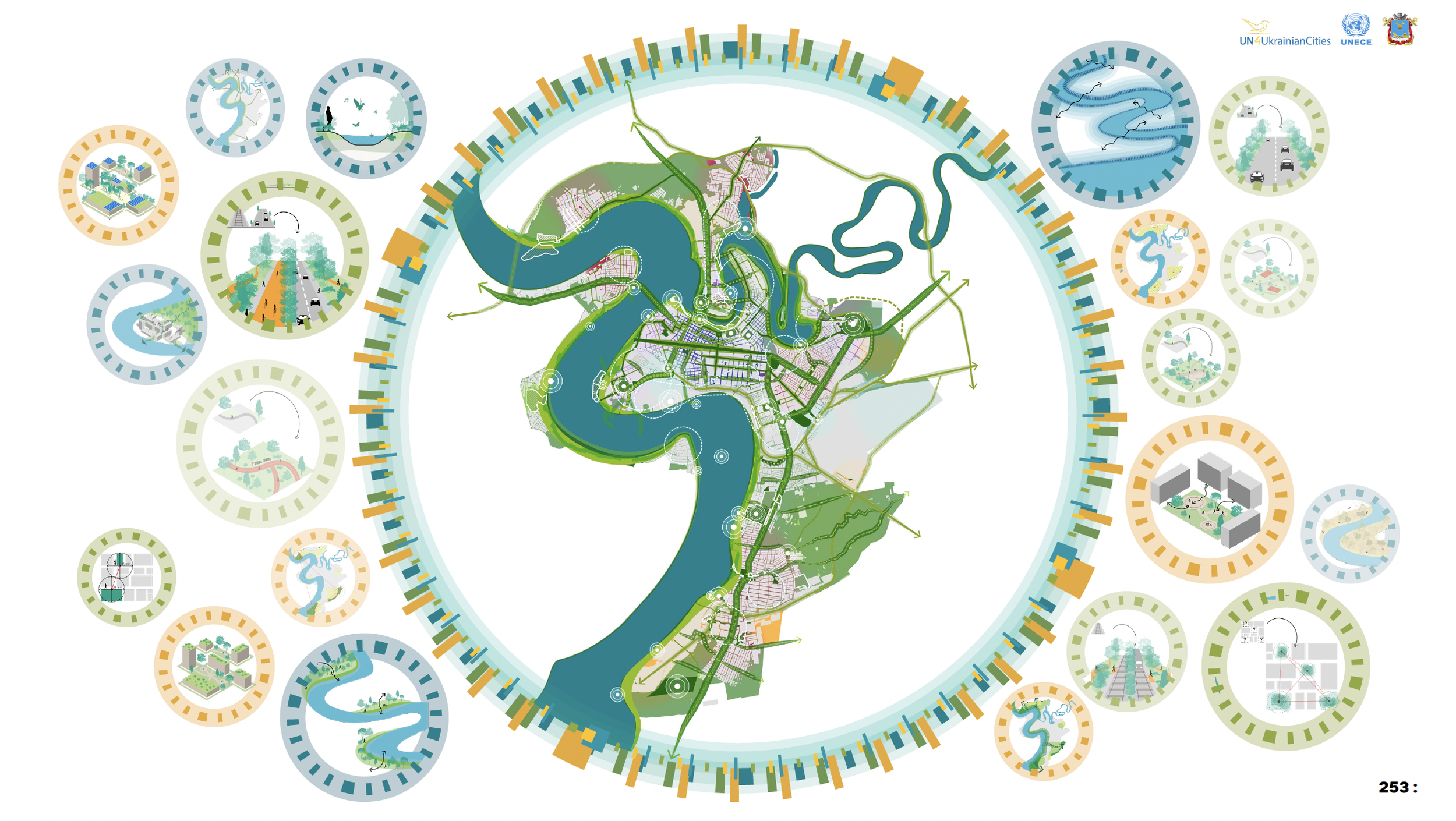
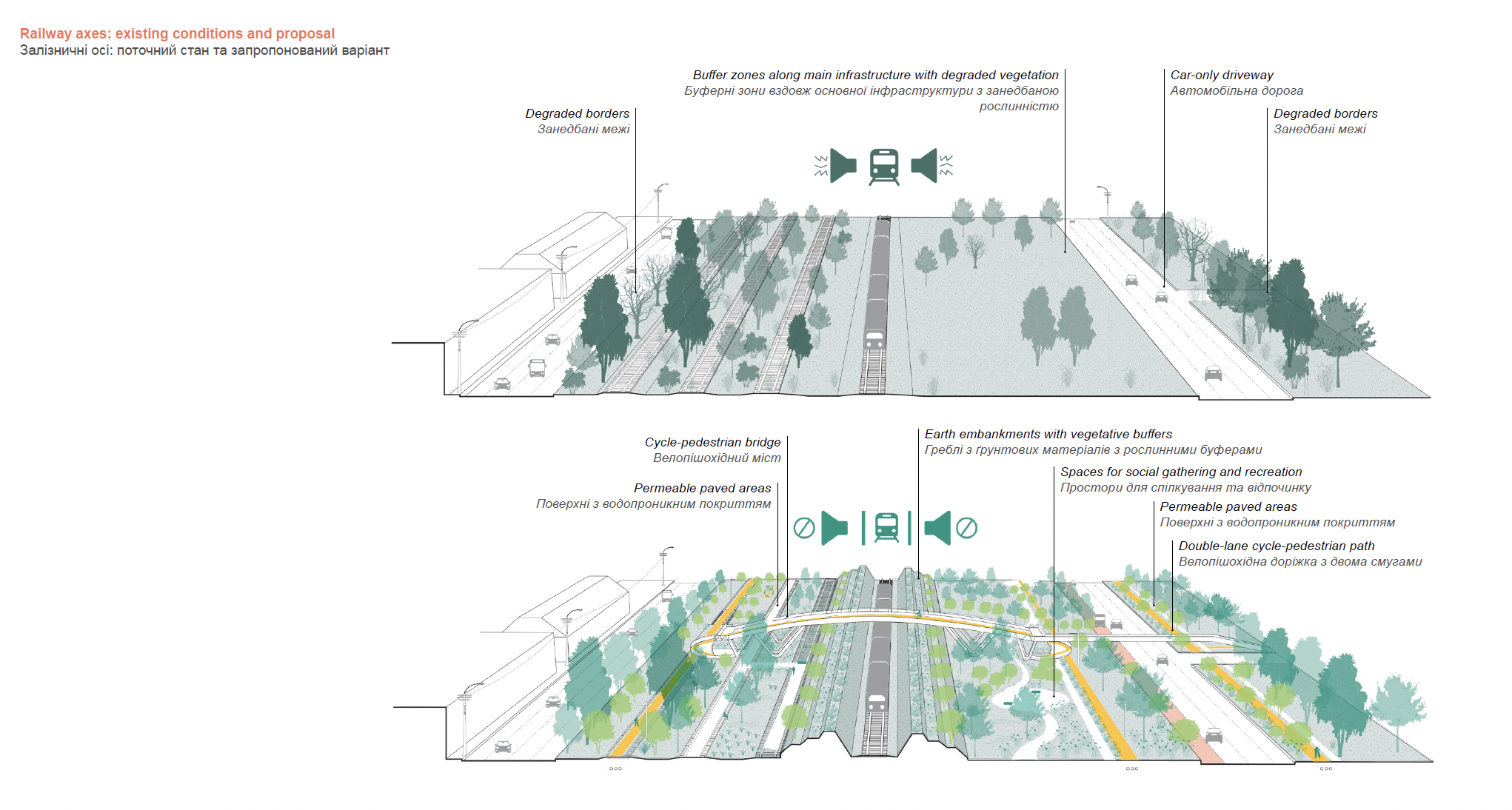
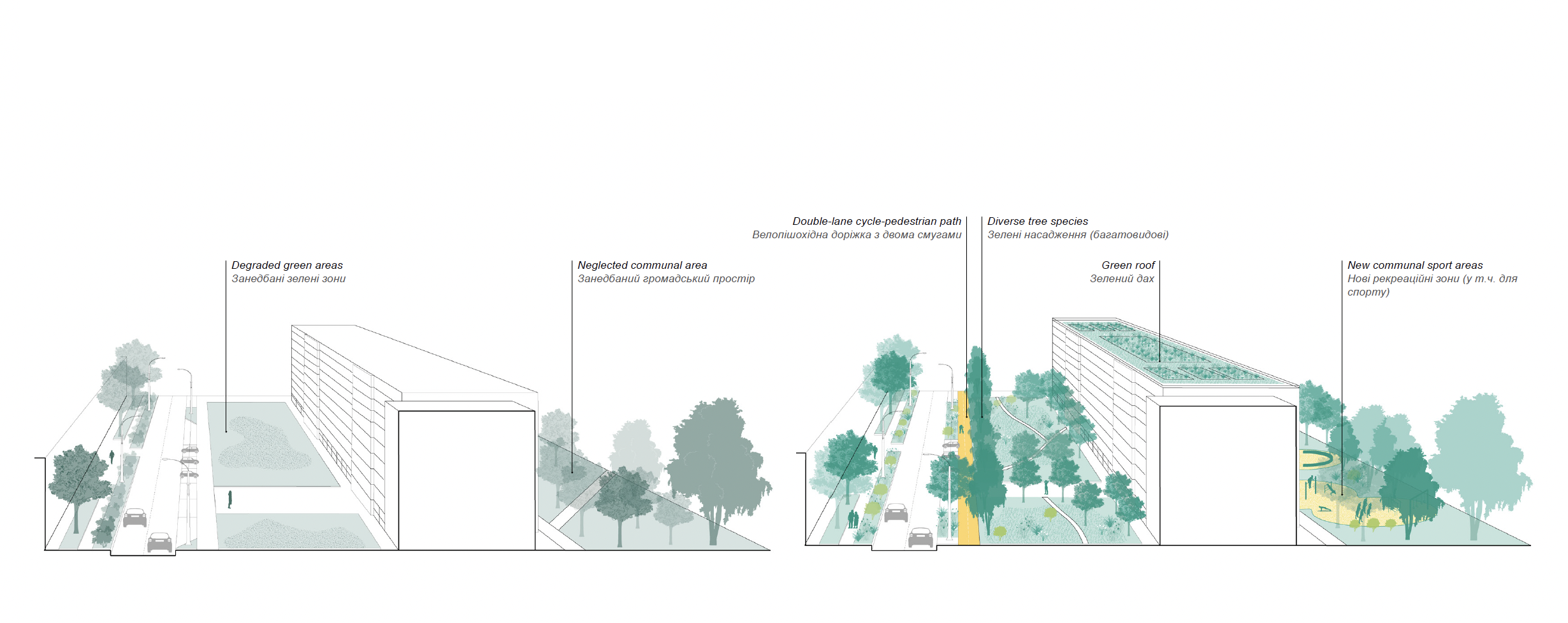
At its heart is a blue-green transition that reconnects Mykolaiv with its two rivers and uses landscape as infrastructure for the city’s recovery. The Concept Masterplan proposes opening up and activating the waterfront, strengthening ecological connections, improving existing green spaces and creating a new network of green axes across the urban fabric. This approach aims to improve public space and air quality, support biodiversity and increase the city’s resilience to climate change. The vision builds directly on what residents identified as one of Mykolaiv’s greatest assets: its relationship with its rivers and natural landscape.
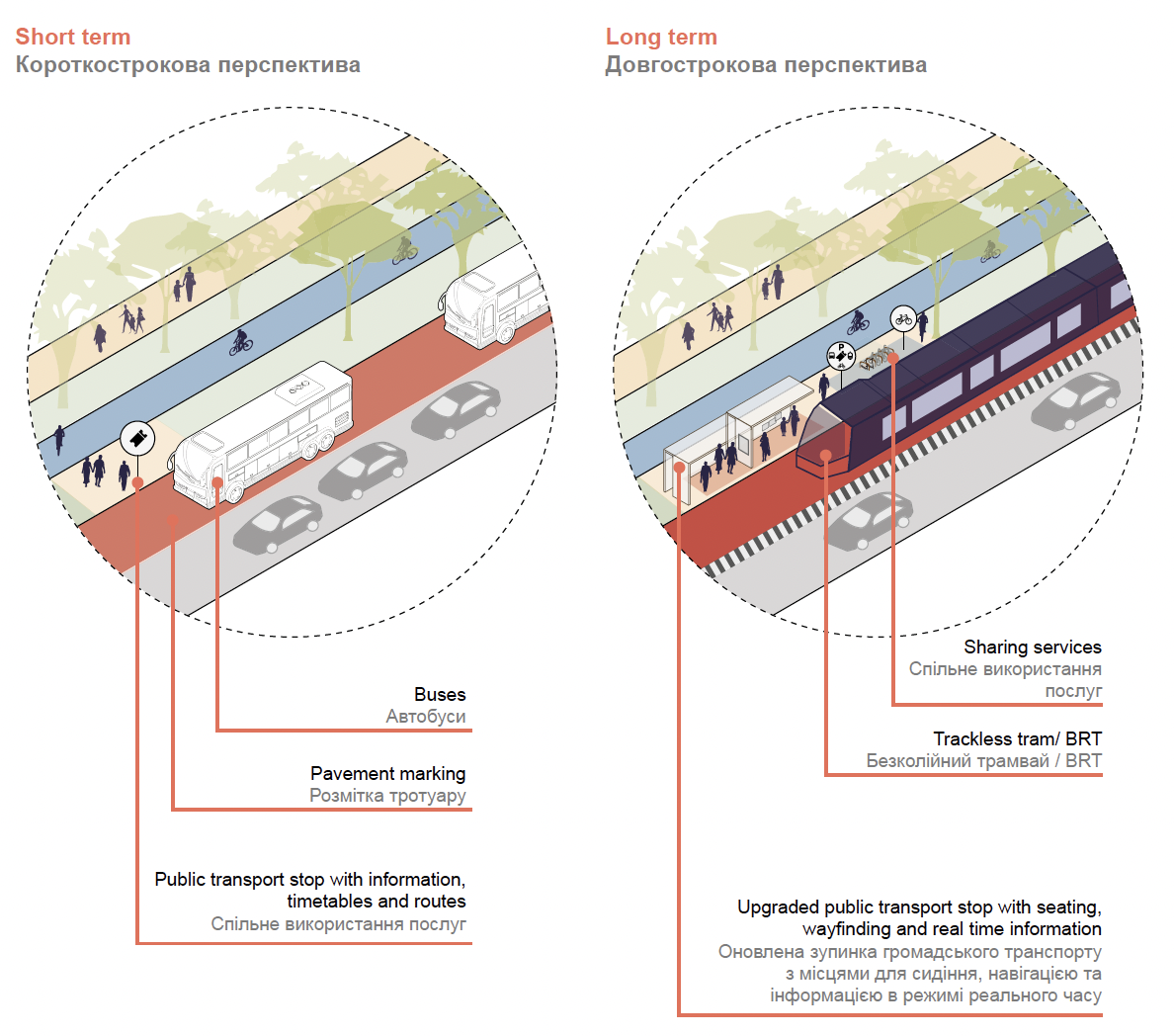
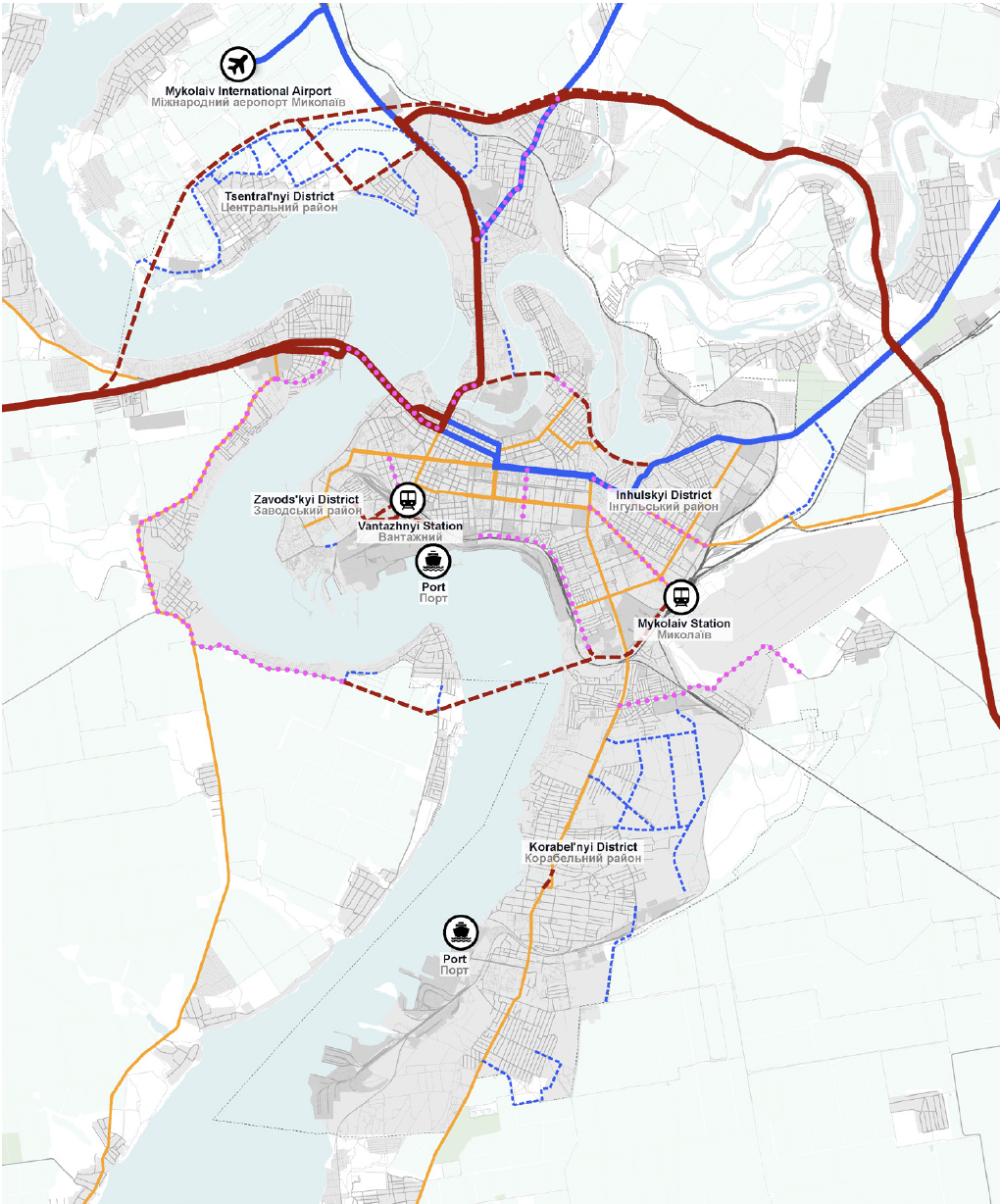
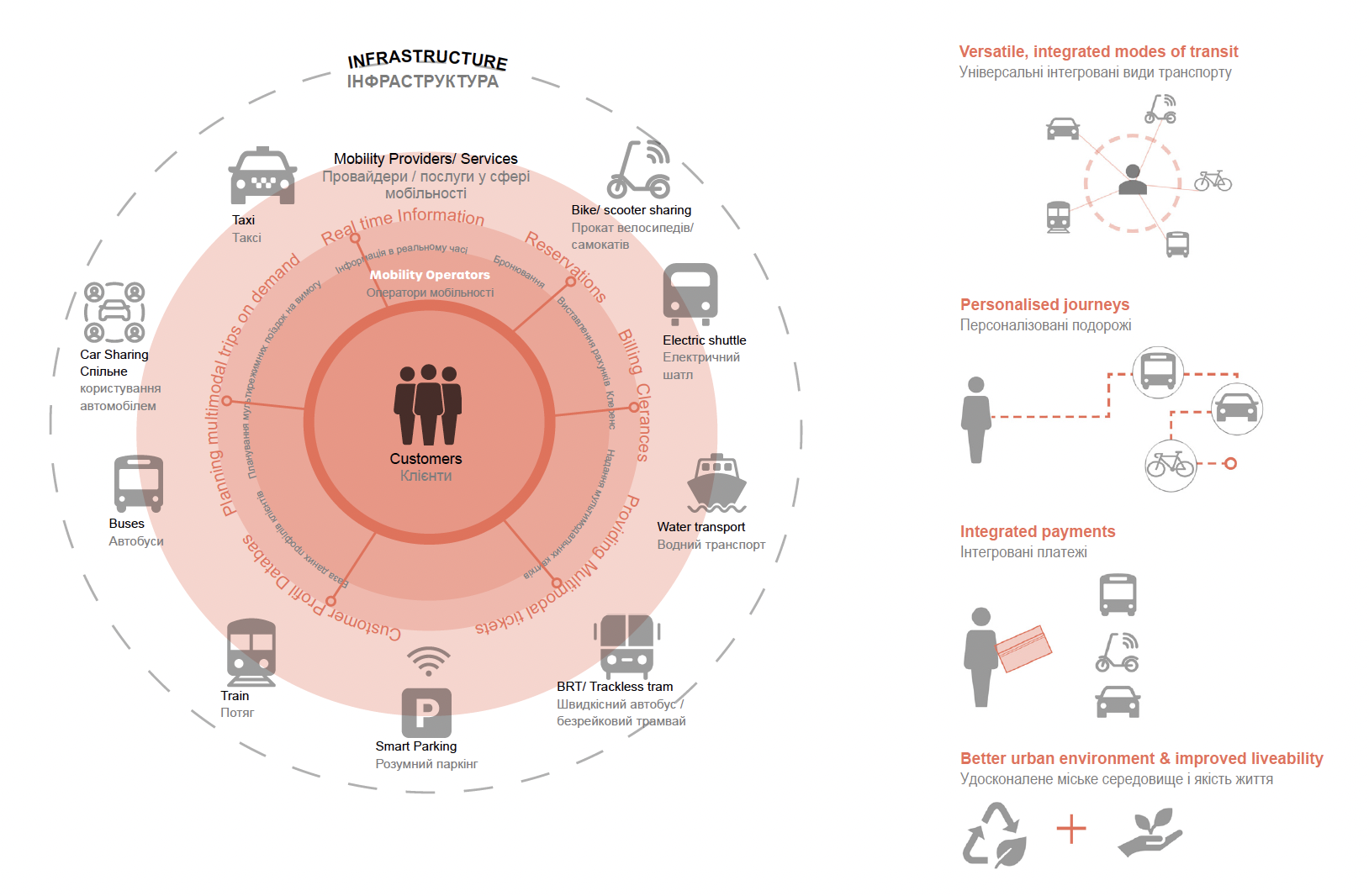
Alongside the landscape strategy, the Concept Masterplan addresses how people and goods move through the city. It proposes a more integrated, flexible and environmentally sustainable mobility system, including stronger public transport, improved railway connections, active mobility and measures to redirect heavy freight traffic away from the urban centre. The broader urban strategy also considers the regeneration of former industrial areas, improved social infrastructure, new housing and economic activities, and the preservation and reuse of Mykolaiv’s industrial and cultural heritage.
Rather than remaining only a strategic document, the Concept Masterplan is designed to translate city-wide ambitions into action. A series of pilot projects were identified as testing grounds for its principles — addressing areas including innovation and enterprise, industry and regeneration, housing, cultural heritage and green public space. These projects are intended to demonstrate what the wider vision can look like on the ground, attract investment and generate lessons that can inform Mykolaiv’s longer-term development.
The Innovation District and the Health Route translate the City-wide Concept Masterplan into concrete action. While the Innovation District focuses on innovation, economic regeneration and mixed-use development, the Health Route applies the same city-wide principles to landscape, public space and Mykolaiv’s relationship with its waterfront.
PROJECT MILESTONES

Community vision takes shape
Local stakeholders, residents and municipal representatives contribute to defining Mykolaiv’s development priorities through an online survey, helping establish the foundations for the city’s long-term strategic vision.
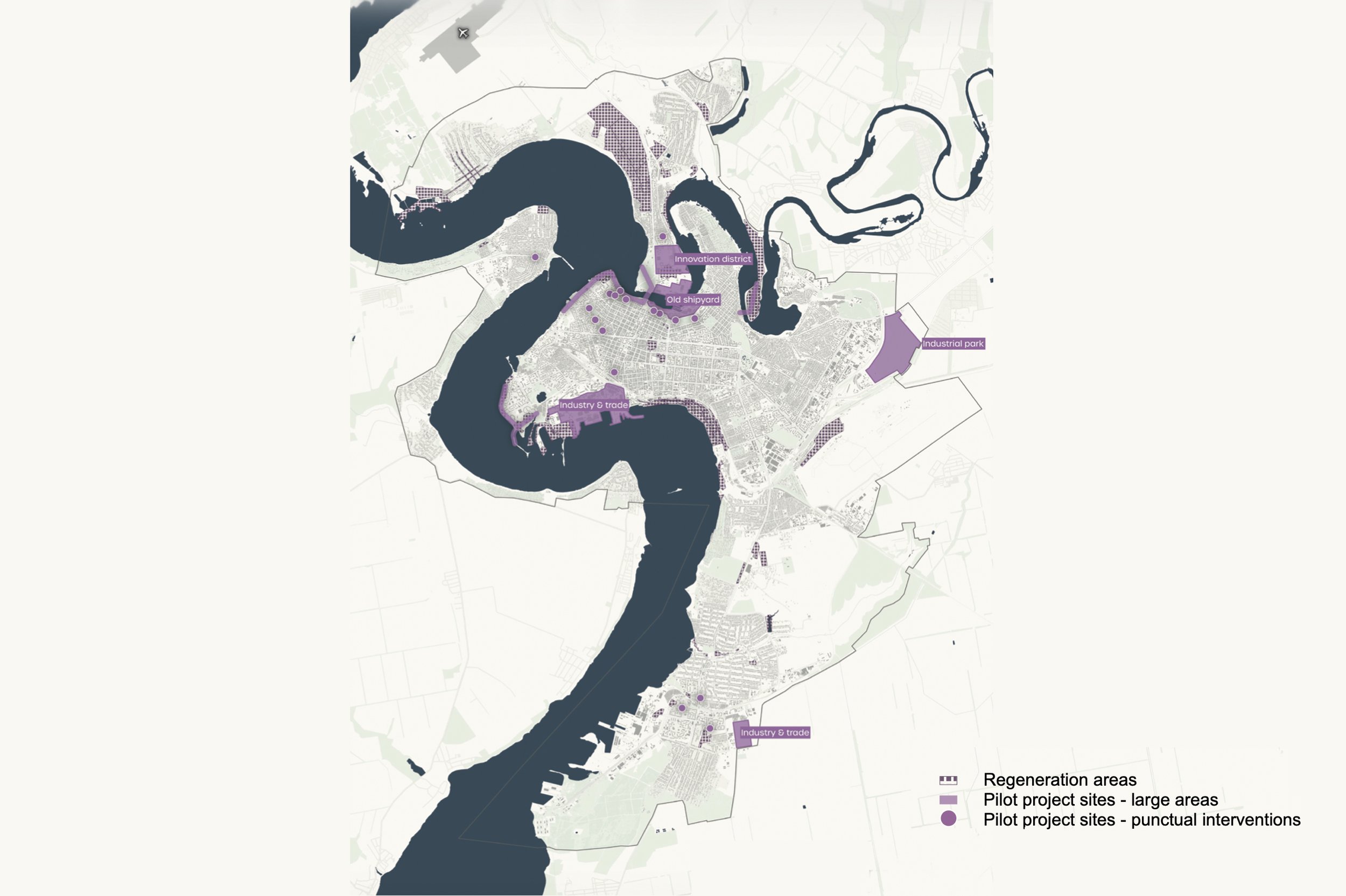
Urban analysis and damage assessment completed
Detailed studies examine Mykolaiv’s urban structure, environmental conditions, infrastructure, mobility, socioeconomic context and development potential, creating an evidence base for the Concept Masterplan strategic proposals.

Future scenarios explored
Local stakeholders review demographic scenarios and the factors that could influence population return and retention, helping the team understand how different recovery pathways could shape Mykolaiv’s future.

Strategic vision defined
Research, community engagement and collaboration with Mykolaiv City Council are translated into a long-term vision for a contemporary, sustainable and resilient city built on its existing identity, resources and industrial heritage.
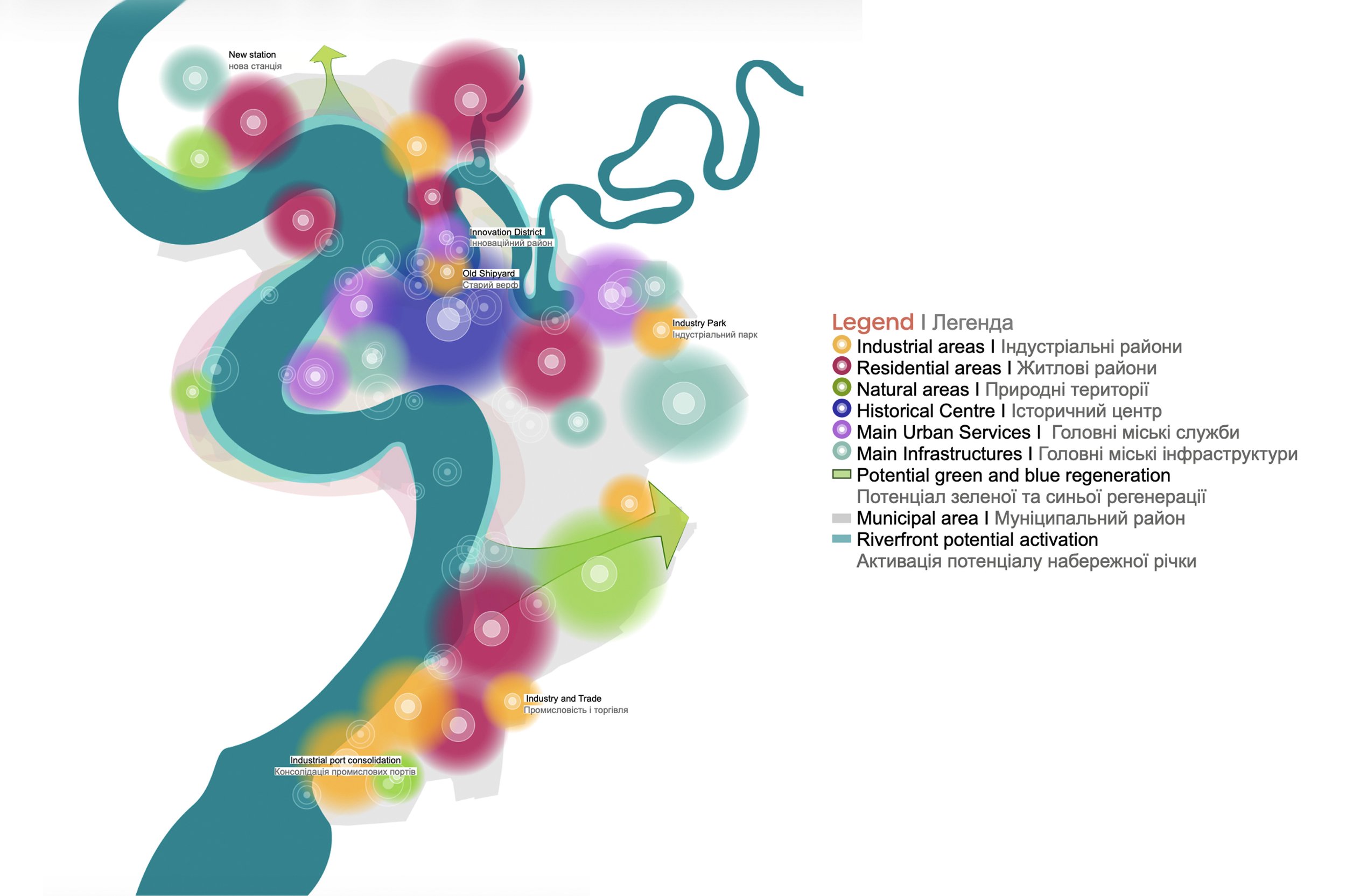
Urban transformation strategies developed
The Concept Masterplan identified strategic areas for regeneration and a series of pilot projects intended as testing grounds and catalysts for Mykolaiv’s wider transformation.

Concept Masterplan finalized
Mykolaiv’s Concept Masterplan brought the urban design, landscape, mobility and regeneration strategies together within one city-wide framework, guiding long-term recovery and providing the foundation for projects including the Innovation District and Health Route.
Innovation District
2
DESCRIPTION
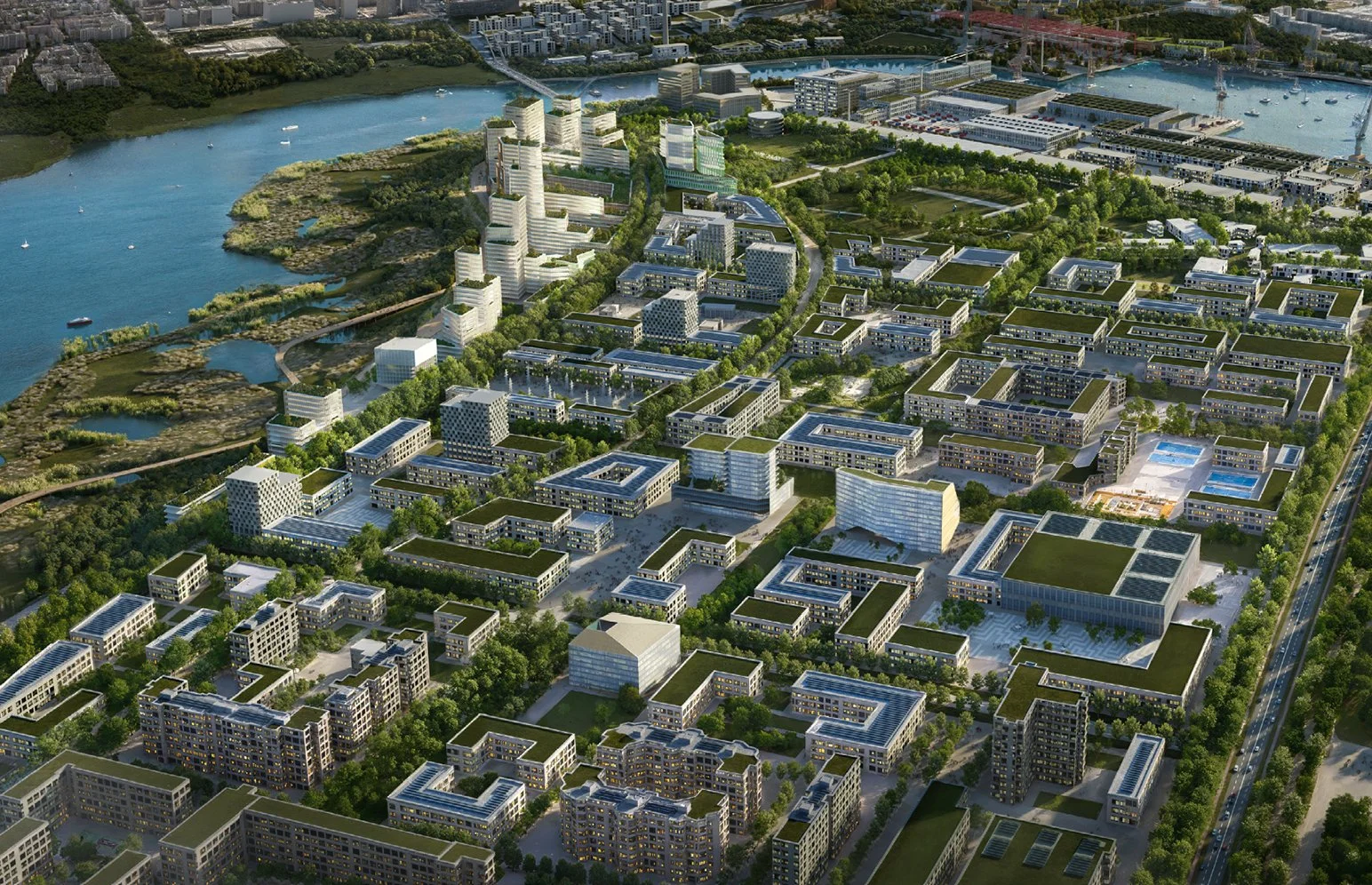
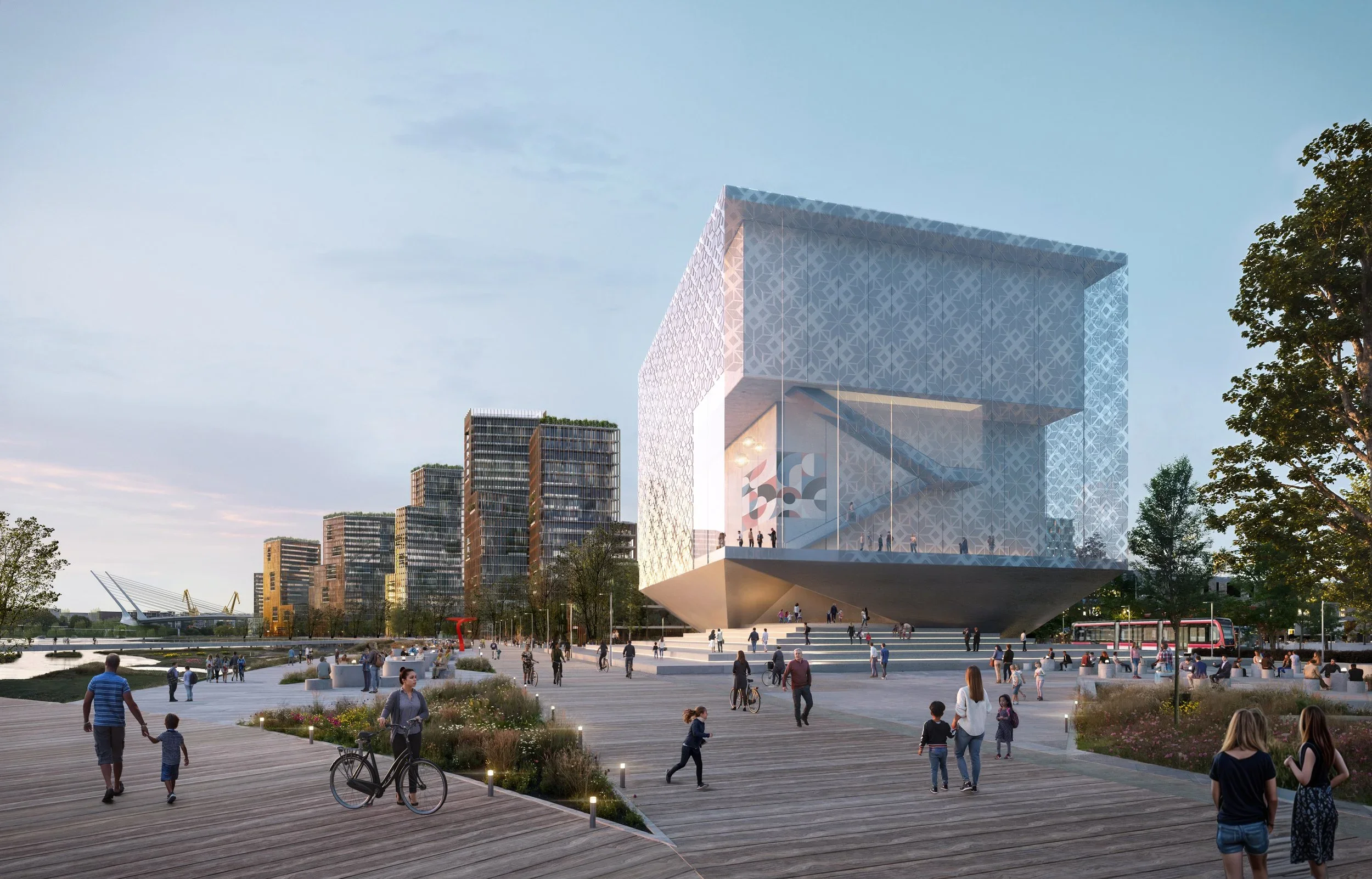
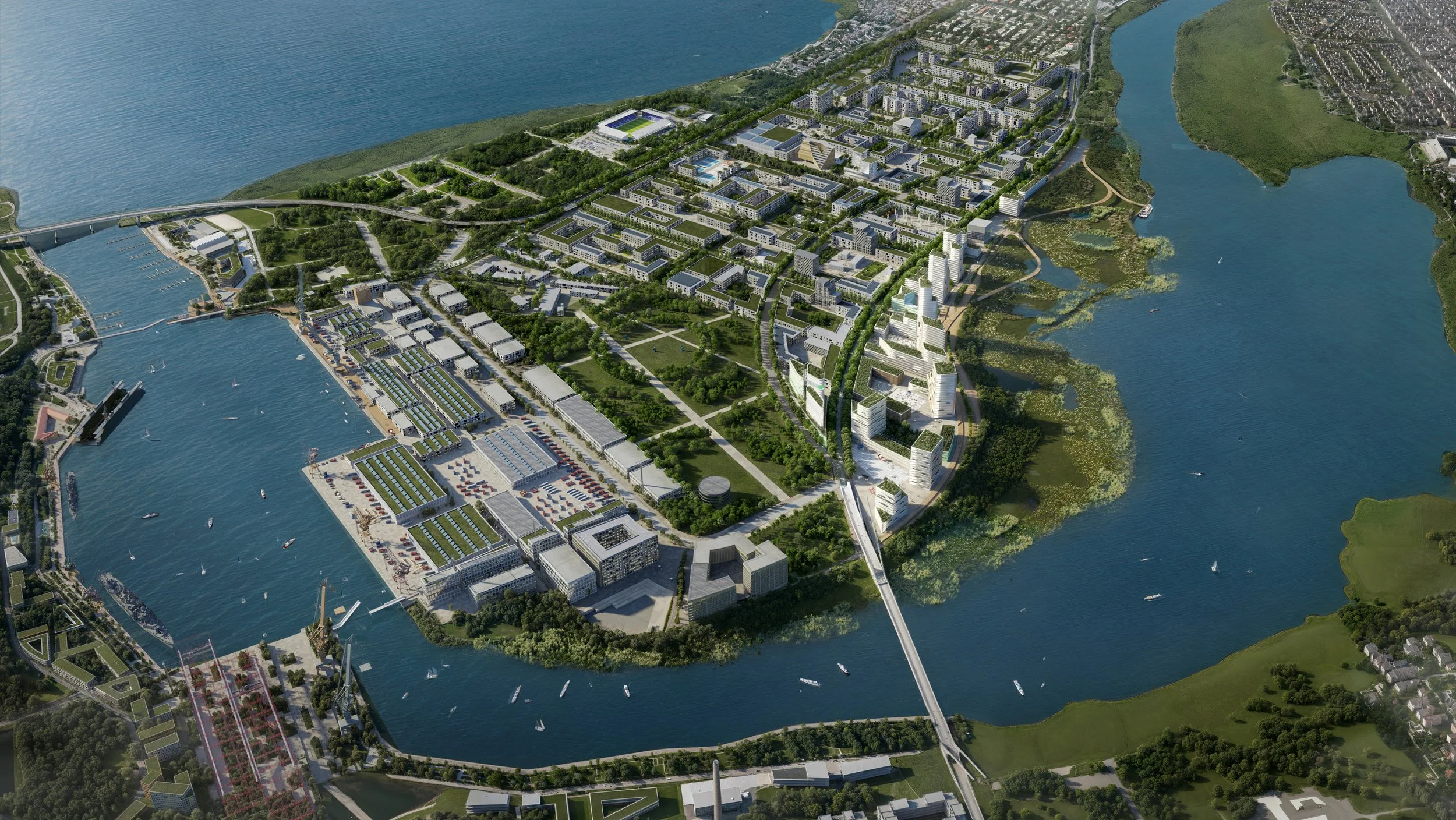
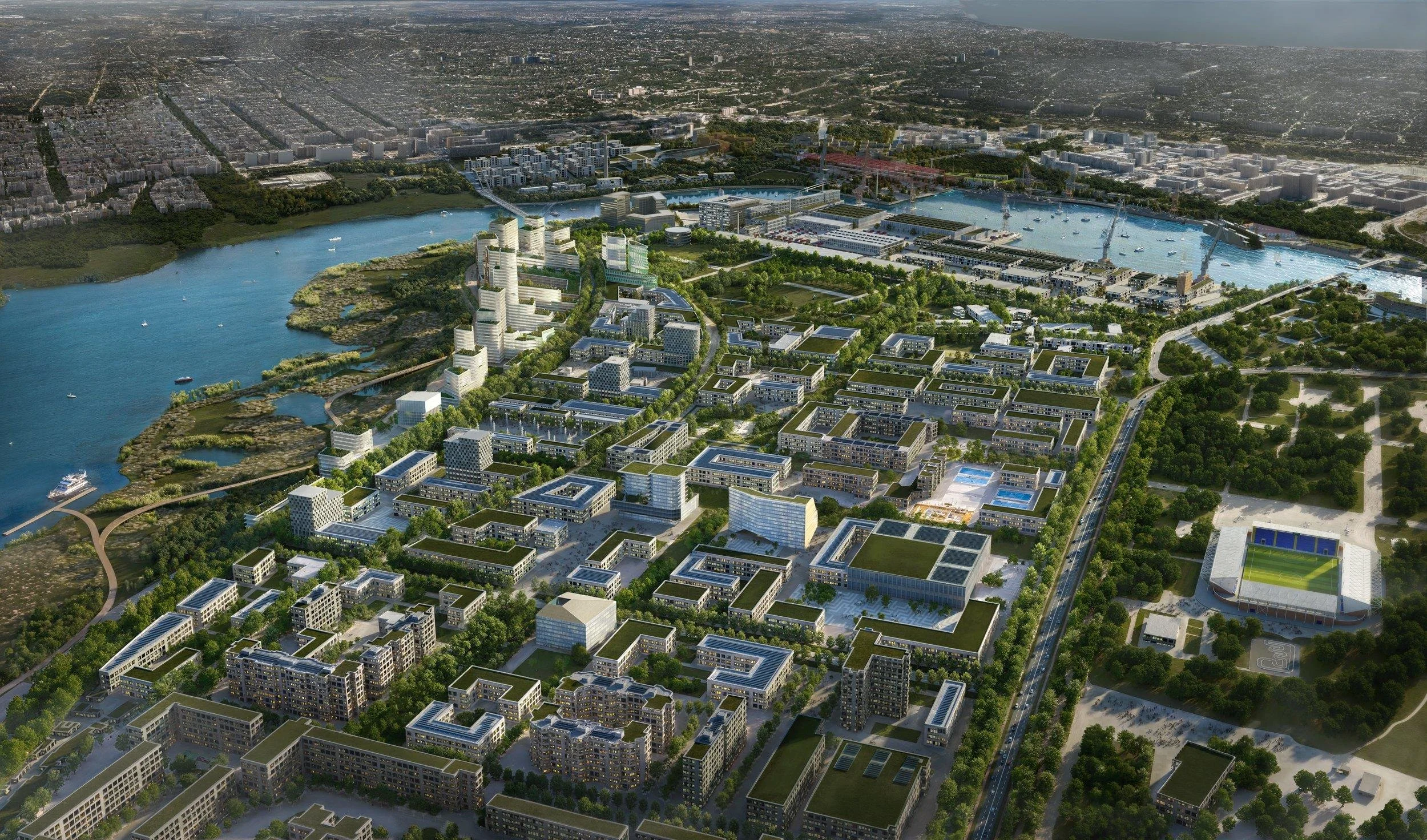
The Innovation District was designed as one of Mykolaiv’s flagship pilot projects, translating the city-wide Concept Masterplan into a tangible model for recovery and regeneration. Closely connected to the Health Route project, it focuses on creating a mixed-use hub for innovation, education, entrepreneurship and cultural life.
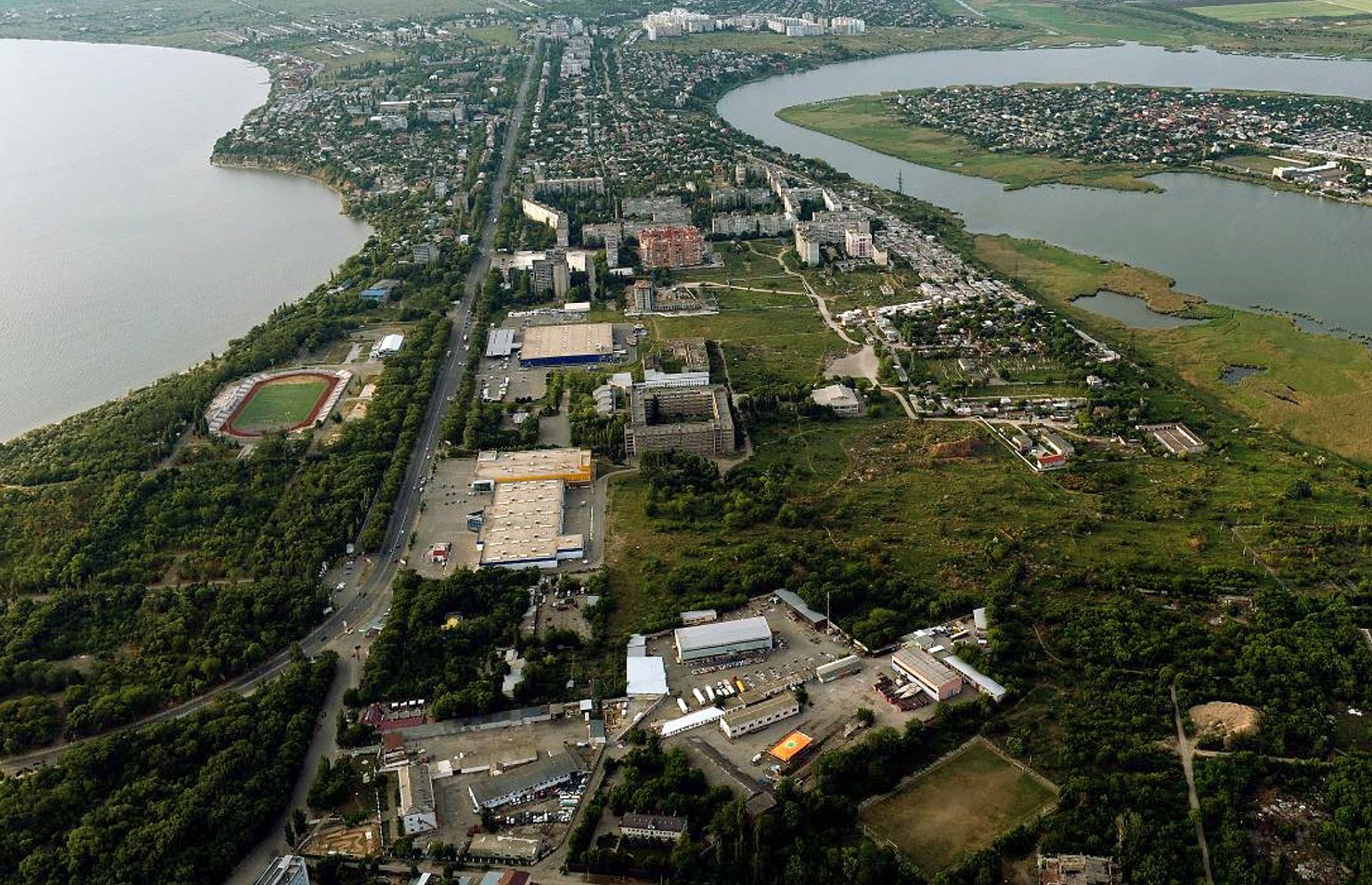
Strategically positioned between the city centre, historic Shipyard and the airport, and anchored by the Admiral Makarov National University of Shipbuilding, the district was designed to bring together universities, research institutes, businesses, start-ups, investors and residents within a sustainable, resilient and accessible urban environment.
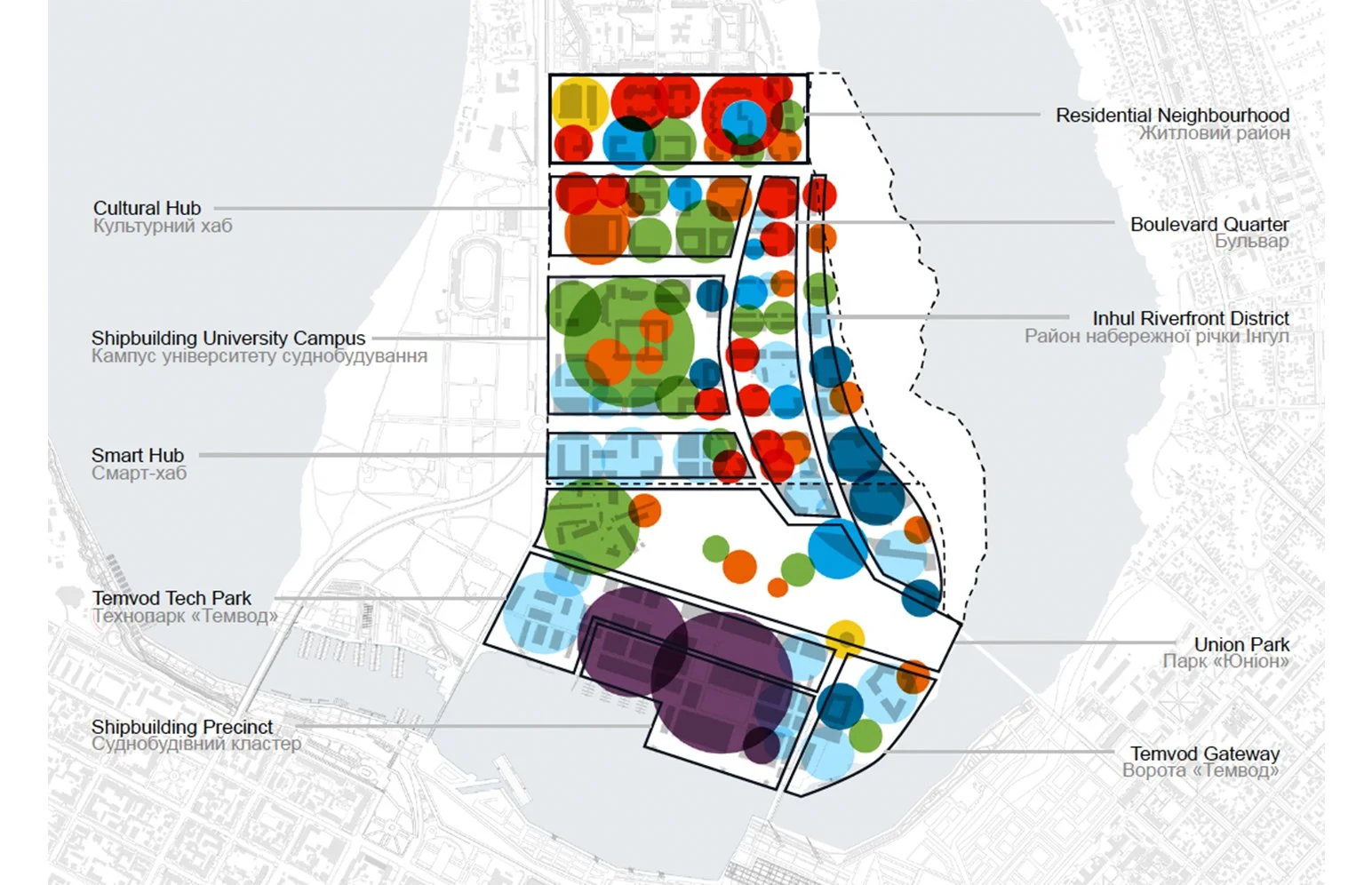
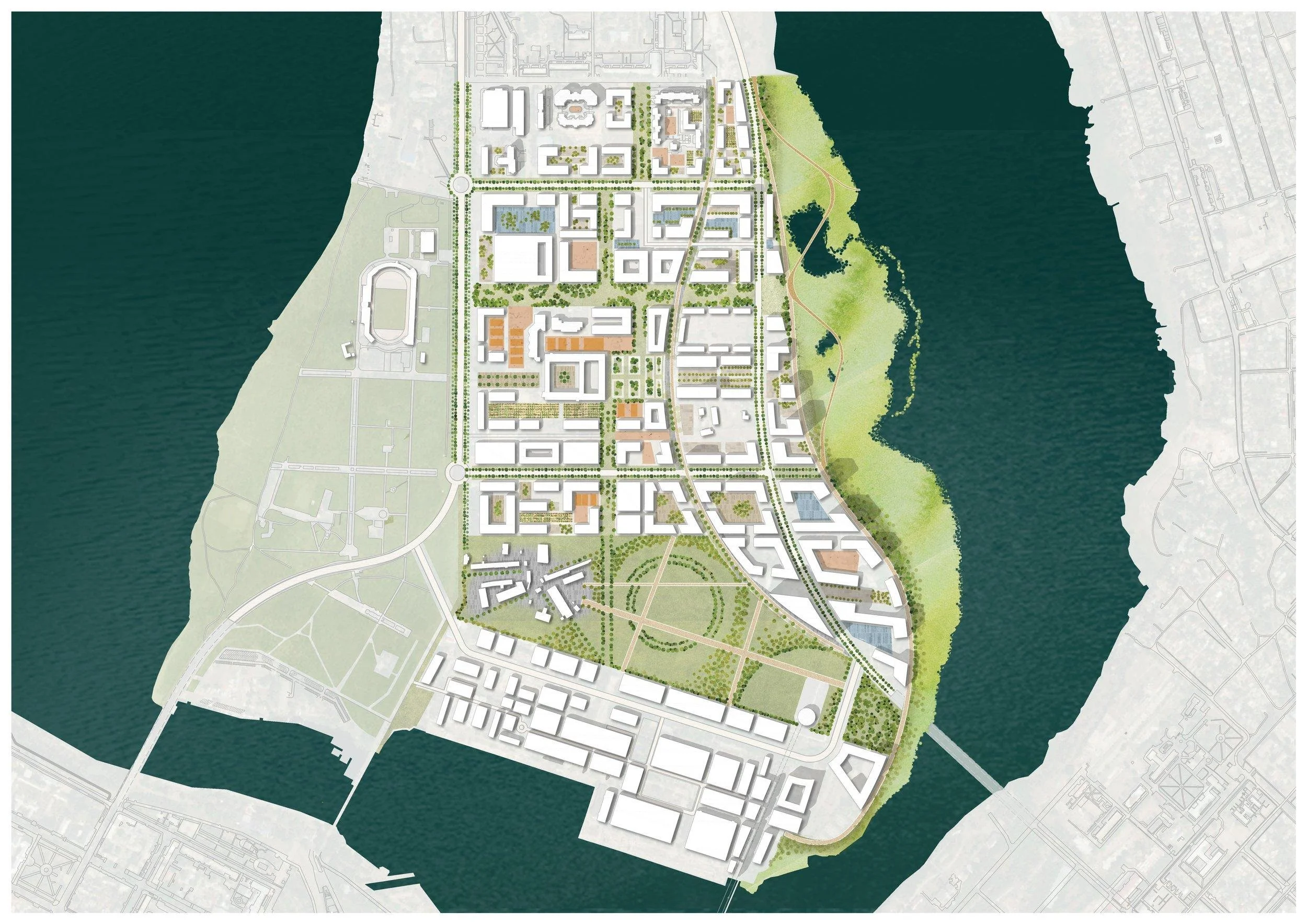
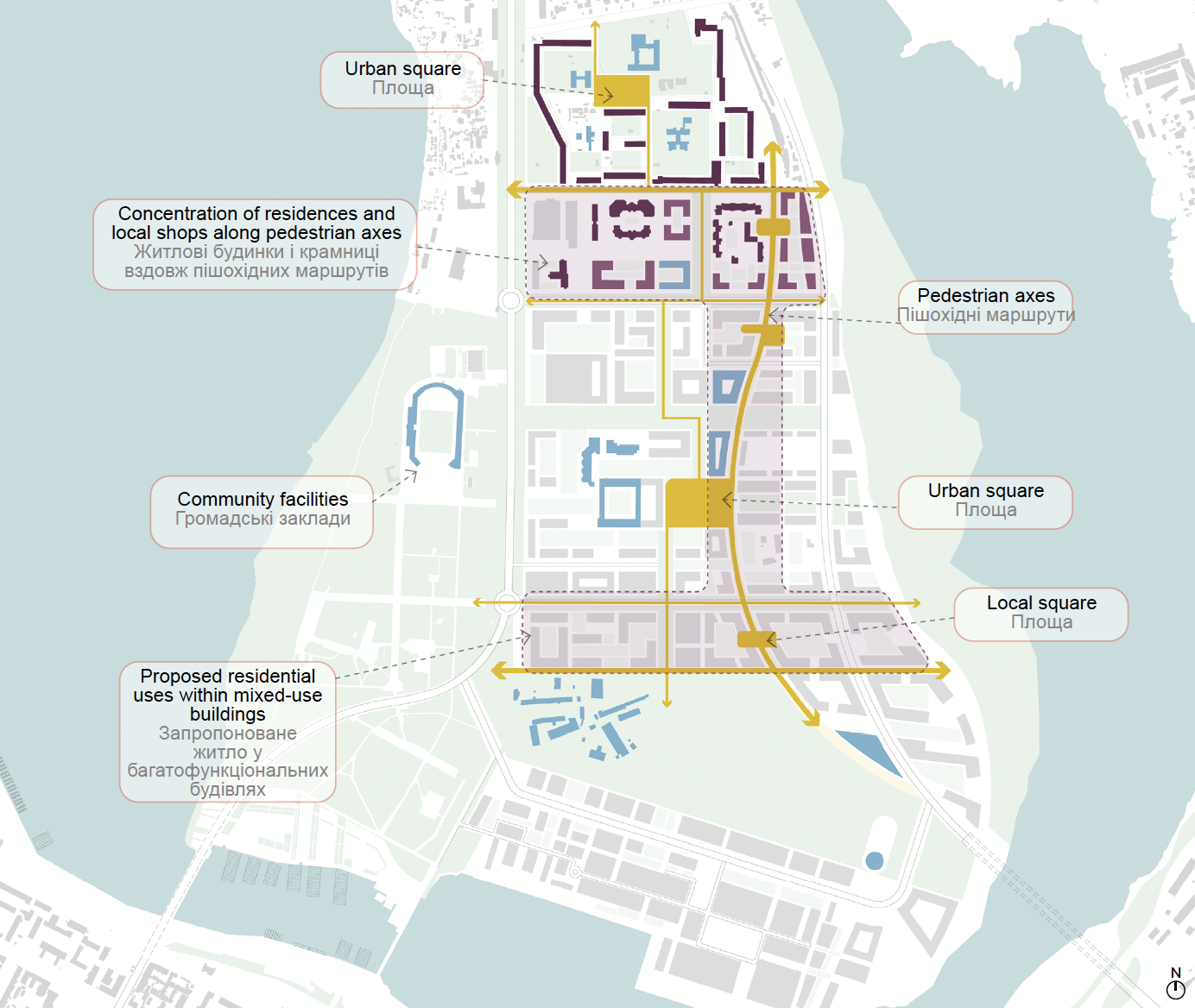
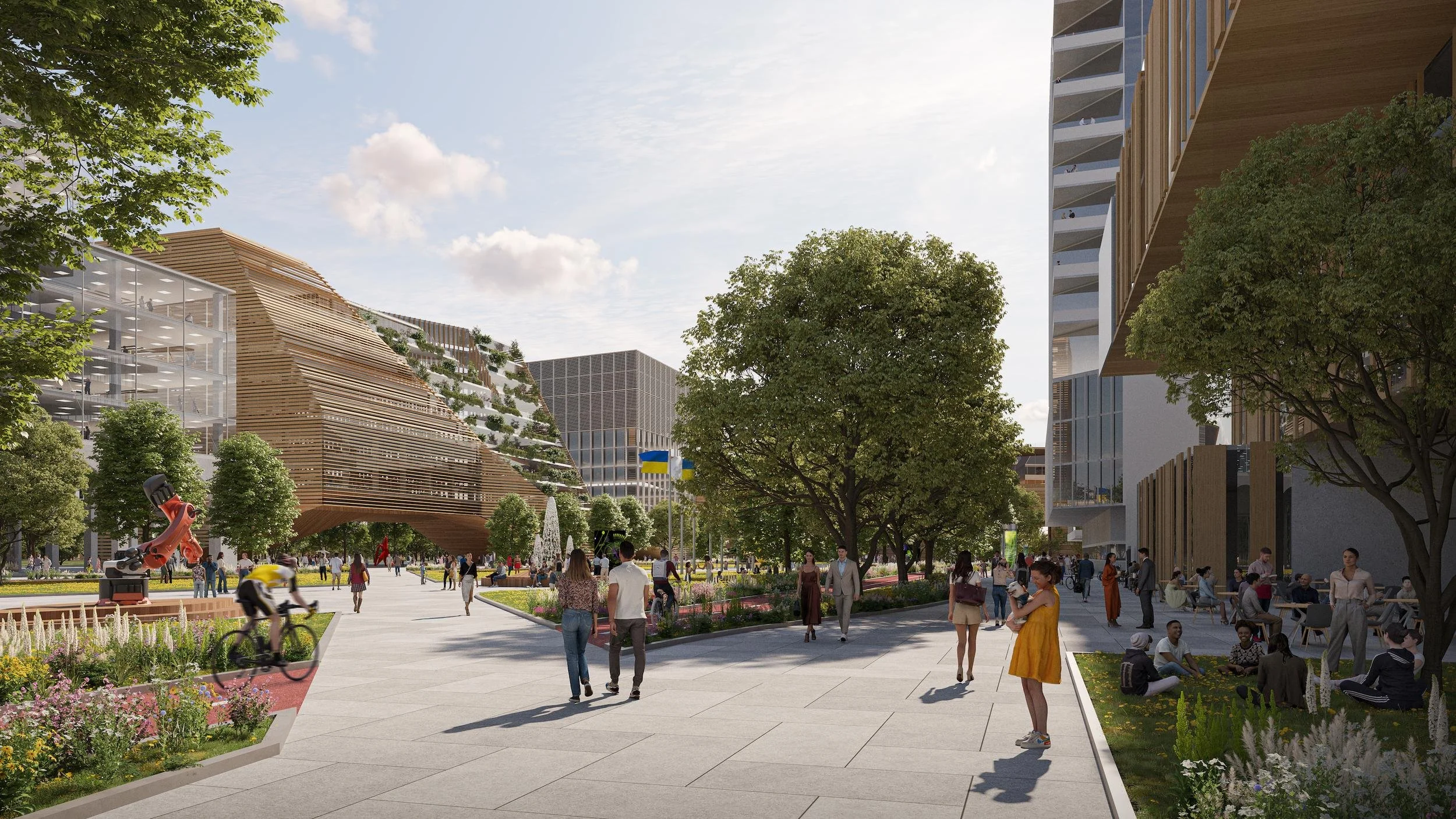
The proposed district combines housing, workplaces, research and educational facilities, public spaces and green infrastructure, creating opportunities for interaction between people and activities throughout the day. A transit-oriented mobility strategy prioritizes walking, public transport and reduced dependence on private vehicles, while a connected network of green spaces contributes to biodiversity, environmental performance and quality of life.
Led by the One Works Foundation (OWF) in collaboration with Mykolaiv City Council, the project brought together an international multidisciplinary team: Systematica developed the mobility scheme, LAND shaped the landscape and green-recovery approach, Politecnico di Milano and LIUC contributed expertise in demographic, environmental, socio-economic and community-engagement themes, while Fondazione Housing Sociale created the associated housing strategy.
More than a new neighbourhood, the Innovation District was conceived as an economic and social catalyst for Mykolaiv — attracting investment, supporting entrepreneurship and knowledge exchange, and demonstrating how integrated urban planning can turn recovery into an opportunity for long-term transformation.
PROJECT MILESTONES
Strategic site selected
Following an assessment of potential locations proposed by the municipality, the Solyani peninsula in Tsentral’nyi District was selected for the Innovation District. The evaluation considered available land, location, transport connections and opportunities to build on surrounding activities.

Residents’ priorities informed the design
A survey conducted through municipal channels received over 140 responses. Residents shared their views on housing, neighbourhood services, mobility, safety and social life, helping shape the district’s residential and community spaces.
Concept designs developed
The first concept brought together university facilities, research and enterprise, housing, public services and green spaces within a connected mixed-use district, supported by mobility, landscape and infrastructure strategies.

Innovation District design completed
The final concept design consolidated the district’s spatial proposals and supporting strategies, establishing a framework for a walkable neighbourhood that connects education, employment and everyday services with the riverfront and surrounding city.

Phased development strategy defined
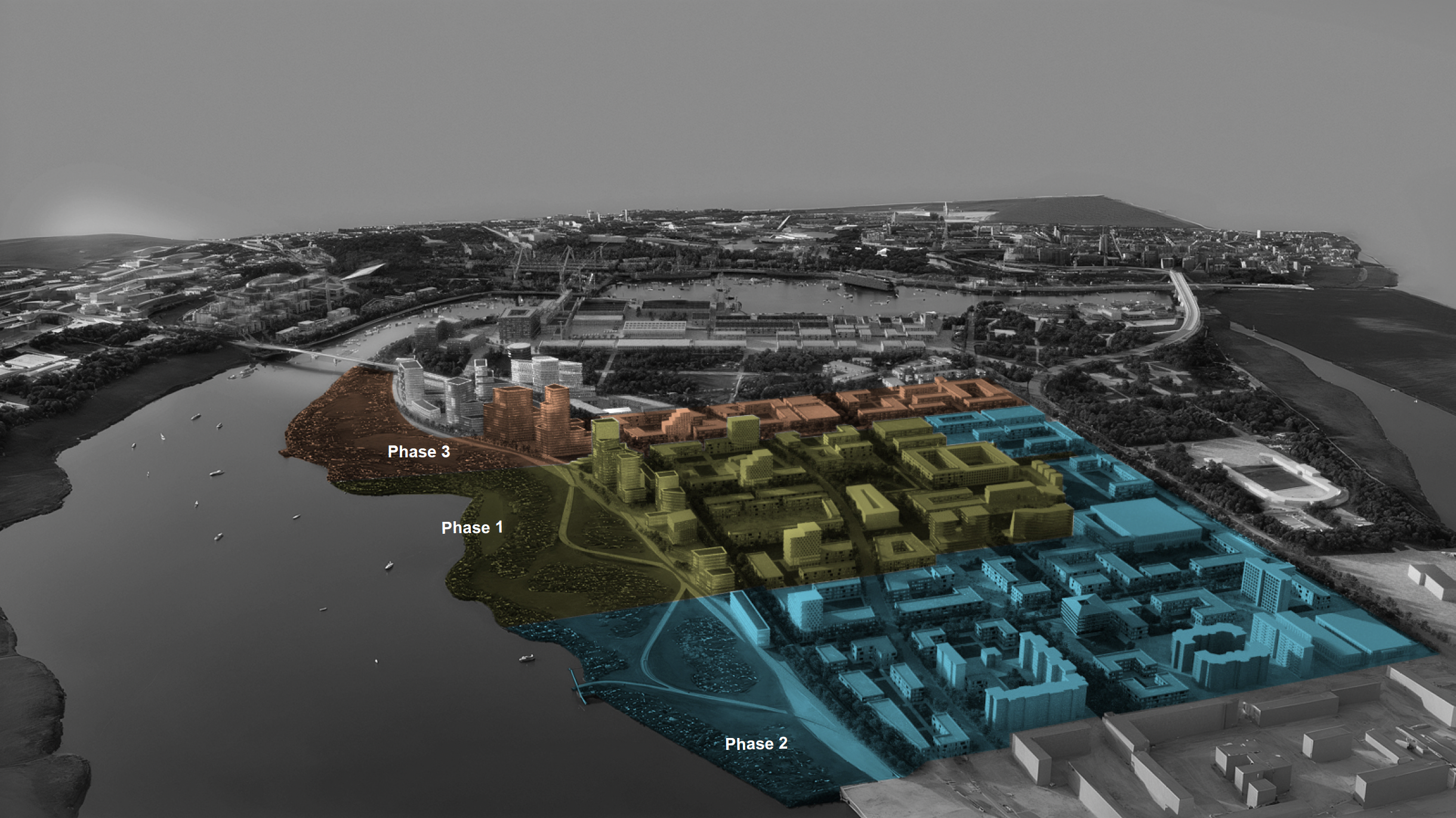
Three proposed phases provided a pathway for progressive development: regeneration of the university campus and riverfront; expansion of housing, cultural facilities and services; and stronger connections with the shipyard and city centre. The approach considered land ownership and existing activities.
Preparing for implementation
Further feasibility studies, technical design and coordination with landowners and relevant authorities will be needed to advance the concept. Financing and investment partnerships will support the development of priority interventions through the proposed phased approach.
Health Route
3
DESCRIPTION
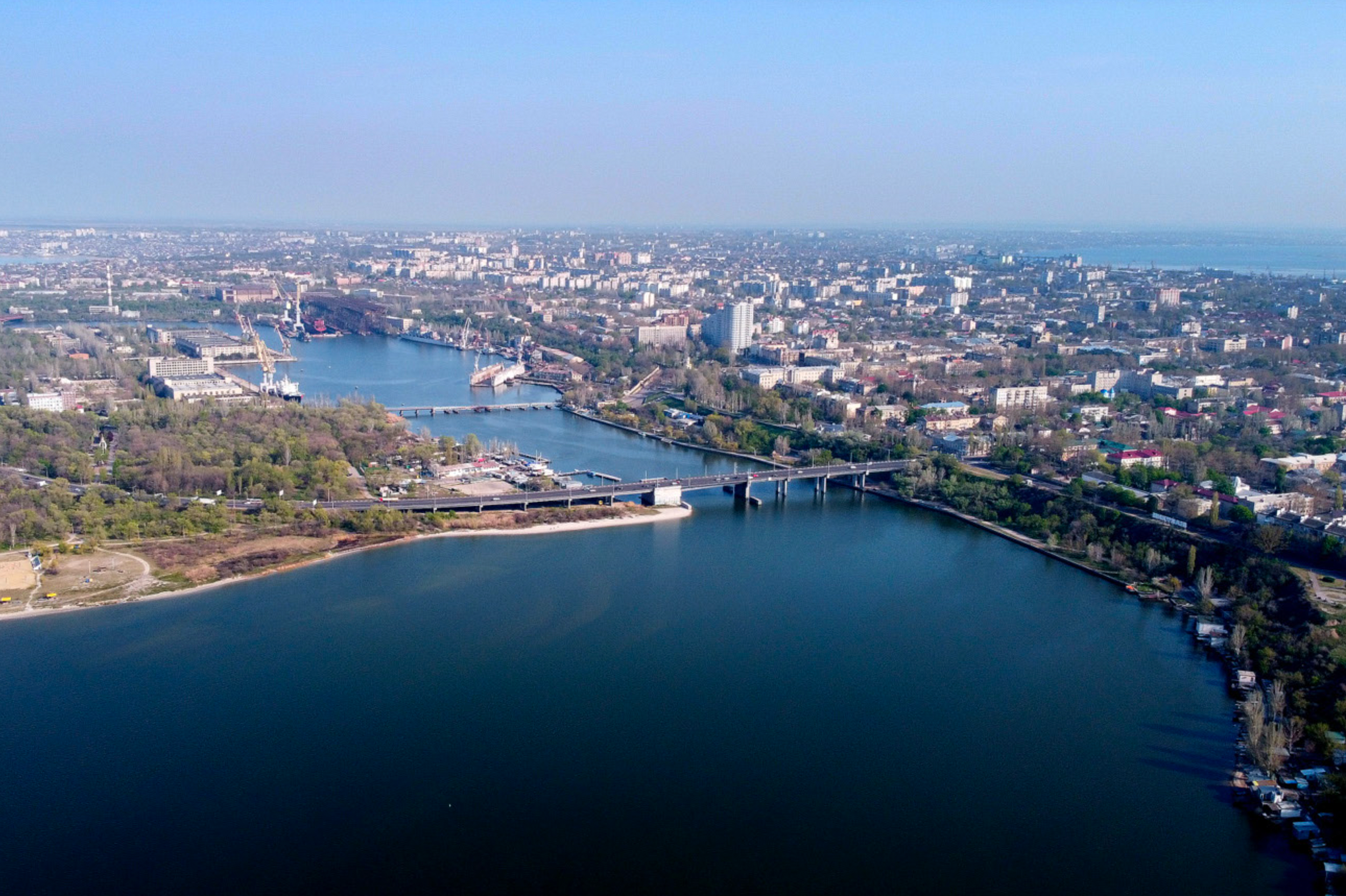
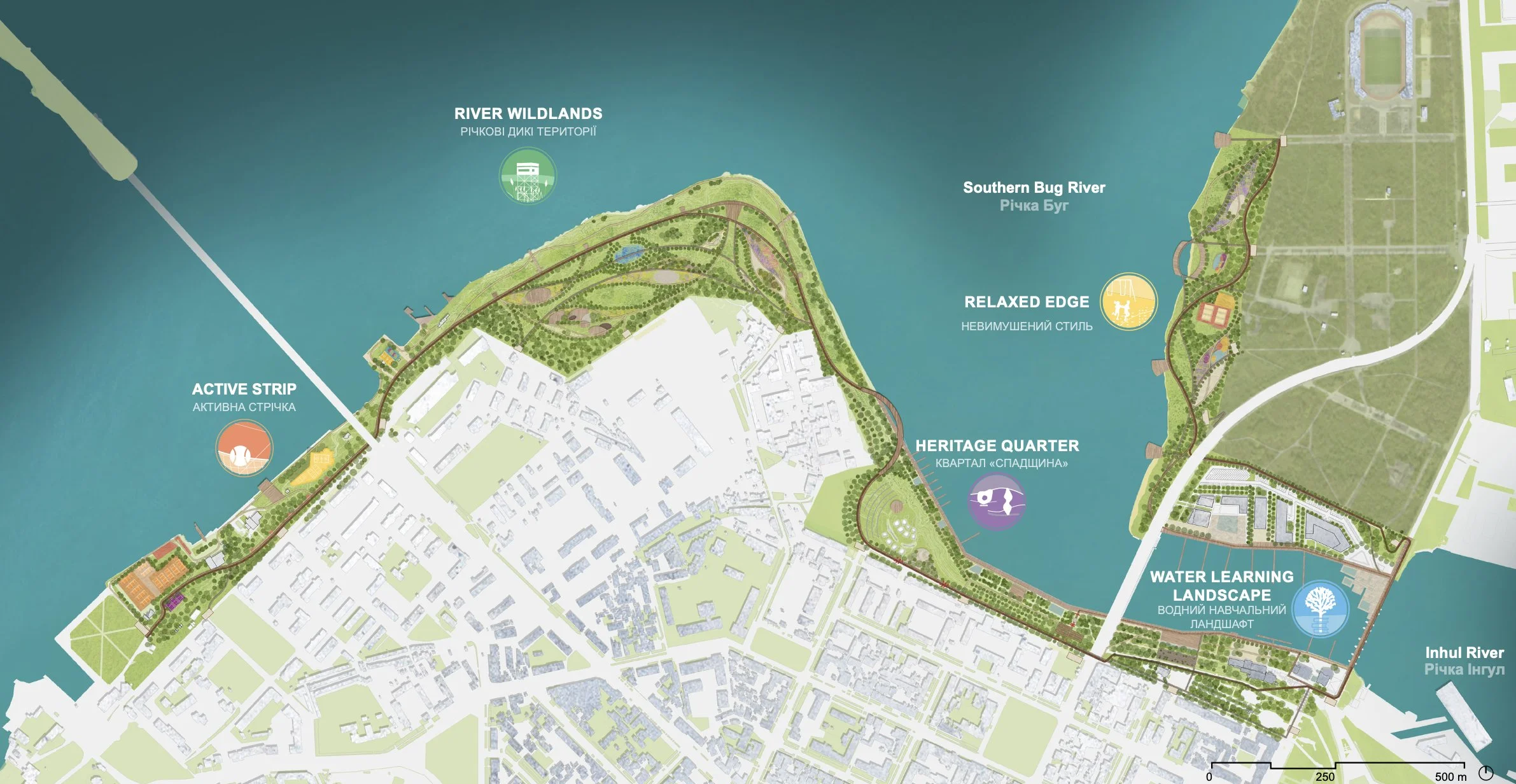
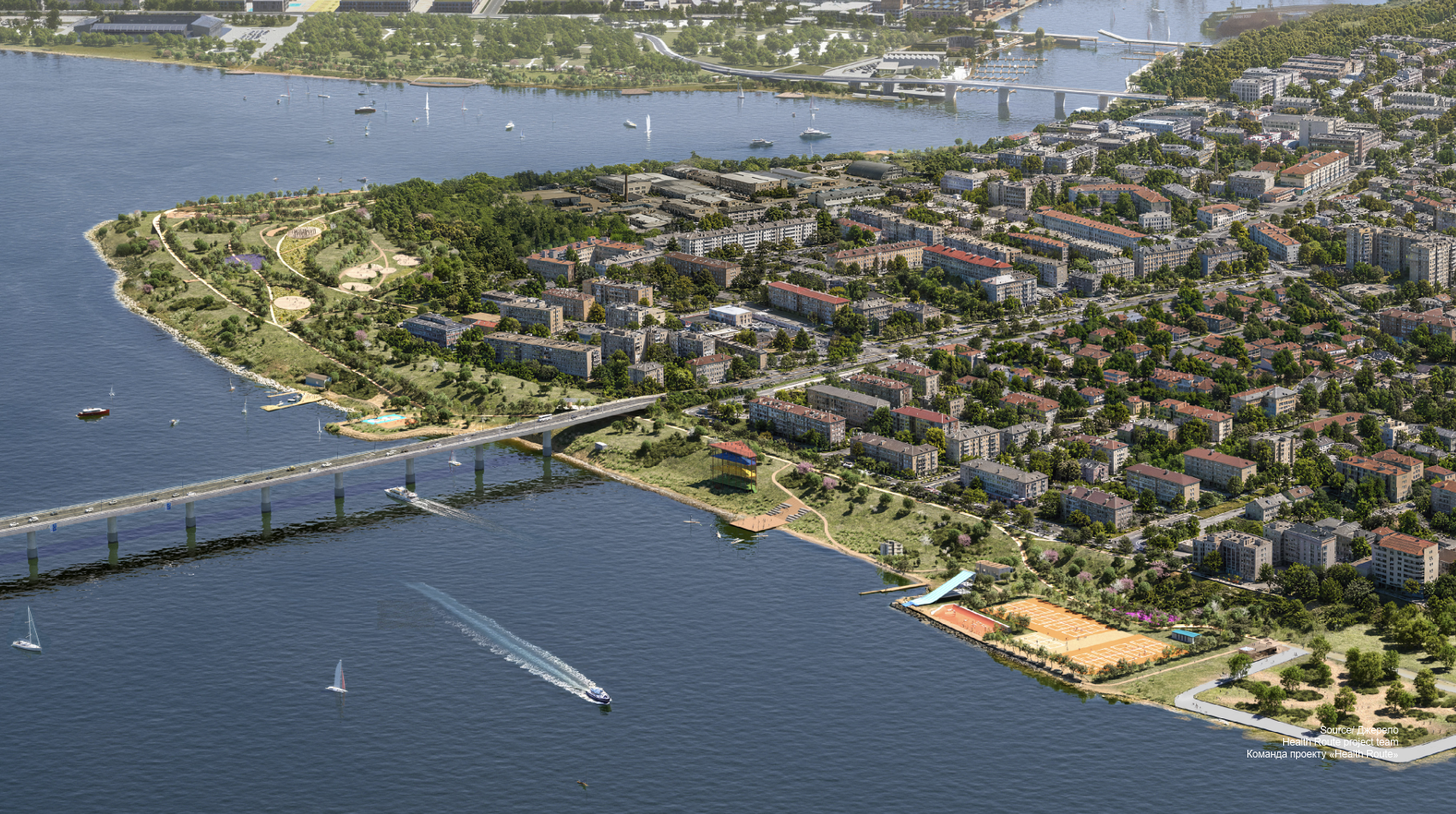
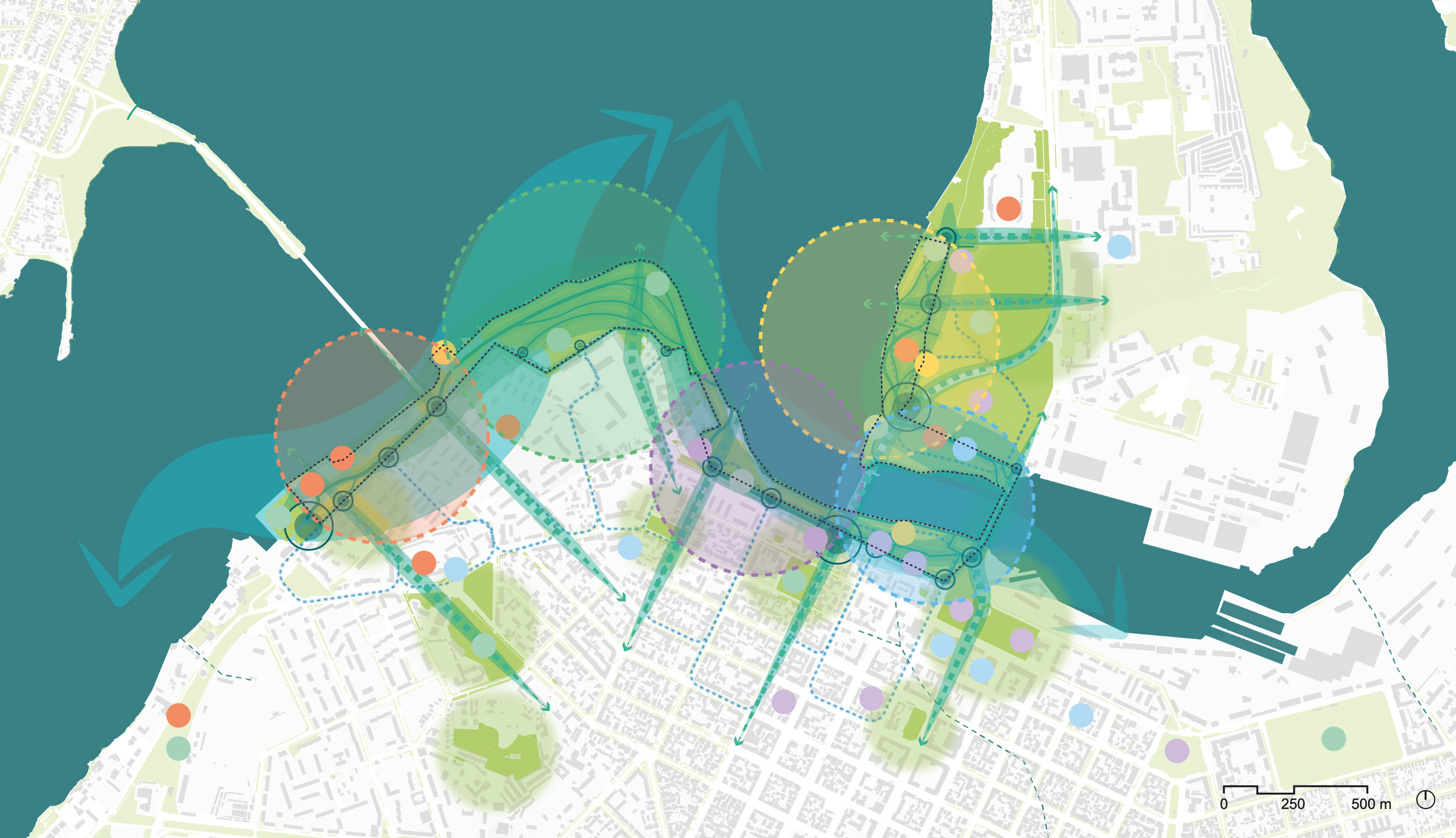
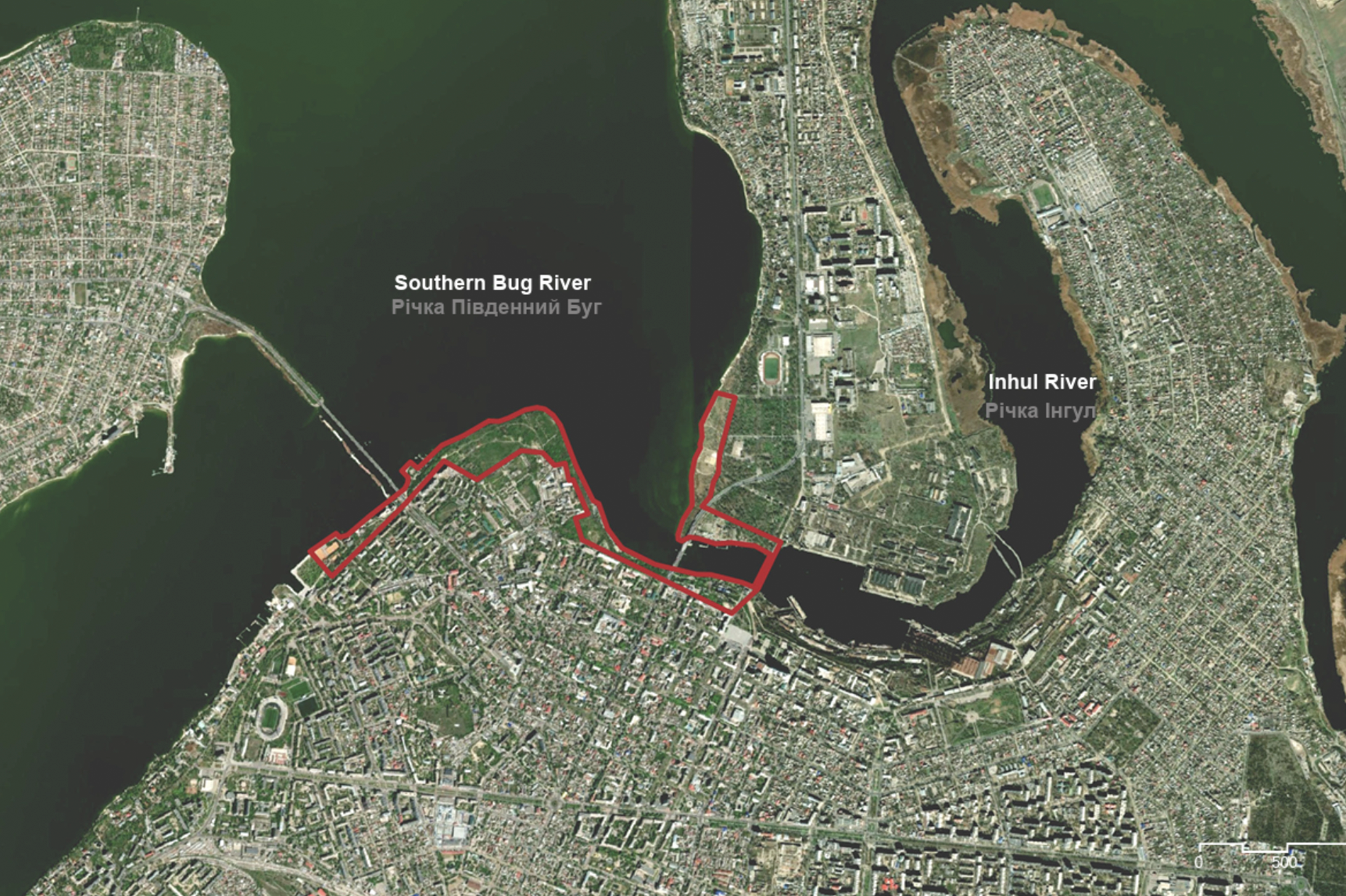
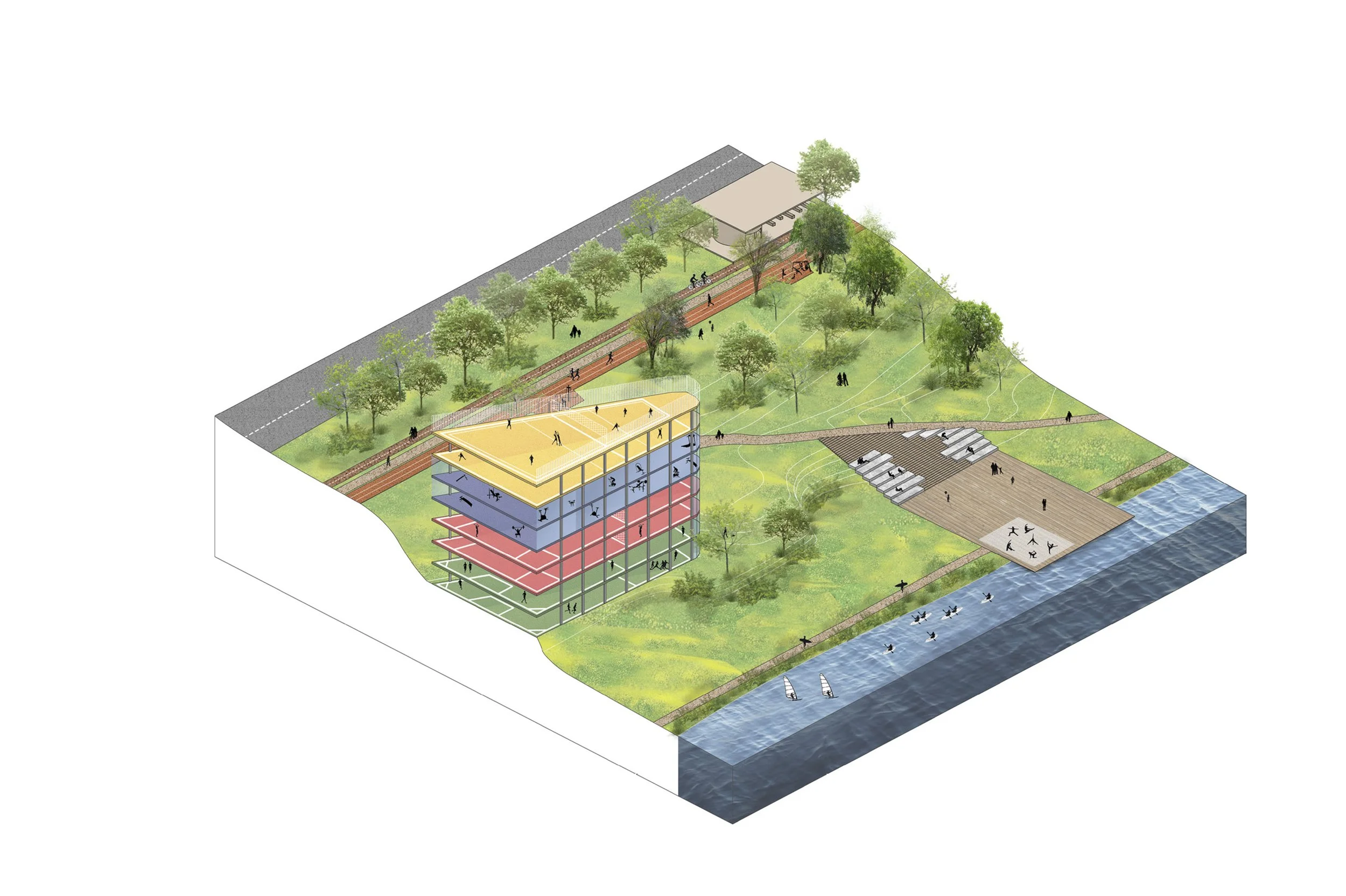
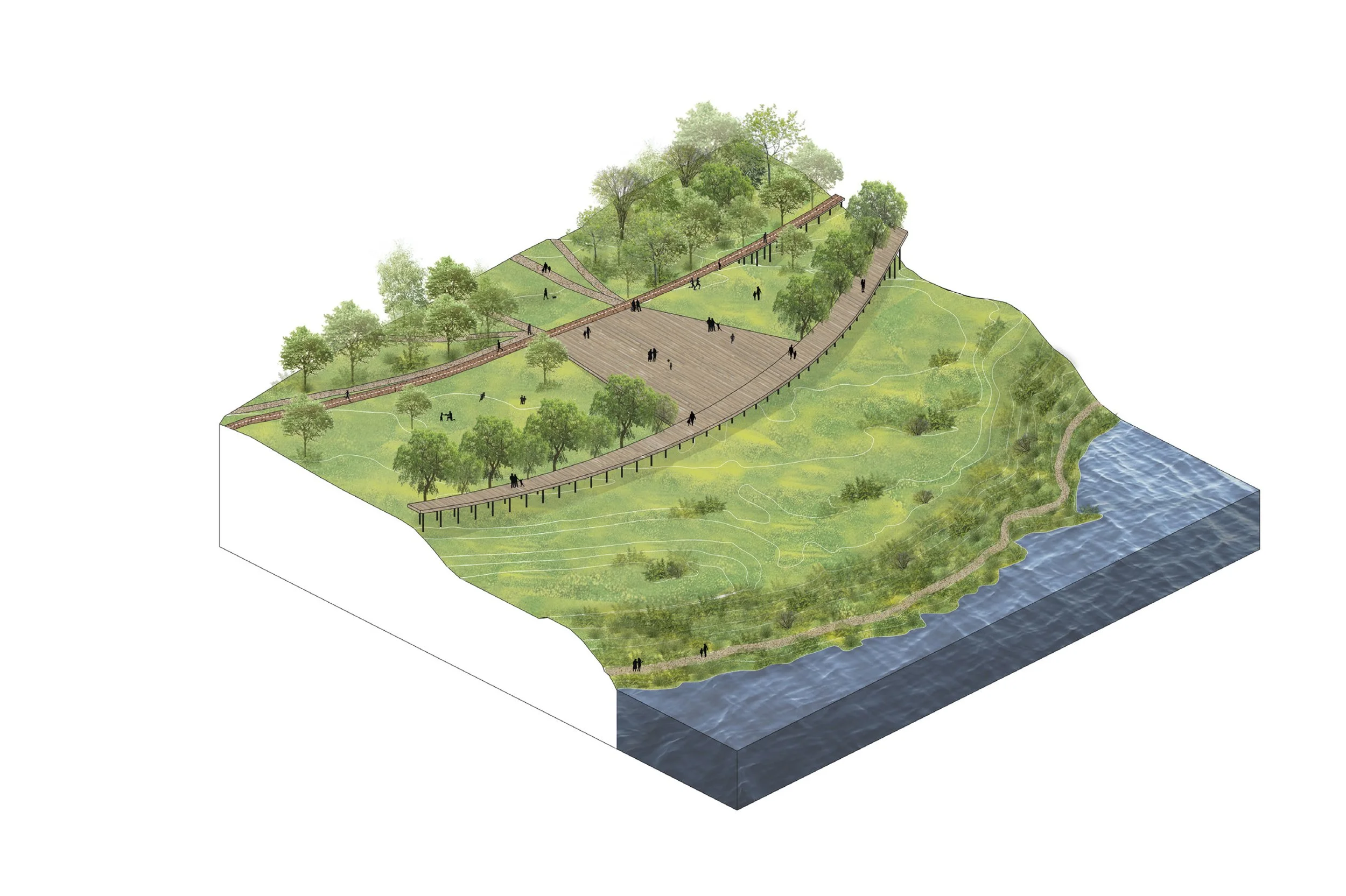
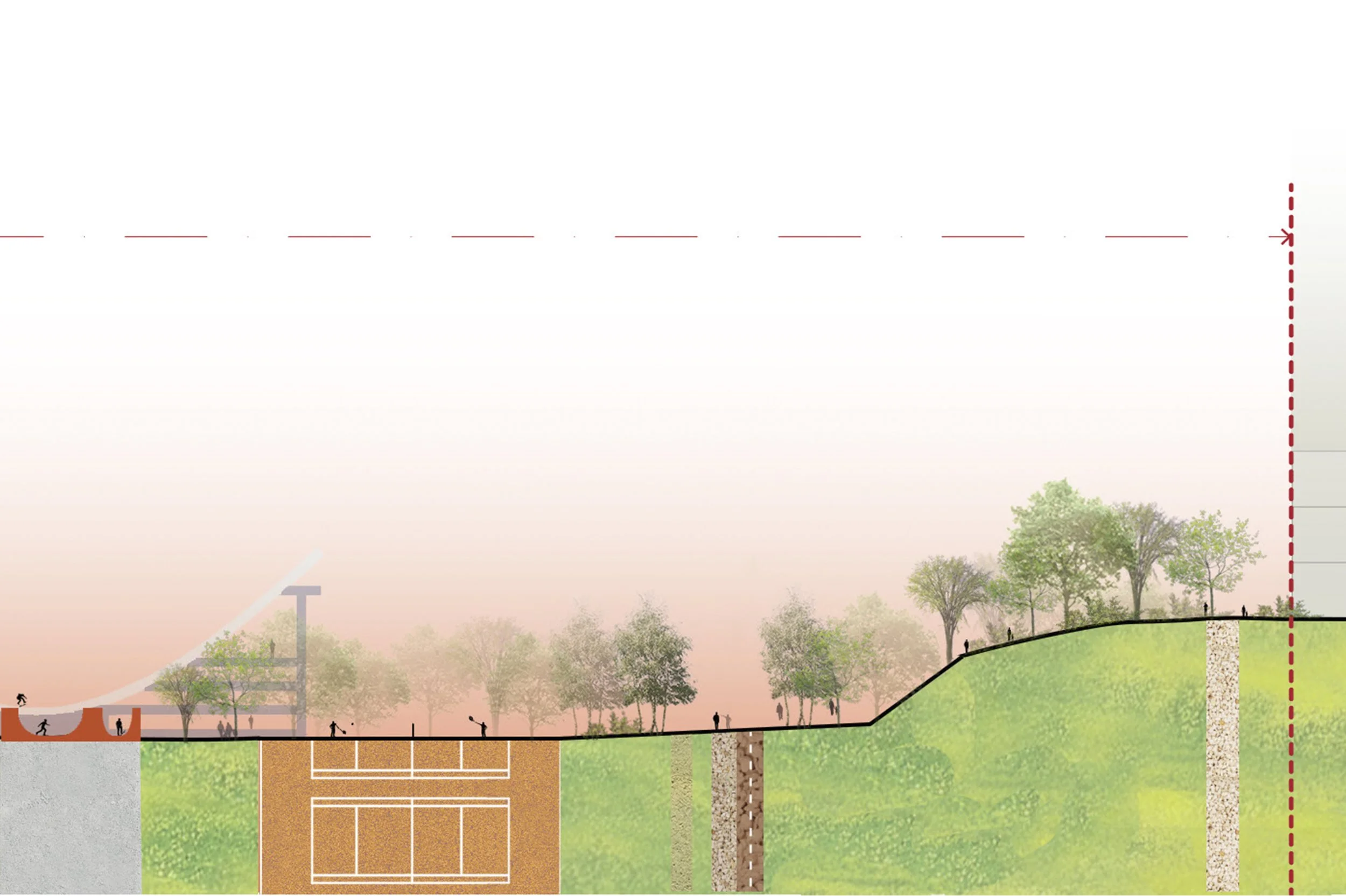
The Health Route project aims to bring together climate resilience, green urban recovery and community wellbeing through the design of a 5 km waterfront corridor at the confluence of the Southern Bug and the Ingul Rivers. The proposal links green spaces, walking and cycling routes, and inclusive public areas, establishing a vision for reconnecting the city with its waterfront and creating an accessible landscape for everyday recreation and social interaction.
The Health Route responds to some of the city’s key environmental and social challenges, including limited green infrastructure, flood risk and fragmented public spaces. Rather than working against the characteristics of the site, the landscape design builds on its existing topography, waterways and natural environment to enhance biodiversity, strengthen climate resilience, create accessible spaces for recreation along the waterfront and reconnect the city with its rivers.
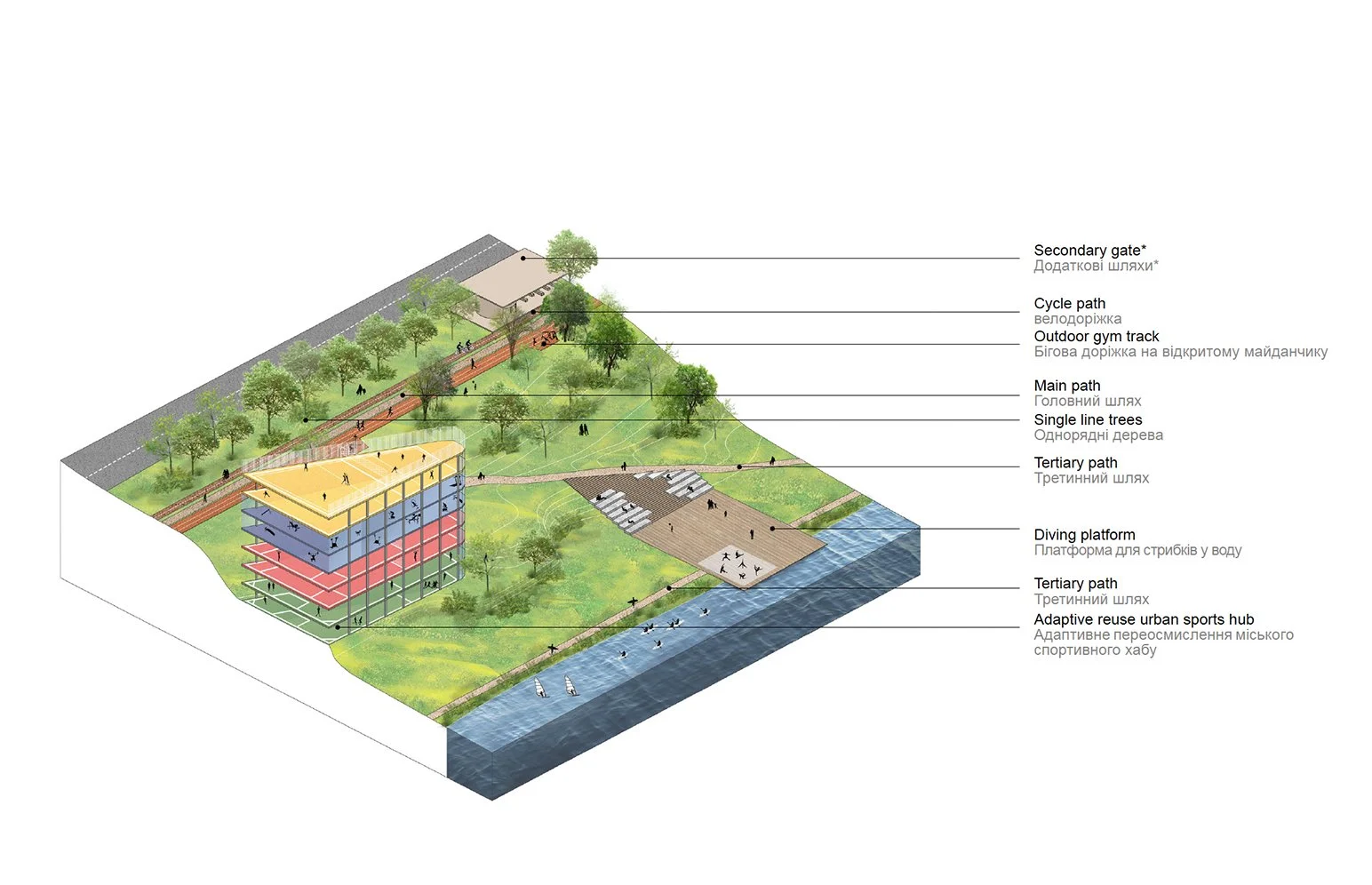
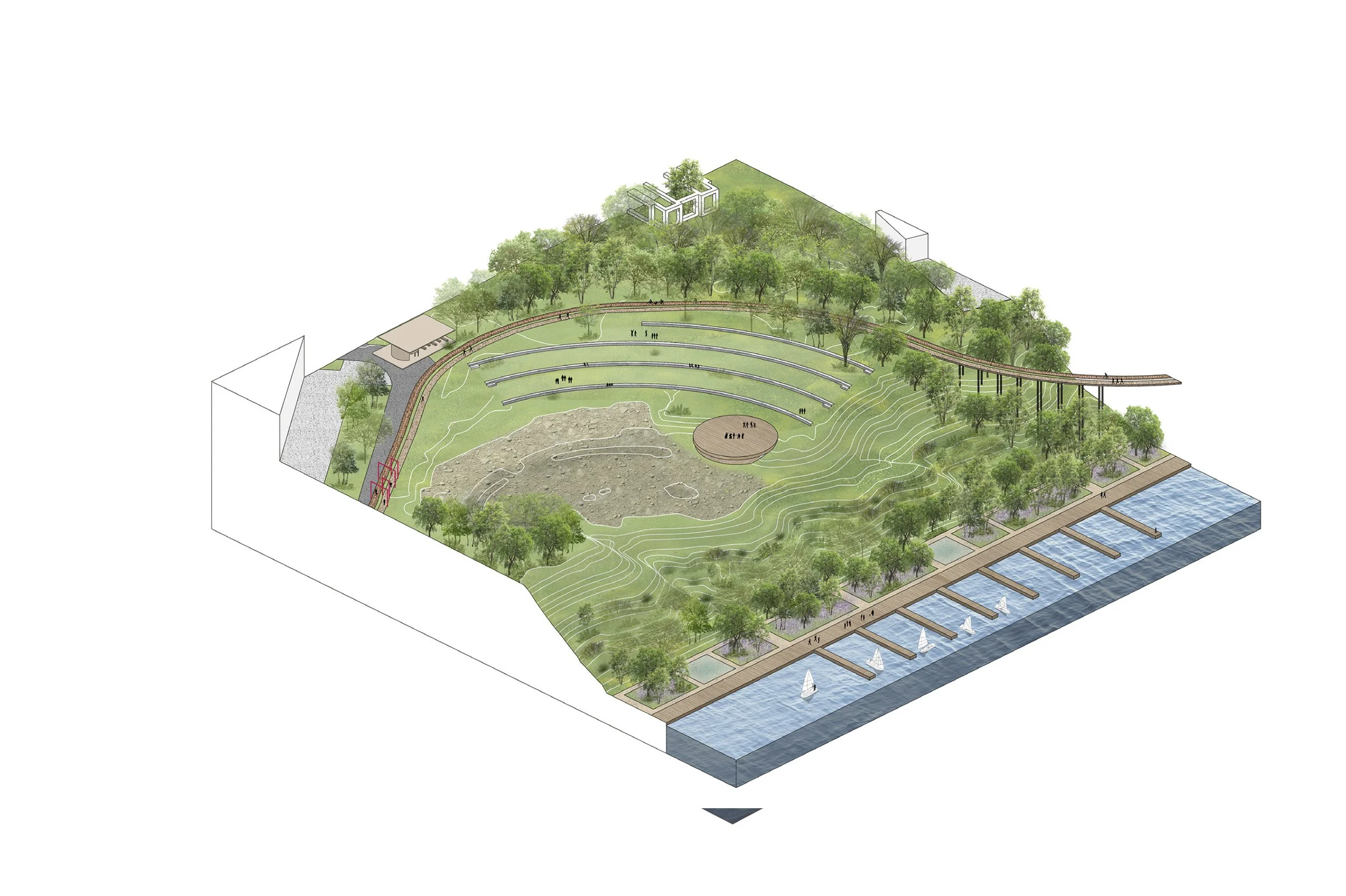
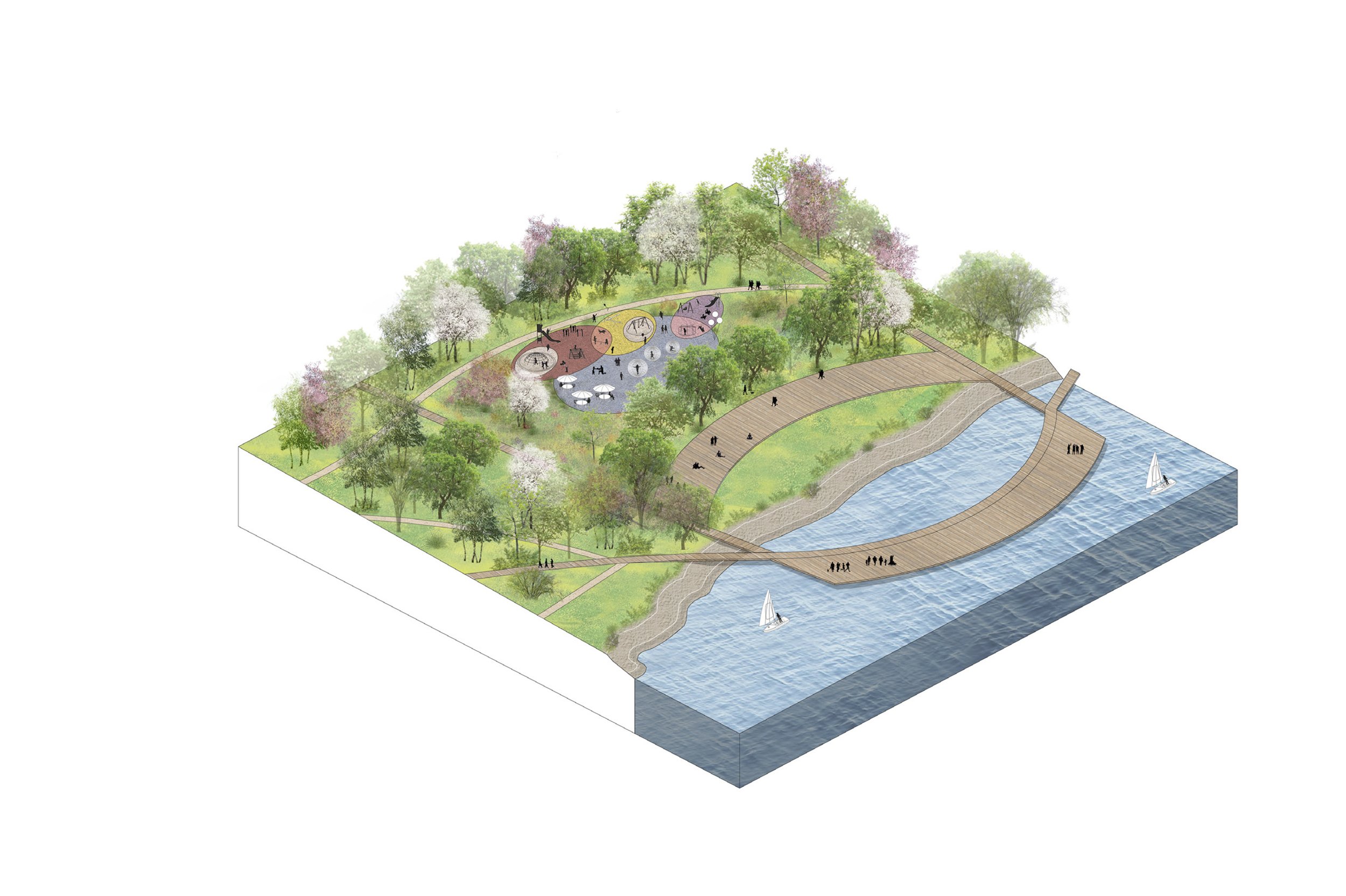
Already popular with runners and cyclists, the area was designed to be strengthened with new sports and exercise facilities. At the Bronze Age settlement of Dykyi Sad, the route introduces a cultural dimension that connects the landscape with Mykolaiv’s long history and heritage. Dedicated learning spaces, outdoor education facilities, relaxation areas, beach access and public amenities further expand the range of activities along the route.
Towards the river wildlands, the interventions become increasingly sensitive to the natural landscape, creating a low-impact retreat where rough terrain and rich flora and fauna frame views of the river and provide space for recreation and leisure.
Led by the One Works Foundation, together with landscape architects of LAND Italia, mobility experts from Systematica and smart city specialists from Carlo Cattaneo University (LIUC), the project was developed in close collaboration with Mykolaiv City Council, seeking to unlock the potential of the waterfront as a catalyst for positive urban transformation.
Community participation has been central to the Health Route’s development. Public surveys helped identify residents’ needs and priorities, while local students contributed directly through dedicated research and presentation workshops. This engagement inspired the creation of an activation programme involving events, partnerships and the progressive phased development of the area.
The Health Route was conceived not as a finished intervention, but as a place that can evolve over time. By encouraging a sense of ownership and long-term stewardship, the project places Mykolaiv’s residents at the centre not only of its conception, but also of its future development and implementation.
PROJECT MILESTONES
Conceptualization and kick start
The Health Route pilot began with coordination between Mykolaiv City Council, UNECE and the expert team led by One Works Foundation. The project focused on developing a 5 km waterfront corridor that combined climate resilience, accessible green spaces and community wellbeing.

Residents’ priorities gathered
An online survey collected over 460 responses. Residents identified priorities including better accessibility, lighting, walking and cycling connections, recreation facilities and environmental quality. These findings informed the project’s design approach.

Site analysis and strategies refined
Technical and spatial assessments examined the waterfront’s topography, vegetation, land uses, mobility and relationship with the rivers, identifying constraints and opportunities for future design. Landscape, mobility and smart-city analysis were developed, supported by technical surveys and international benchmarks. The work established approaches to ecological connectivity, water management and inclusive access.

Young people contributed to the waterfront vision
The Urban Generation Days workshop brought younger residents into the planning process. Students explored the site and developed proposals for recreation, accessibility, planting and waterfront connections, contributing local perspectives to the design work.
Translating findings into design
The site analysis and community feedback informed coordinated landscape, mobility and public-space designs. These proposals defined interventions to improve waterfront access, strengthen ecological resilience and create inclusive spaces for recreation and community life.

Phased implementation and community activation
The proposed implementation approach combines phased improvements to the waterfront with an activation programme of events, local partnerships and community activities. Continued resident participation would help shape each stage, strengthen local ownership and support long-term stewardship as the area evolves.
Related Resources
Mykolaiv Health Route Pilot Project – Output 1: Site Analysis and Surveys
-
The new Mykolaiv Health Route Pilot Project – Output 1: Site Analysis and Surveys provides a comprehensive foundation for the future development of the Health Route, bringing together site analysis, international benchmarks, community engagement, and landscape, mobility, and Smart City strategies.
Developed by a multidisciplinary team of experts, the Output identifies the site's key characteristics, challenges, and opportunities, while incorporating the crucial perspectives of local residents, future users, and students through an online survey and participatory activities.The document establishes the evidence and principles for the next stage of design development, supporting the overall transformation of Mykolaiv’s waterfront into an integrated, accessible, and inclusive green-blue corridor.
Enhancing Urban Planning in the city of Mykolaiv: Graphic and Digital Deliverables
-
This final report brings together the key strategies developed throughout the new Concept Masterplan for Mykolaiv, focusing on two critical urban systems: mobility and landscape. It outlines a comprehensive mobility strategy covering road, rail, soft mobility, and public transport networks, as well as landscape guidelines aimed at shaping Mykolaiv into a nature-positive city.
The report also includes site evaluations for two pilot projects — Industry and Trade and Housing and Community — and highlights the public outreach and stakeholder engagement activities undertaken.
Though it concludes the phase I, this report lays a solid foundation for the city's long-term recovery and sustainable development.
Innovation District: A Vision for Mykolaiv’s Future
-
This report presents the first pilot project following the adoption of Mykolaiv’s city-wide strategy—the Innovation District. Positioned at the crossroads of the city centre, the historic Shipyard, and the airport, this dynamic new hub is set to drive regeneration through education, research, and sustainable development. Anchored by the Admiral Makarov National University of Shipbuilding, the district integrates urban design, mobility, and landscape strategies to shape a forward-looking model for living and working. Its principles aim to inspire future developments and set a standard for resilient urban growth in Mykolaiv.
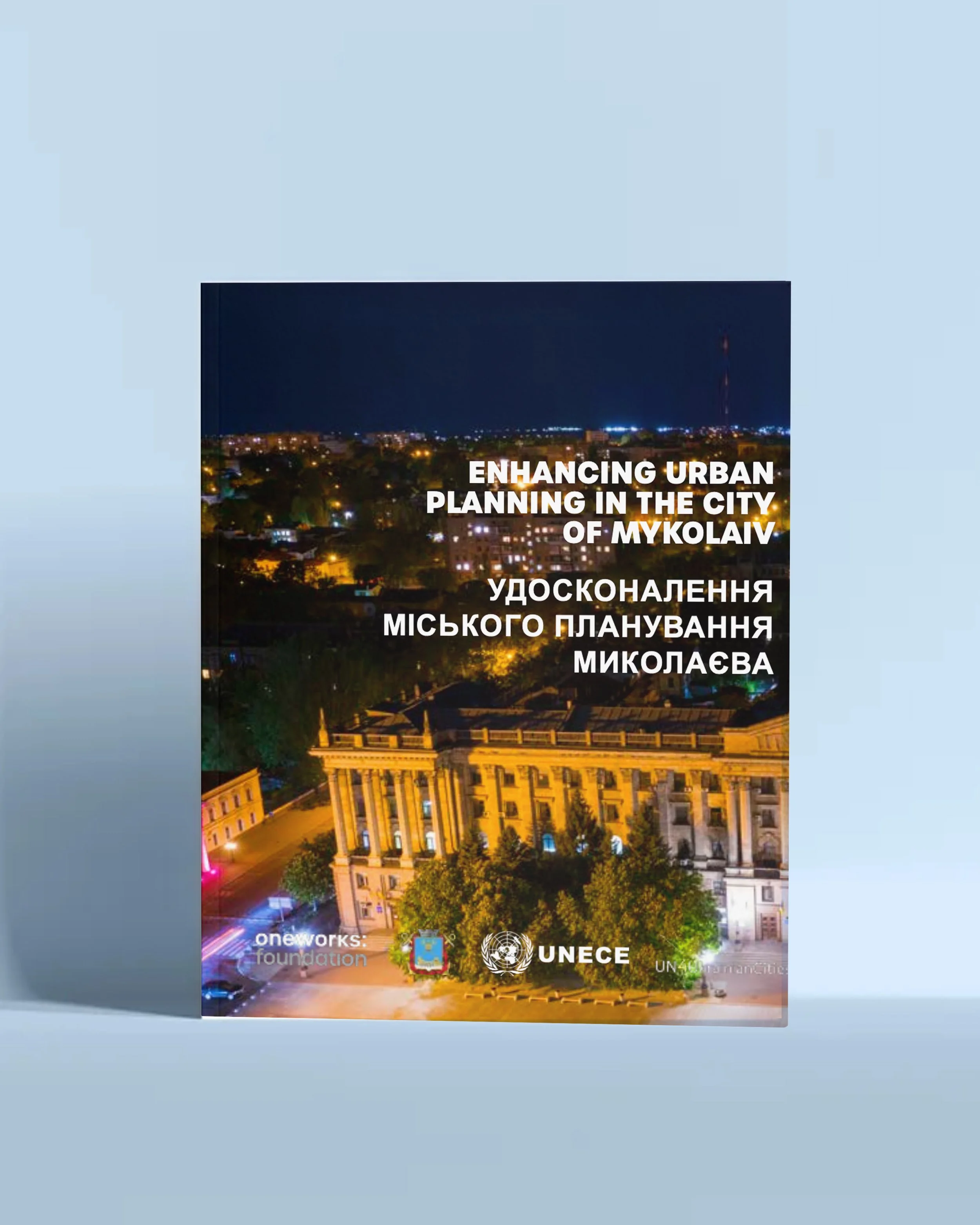
Enhancing Urban Planning in the City of Mykolaiv: Concept Designs
-
Output 3 (part 1) of the Mykolaiv Concept Masterplan represents a comprehensive approach to sustainable urban development, developed within the UN4UkrainianCities project by OWF and international expert team, funded by BMZ and supported by GIZ. The plan addresses five key areas: transport and mobility strategy, urban policies, cultural heritage, pilot project sites, and community engagement. Through innovative solutions such as integrated mobility networks, adaptable infrastructure use, and digital community engagement platforms, the plan establishes sustainable urban development in Ukraine through comprehensive, community-focused solutions that balance preservation with innovation.
This strategic document demonstrates how cities can approach reconstruction with a focus on environmental sustainability, social inclusion, and economic vitality. The plan incorporates extensive stakeholder input and international best practices while remaining grounded in local context and needs. It includes detailed implementation guidance through carefully selected pilot projects and measurable Key Performance Indicators, ensuring that theoretical frameworks can be transformed into tangible improvements for Mykolaiv's residents.
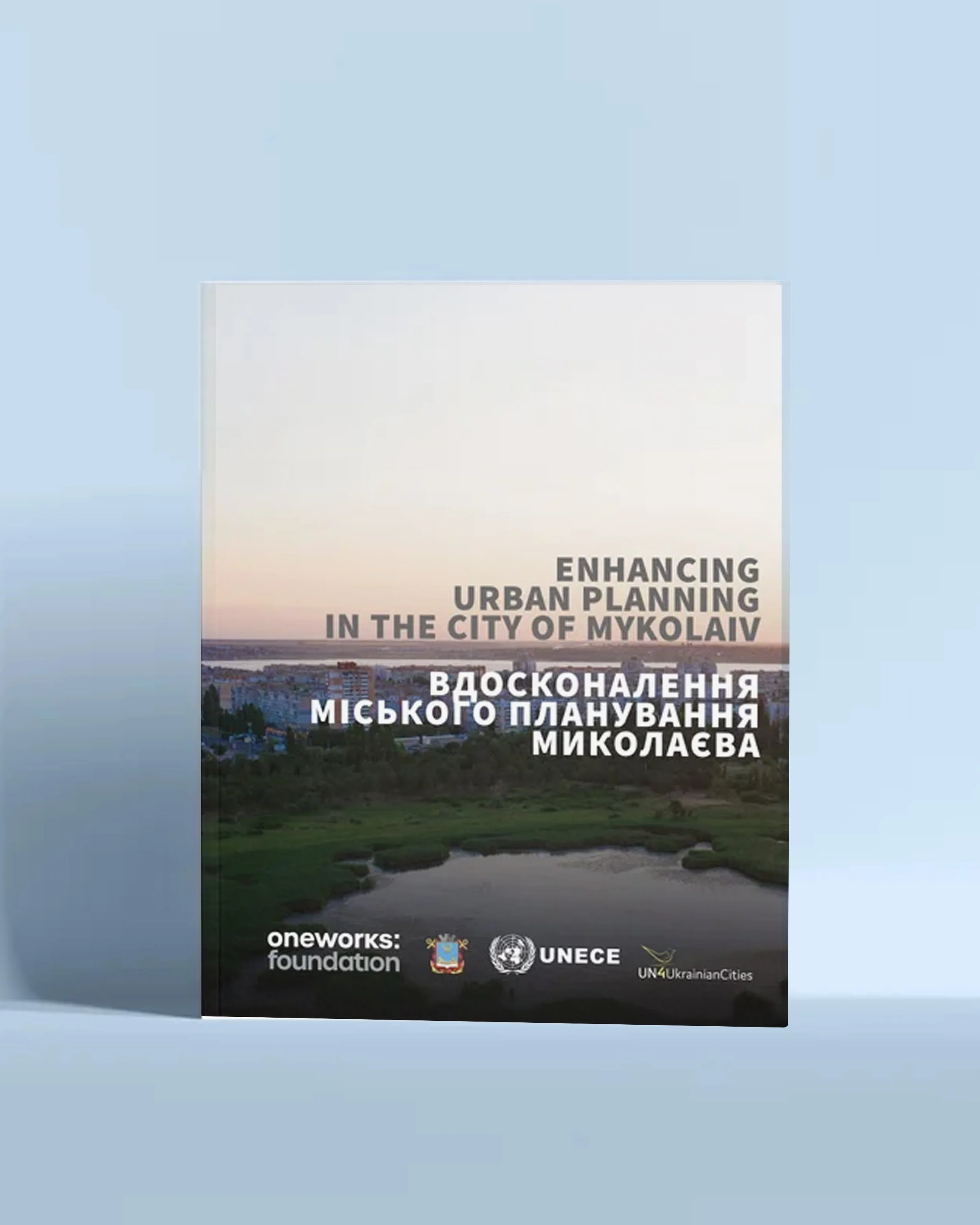
Enhancing Urban Planning in the City of Mykolaiv: Detailed Analysis and Damage Assessment
-
The Oneworks Foundation has been appointed to lead a multi-disciplinary team, with the purpose of developing a sustainable vision for the City of Mykolaiv.
Spanning from demographic projections to landscape and traffic strategies, these studies will pave the road for "building back better", and support the Municipality in addressing criticalities as well exploiting opportunities, while engaging with the local community.
This report summarises months of analysis on the city pre-conflict and current conditions. As a first step in the development of a concept master plan for the city, this document will be followed by further studies that will guide subsequent phases of the rebuilding process.
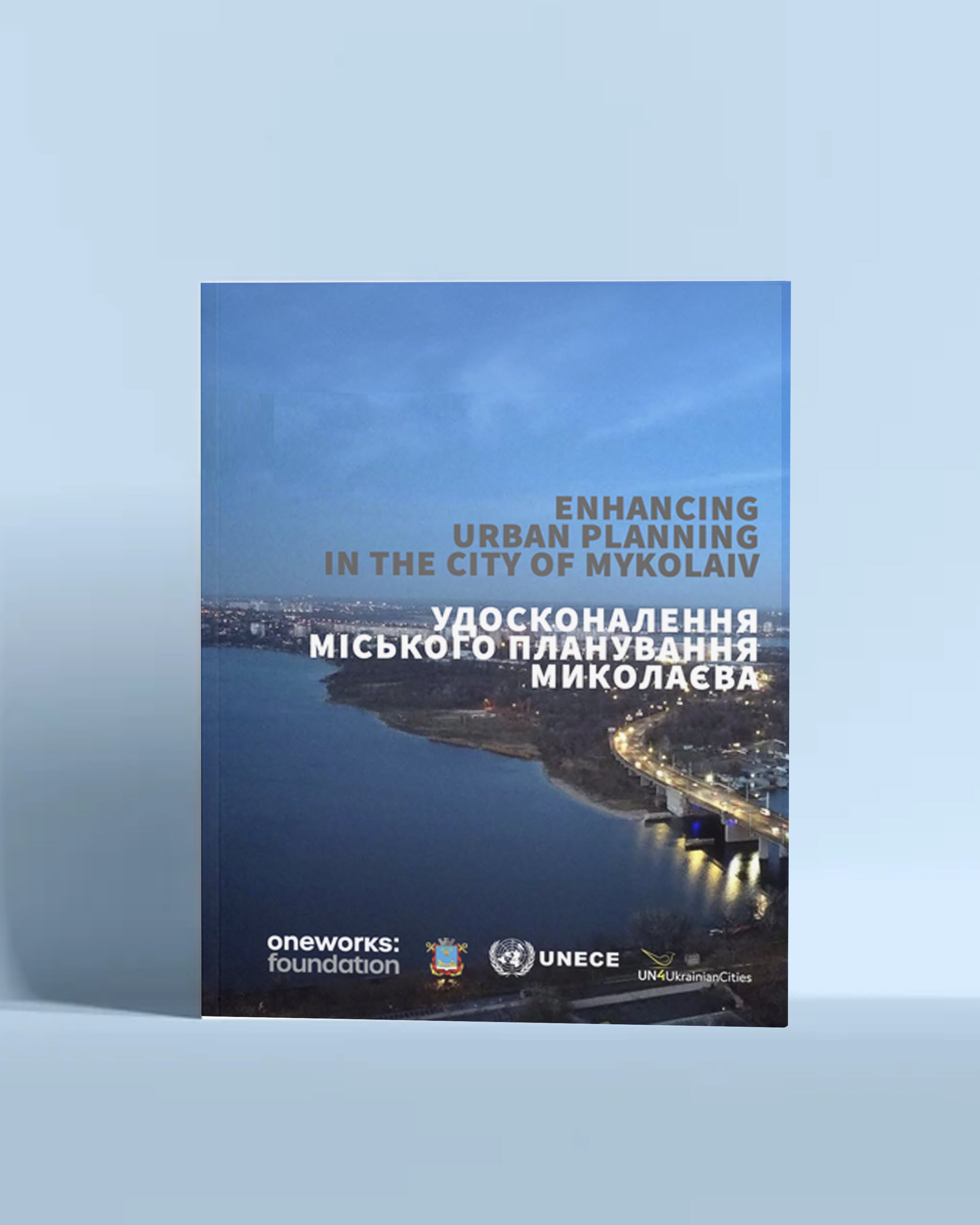
Enhancing Urban Planning in the City of Mykolaiv: Vision and Strategic Proposals
-
Following a detailed analysis of Mykolaiv's present conditions, the One Works Foundation-led team developed further studies delving into different subjects. On one hand, the team analysed international and Ukrainian sustainability policies that could be relevant to Mykolaiv, and carried out specific studies on the current environmental conditions of the city. On the other hand, demographic projections helped understand how the end of the conflict and subsequent social, political, and economic approaches may lead to different scenarios.
The results of these investigations contributed to the formulation of a preliminary overarching strategy that will pave the way for a sustainable future for Mykolaiv.
This report therefore explains the proposed key urban, landscape design, and mobility moves that will be further discussed and developed in the upcoming months.
In partnership with