Support to National Housing Policy Reform
Supporting Ukraine in building a modern, sustainable and inclusive housing system.
The UN4UkrainianCities Initiative supports Ukraine’s efforts to reform its national housing policy and legislative framework, helping establish the legal, institutional and financial foundations for a more sustainable housing system.
Working in close cooperation with the Ministry for Development of Communities and Territories of Ukraine, UNECE experts provide policy advice and technical expertise to strengthen housing legislation, drawing on international experience and European practices.
Building the foundations for housing reform
Ukraine’s recovery creates an urgent need to address housing shortages, displacement, affordability and the long-term management of housing.
UN4UkrainianCities has contributed expertise to the development of a new national housing framework, including support leading to the adoption of the Law of Ukraine “On the Fundamental Principles of Housing Policy.”
The Law establishes the foundations for a comprehensive transformation of Ukraine’s housing model and creates the basis for further reforms addressing social and affordable housing.
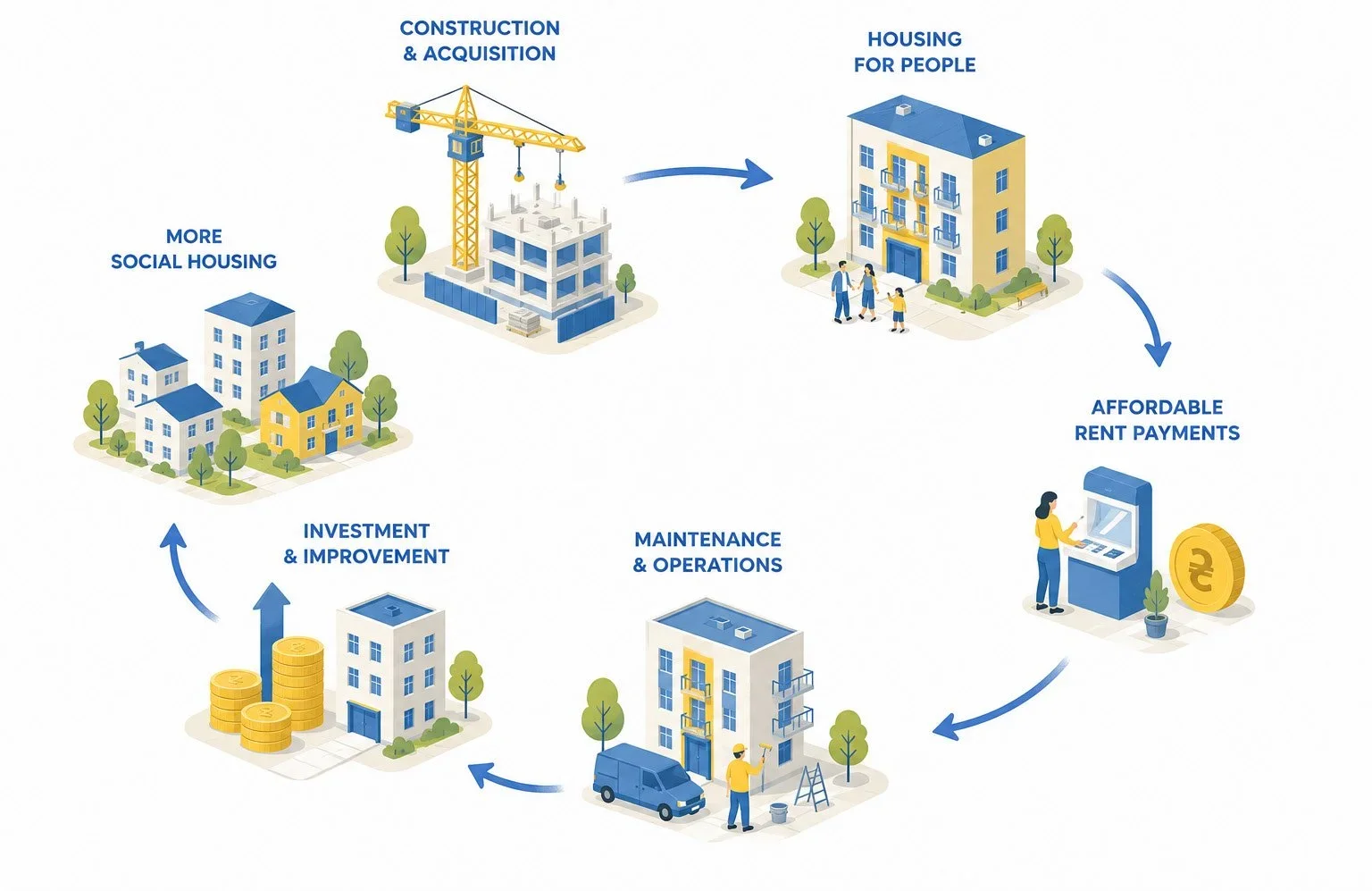
Developing a new social housing system
Building on this work, the Initiative is supporting the development of the draft Law of Ukraine “On Social Housing.”
UN4UkrainianCities experts prepared the Analytical Note on the Conceptual Proposals for Refining the Draft Law on Social Housing, providing recommendations for a system that is:
Financially sustainable, with rents reflecting the real costs of providing and maintaining housing while remaining below market levels.
Affordable, through targeted support and rent subsidies based on household circumstances.
Transparent, with clear rules determining who can access social housing.
Inclusive, taking into account different forms and levels of vulnerability.
Professionally managed, through effective non-profit social housing operators.
Connected to social services, helping households address the broader causes and consequences of vulnerability.
A fair approach to housing eligibility
The proposed framework introduces a three-level eligibility system designed to ensure that social housing reaches households that need it most.
1. Basic eligibility
Assessment of factors such as household income and existing housing conditions.
2. Vulnerability assessment
Consideration of visible and less visible vulnerabilities, including disability, chronic illness, psychological trauma, displacement and overlapping vulnerabilities within households.
3. Local needs
Additional consideration of local workforce requirements and development priorities, helping housing policy contribute to the long-term resilience of cities and communities.
Eligibility would also be reviewed periodically, with transitional mechanisms protecting residents while ensuring that limited social housing resources are used effectively.
Sustainable social housing operators
A modern social housing system also requires institutions capable of developing, managing and maintaining housing over the long term.
The proposed model envisages non-profit social housing operators supported by diversified sources of revenue, including:
rental income;
public funding;
limited commercial activities whose revenues are reinvested into housing;
cooperation with private developers;
public-private partnership mechanisms.
This approach can help expand the supply of affordable housing, reduce dependence on public funding and support mixed-income communities.
Housing and social support working together
Housing alone cannot address every challenge experienced by vulnerable households.
The proposed framework therefore strengthens coordination between social housing and social services, particularly for people affected by displacement, destroyed housing, unemployment, disability, ageing, financial hardship or caregiving responsibilities.
Social housing can consequently function not only as accommodation, but also as a pathway towards greater stability and independence, helping households transition towards the standard housing market when their circumstances improve.
Towards a new housing model for Ukraine
Together, these reforms aim to establish the foundations for a modern, transparent and financially sustainable housing system aligned with European practices.
The objective is to:
expand access to social and affordable housing;
make better use of public resources;
protect vulnerable households;
support mixed-income communities;
strengthen the long-term management of housing;
contribute to more inclusive and resilient Ukrainian cities and communities.
Development of the draft Law ‘On Social Housing’
UN4UkrainianCities is supporting the preparation of Ukraine’s draft Law ‘On Social Housing’, helping lay the foundations for a sustainable social rental sector. Project experts have developed policy recommendations addressing financial sustainability, eligibility and vulnerability criteria, social housing operators, and coordination between housing and social services.
The work aims to support a transparent, inclusive and financially sustainable social housing system, aligned with European practices and capable of responding to the needs of vulnerable households and communities. UN4UkranianCities
Development of Ukraine’s State Housing Strategy
UNECE, through UN4UkrainianCities, is actively supporting the development of Ukraine’s State Housing Strategy, working within the Technical Working Group alongside national authorities and international partners.
The project contributes to defining strategic and operational objectives, integrating social housing and housing stock renovation, and ensuring that policy decisions respond to the needs of communities and households. The Strategy will provide a long-term framework for housing policy, including priorities, implementation mechanisms, funding and monitoring.
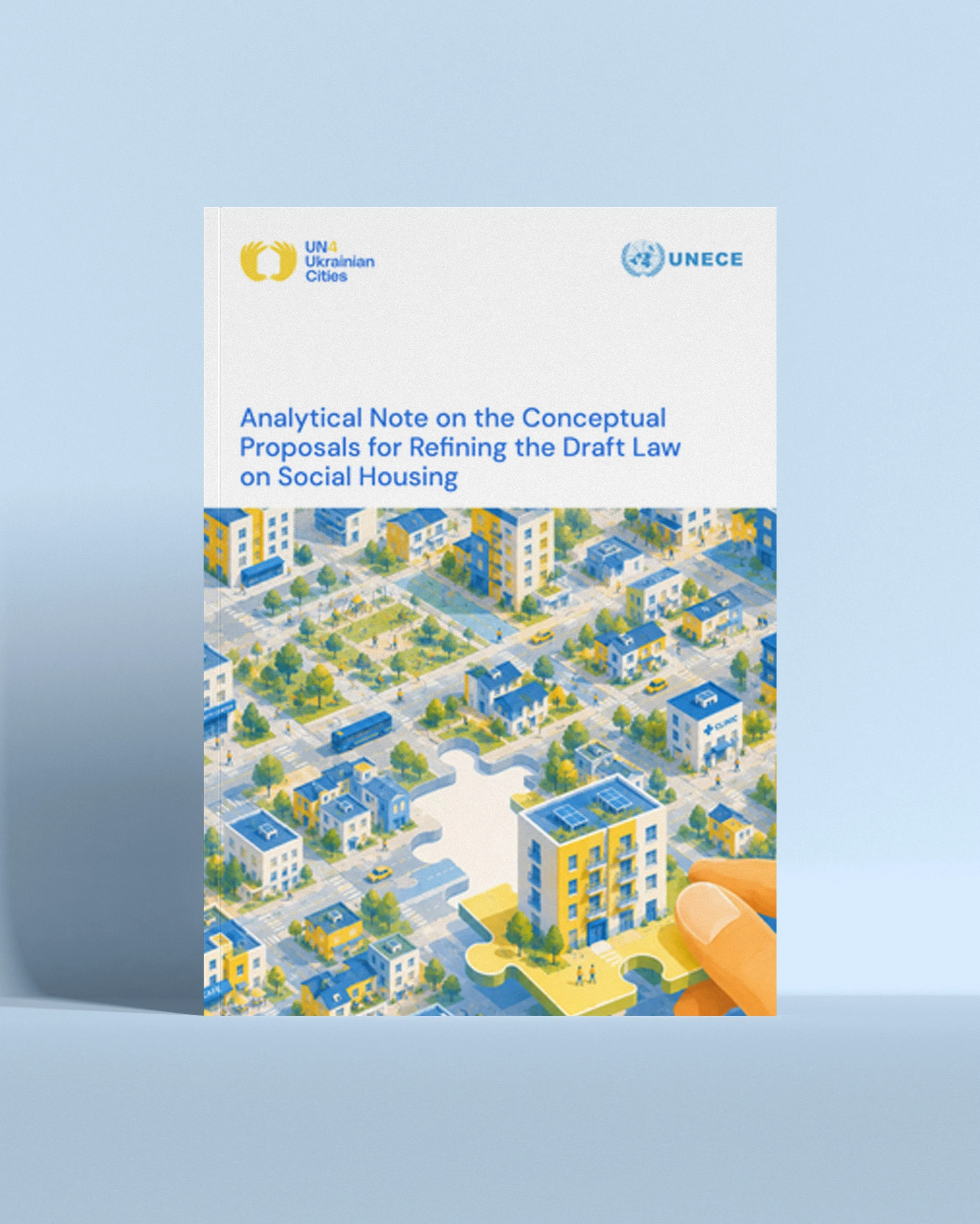
Analytical Note on the Conceptual Proposals for Refining the Draft Law on Social Housing
-
As Ukraine advances its recovery, housing has increasingly become one of the country's most pressing policy priorities: this new Analytical Note, developed under the UNECE UN4UkrainianCities Initiative in close coordination with the Ministry for Development of Communities and Territories of Ukraine, provides conceptual proposals and guidelines for refining the draft Law “On Social Housing”. Based on an analysis of the current housing framework in Ukraine, key recommendations are outlined to establish a sustainable, transparent, and inclusive social housing system aligned with European best practices. These include valuable guidance on eligibility criteria, social housing operators, financial sustainability, and coordination with social services.
Ultimately, the Analytical Note provides a foundation for developing a modern social housing system capable of responding to current and future needs, expanding access to affordable housing, supporting vulnerable households, and contributing to more resilient and inclusive communities.
Related Resources
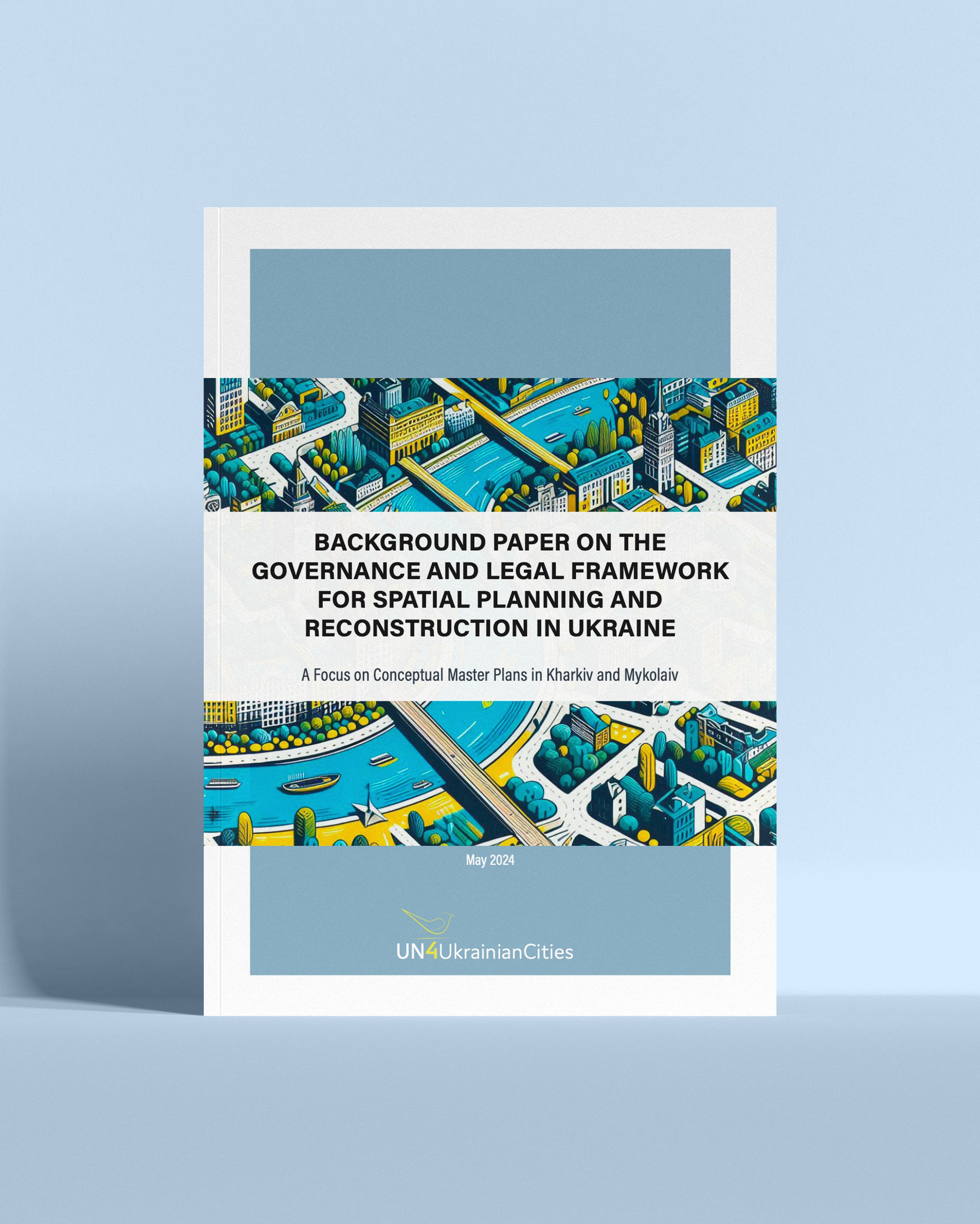
Background Paper on Governance and Legal Framework for Urban Reconstruction in Ukraine
-
This background paper highlights the vital role of urban planning in the reconstruction efforts of Kharkiv and Mykolaiv. Developed as part of the UN4UkrainianCities project. It aims to addresses the challenges and opportunities faced by these war-affected cities, as well as to outline the governance and legal frameworks crucial for their sustainable development.
As Ukraine begins the monumental task of rebuilding, the paper emphasizes the importance of integrated urban planning in driving modernization and innovation.
Key highlights from the paper include:
Decentralization in Urban Planning: The transition from a top-down planning system to a decentralized approach has empowered local governments, allowing them to play a pivotal role in Ukraine's recovery.
Concept Master Plans: In collaboration with international partners, the cities of Kharkiv and Mykolaiv are developing long-term concept master plans to guide future spatial and socioeconomic development.
Coherent Legislative Framework: The paper emphasizes the need for a streamlined and harmonized legislative framework to facilitate effective recovery and prevent fragmented efforts.
The UN4UkrainianCities project, funded by the German Federal Ministry for Economic Cooperation and Development (BMZ) and supported by the Deutsche Gesellschaft für Internationale Zusammenarbeit (GIZ) GmbH, aims to enhance urban planning in Kharkiv and Mykolaiv. This is achieved by supporting the development of concept master plans, formulating pilot projects, and facilitating investments in sustainable urban infrastructure.
As Ukraine progresses with its EU accession efforts, the paper calls for a recovery approach that is rooted in local needs and capacities. It highlights the potential for transformative change through decentralized and inclusive planning.