Building a New Social Housing System for Ukraine: the New Analytical Note on the Conceptual Proposals for Refining the Draft Law on Social Housing
As Ukraine advances its recovery, housing has increasingly become one of the country's most pressing priorities. Indeed, as millions have been displaced and significant portions of the housing stock have been destroyed or damaged, the country has an opportunity to update and improve existing mechanisms in the housing sector to respond to current and future needs by promoting inclusion, resilience, and long-term development.
The UN4UkrainianCities Initiative directly supports efforts to strengthen Ukraine’s national housing legislative framework. Its experts played a key role achieving the Verkhovna Rada's adoption of the Law of Ukraine ‘On the Fundamental Principles of Housing Policy’, which introduces new approaches to the housing sector and establishes the basis for a comprehensive transformation of Ukraine’s housing model.
Building on these results, the project continues to support the development of the draft Law ‘On Social Housing’. The new ‘Analytical Note on the Conceptual Proposals for Refining the Draft Law on Social Housing’ is now available, developed by the Initiative’s experts, in close coordination with the Ministry for Development of Communities and Territories of Ukraine. The document provides a comprehensive analysis of Ukraine's social housing framework and offers policy recommendations for a sustainable, transparent, and people-centered social housing system aligned with European practices.
Learning from Past Challenges: Guidelines for a Modern, Sustainable, and Inclusive Social Housing System
While Ukraine has engaged with social housing since 2007, when the Law of Ukraine ‘On the Social Housing Stock’ entered into force, a functioning social housing model was never fully established: the social housing stock never became a significant component of Ukraine’s housing policy, and the existing model lacked financial sustainability needed to respond effectively to growing housing needs. These limitations became increasingly evident in recent years when the existing system was unable to fully address the needs of internally displaced persons, young families, public-sector employees, and other groups.
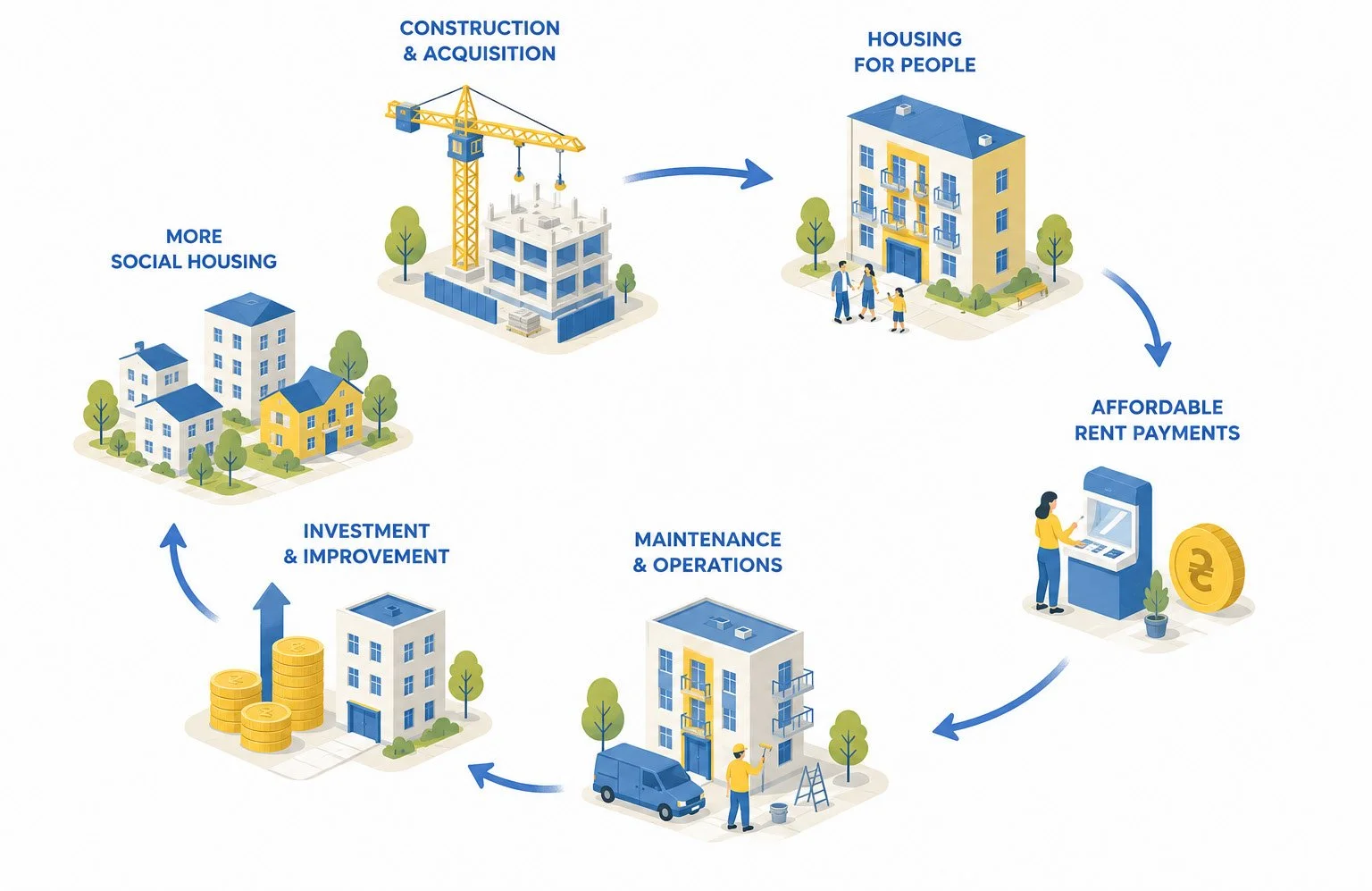
Drawing on these lessons, the paper’s core message is straightforward: a financially sustainable model should ensure that rents, while remaining below market levels, reflect the real costs of providing and maintaining housing, and guarantee affordability through targeted rent subsidies based on households’ financial circumstances. To achieve this, the Analytical Note identifies priority areas to be addressed by the draft Law of Ukraine ‘On Social Housing’:
Establishing an economically sustainable model for the operation of social housing;
Introducing a transparent system for determining eligibility for social housing, securing comprehensive support for vulnerable population groups;
Creating an effective model for social housing operators, ensuring well-regulated, non-profit entities with diversified revenue sources, and limiting reliance on public funding, following the instruments used in several European countries;
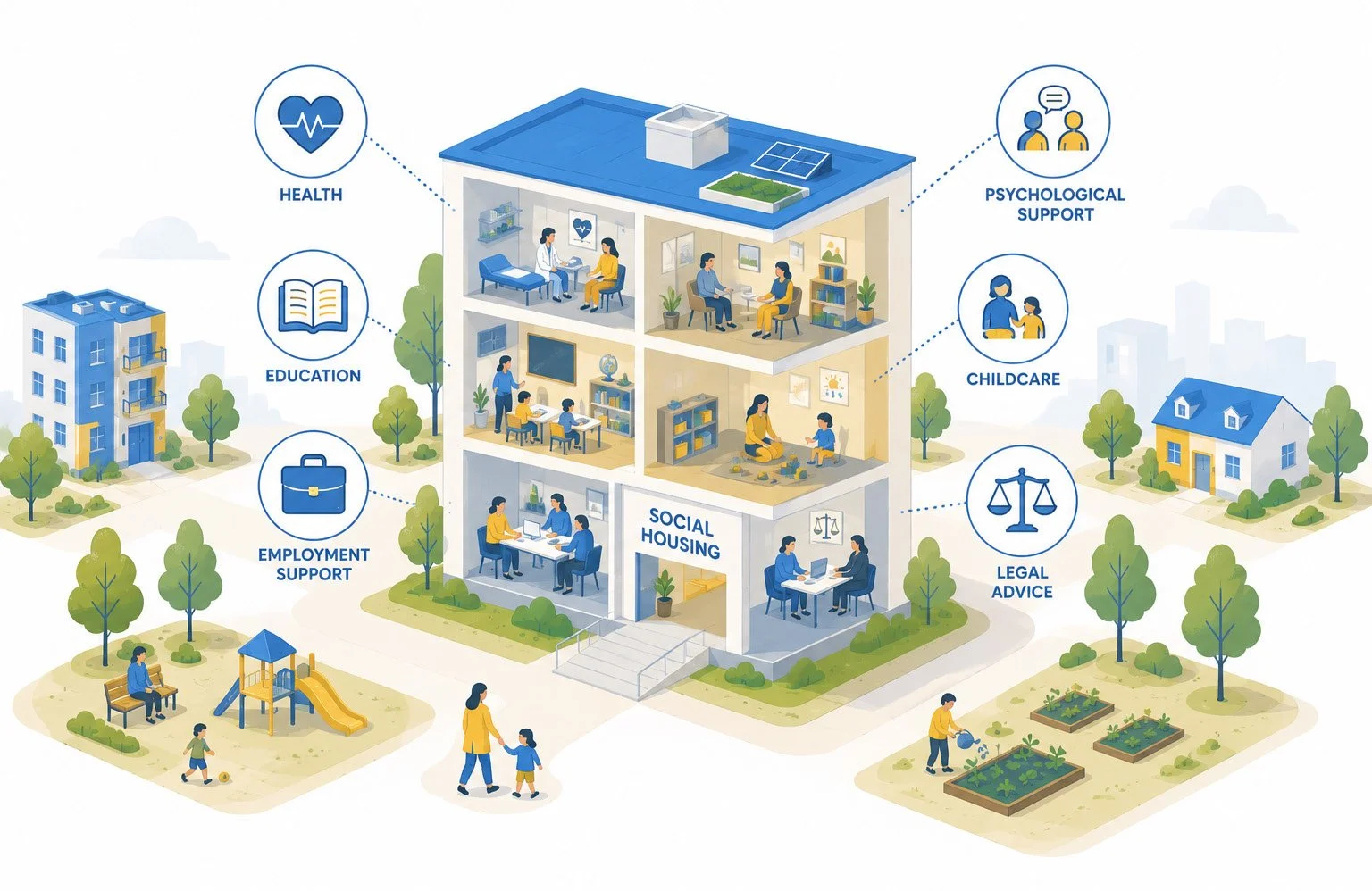
Ensuring effective coordination between the social housing system and social services;
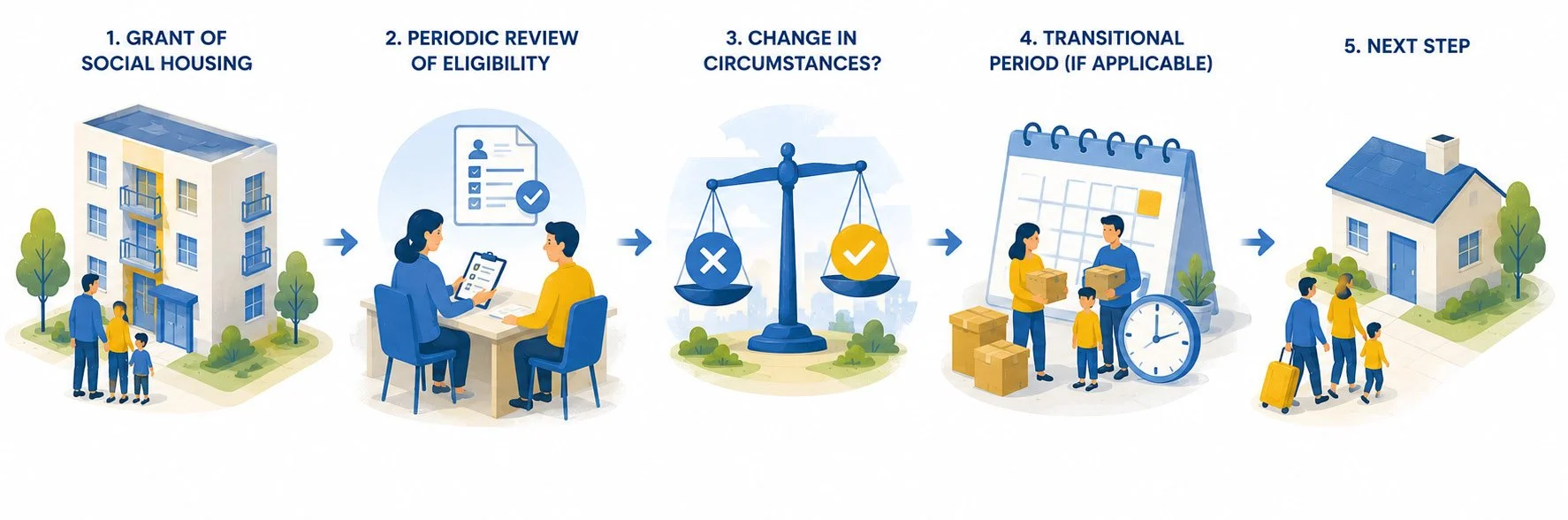
Establishing clear rules governing the review of individual eligibility for social housing and determining the consequences of losing the grounds for receiving such housing.
Access Criteria and Review: the Three Level Eligibility System and Vulnerability Assessment
To make sure that social housing reaches the right beneficiaries requires a transparent approach to eligibility. The Analytical Note proposes a three-level eligibility system for fair social housing allocation: it combines basic requirements (income, housing conditions), a vulnerability assessment (covering visible and hidden vulnerabilities), and criteria based on local workforce and development needs, supporting vulnerable households and the long-term resilience of Ukrainian cities.
The system goes beyond visible indicators of vulnerability by considering hidden vulnerabilities, such as non-visible disabilities, chronic illnesses, and psychological trauma. It also accounts for intersectional vulnerabilities by allowing multiple factors within the same household to accumulate in the assessment process. To ensure fairness and avoid ambiguity, preventing recipients from feeling unfairly assessed or excluded, clear, expert-informed and internationally aligned legal standards should be utilized.
The Analytical Note also offers a framework for regular review of social housing eligibility, balancing residents’ rights with efficient use of housing through transitional mechanisms.
The Role of Social Housing Operators
A key element proposed in the Note is the establishment of effective social housing operators. These entities should maintain a non-profit character while having access to diversified sources of revenue, such as public funding, rental income, and limited commercial activities to reinvest into the maintenance and development of the housing stock. Drawing on European best practices, such mechanisms can strengthen financial sustainability, support mixed-income communities, and reduce reliance on public funding. Moreover, cooperation between social housing operators and private developers can expand the supply of affordable housing, in particular through public-private partnership (PPP) mechanisms.
Social Housing and Social Services: The Need for Coordinated Support Mechanisms
The Analytical Note recognizes that social housing alone cannot address all the challenges faced by vulnerable households: the draft Law of Ukraine ‘On Social Housing’ should establish stronger coordination between social housing and social services. While social housing addresses housing needs, social services address the underlying causes or consequences of vulnerability. This complementarity is particularly evident given that many potential beneficiaries of social housing also require social services due to factors such as displacement, destroyed housing, unemployment, disability, old age, financial hardship, or caregiving responsibilities.
By combining these two aspects, social housing can become a transitional support whose main purpose is to assist individuals during periods of vulnerability, enabling them to stabilize their lives, become economically self-sufficient, and transition to the standard housing market as their circumstances improve.
From the Foundations to a New Social Housing Framework
The document provides a roadmap for making social housing a central pillar of Ukraine’s renewed housing policy. The Law of Ukraine ‘On the Fundamental Principles of Housing Policy’ has established the groundwork for reforming the social housing system, representing a significant milestone in the reform of the housing sector. The future Law of Ukraine ‘On Social Housing’ will now play a crucial role in further developing the necessary legal, institutional, and financial mechanisms to ensure the effective implementation of this framework.
The implementation of the proposed approaches will allow Ukraine to establish a modern, sustainable, and inclusive social housing system aligned with European best practices, ultimately ensuring the effective use of public resources, expanding access to social and affordable housing, supporting mixed-income communities, and contributing to more resilient and inclusive urban development.