


Participatory Urban Design in Practice: Insights from the Mykolaiv Health Route Student Workshop
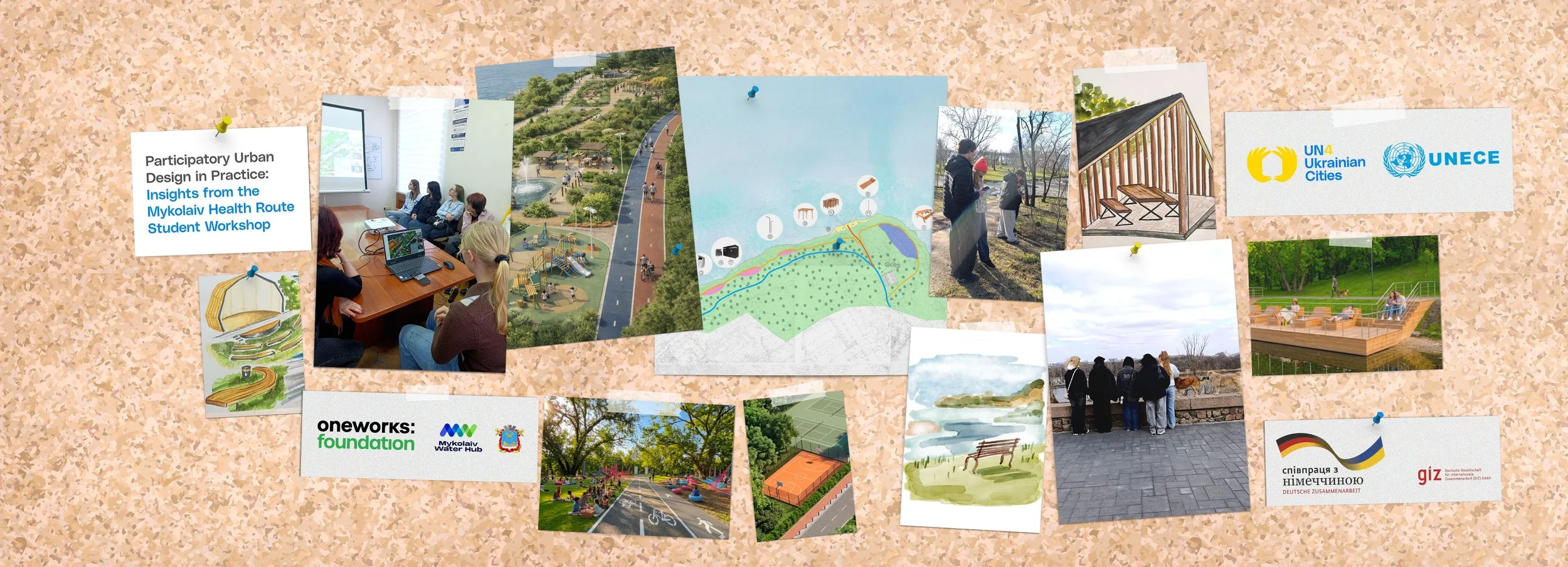
As part of a community engagement initiative in Mykolaiv, a student workshop brought together high-school, college and university participants to actively contribute to site analysis and design proposals, combining academic learning with real-world experience.
The workshop involved twenty students, who were divided into four groups, each guided by an expert coordinator. Three of these groups participated under the Mykoliav Water Hub Scholarship Programme, which encourages students to take on active roles in real, site-based projects. This approach bridges the gap between theory and practice, enabling participants to apply their academic knowledge in a meaningful, hands-on context.
Through a collaborative and iterative process, students engaged in critical thinking, technical analysis, and communication, while producing insights rooted in local conditions. The workshop, just one step in the process, emphasized learning through participation, allowing students to present their analysis of the site, interpret data, and take part in decision-making processes.
The students involvement was structured into several key phases:
Territorial Mapping & Site Survey: Students documented physical conditions, spatial characteristics, and infrastructure through a two-day on-site investigation.
Detailed Assessment: This phase focused on analyzing buildings, land use, accessibility, green spaces, and environmental conditions.
Proposal Development: Participants developed design strategies aimed at sustainability, improving public spaces, and integrating green and infrastructural systems.
Monitoring & Feedback: Ongoing reviews helped refine ideas and strengthen both analysis and proposals.
Presentation: The outcomes were presented online to the Municipality, UNECE, and the technical team coordinated by One Works Foundation (OWF), followed by discussion and feedback.
Overall, the workshop fostered an experiential learning environment, empowering students to become active contributors while generating practical and context-sensitive design solutions.
Group 1
1 girl and 4 boys · Students from Mykolaiv Lyceums
The proposal is organized around key focus areas of ecology, public space, connectivity, and user needs:
- Structuring spaces to support better organization, connectivity, and public use;
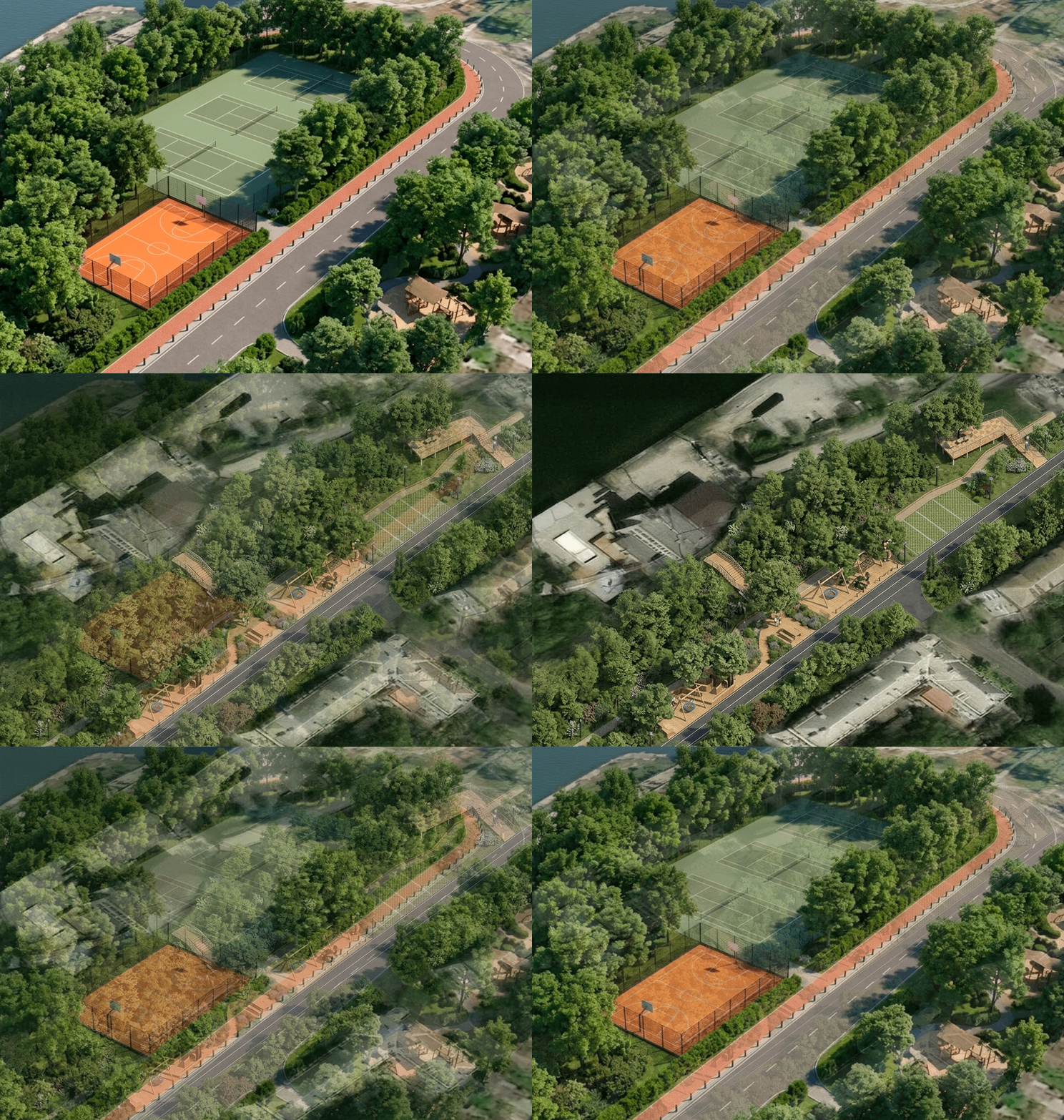
- Upgrading playgrounds and sports facilities to improve recreational quality;
- Enhancing cycling paths and related activities to improve mobility and engagement;
- Strengthening green infrastructure on slopes to reduce erosion and landslide risk;
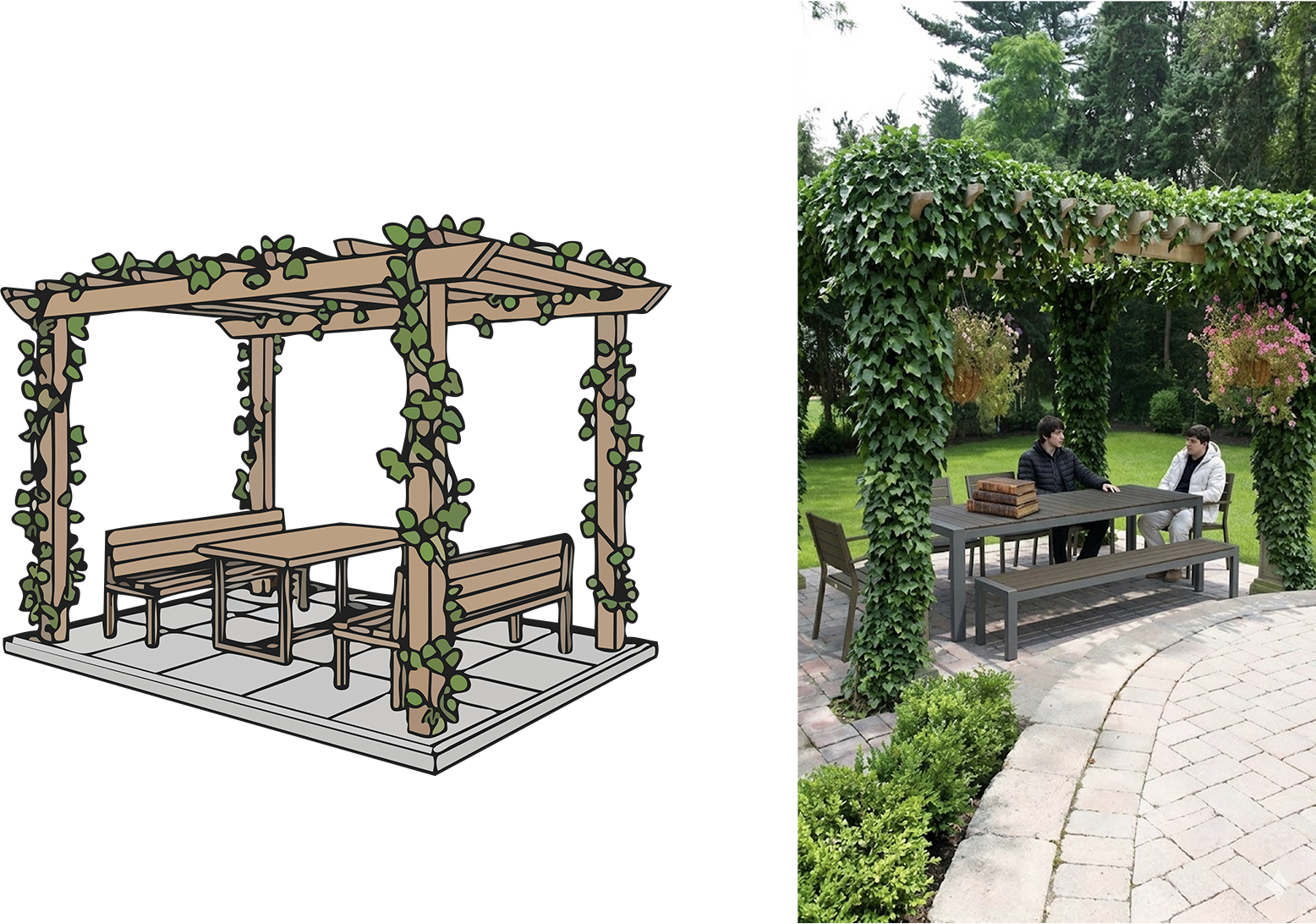
- Improving the areas around playgrounds with more seating and picnic spaces, promoting social gathering and leisure activities;
- Improving car parking provision and overall site accessibility;
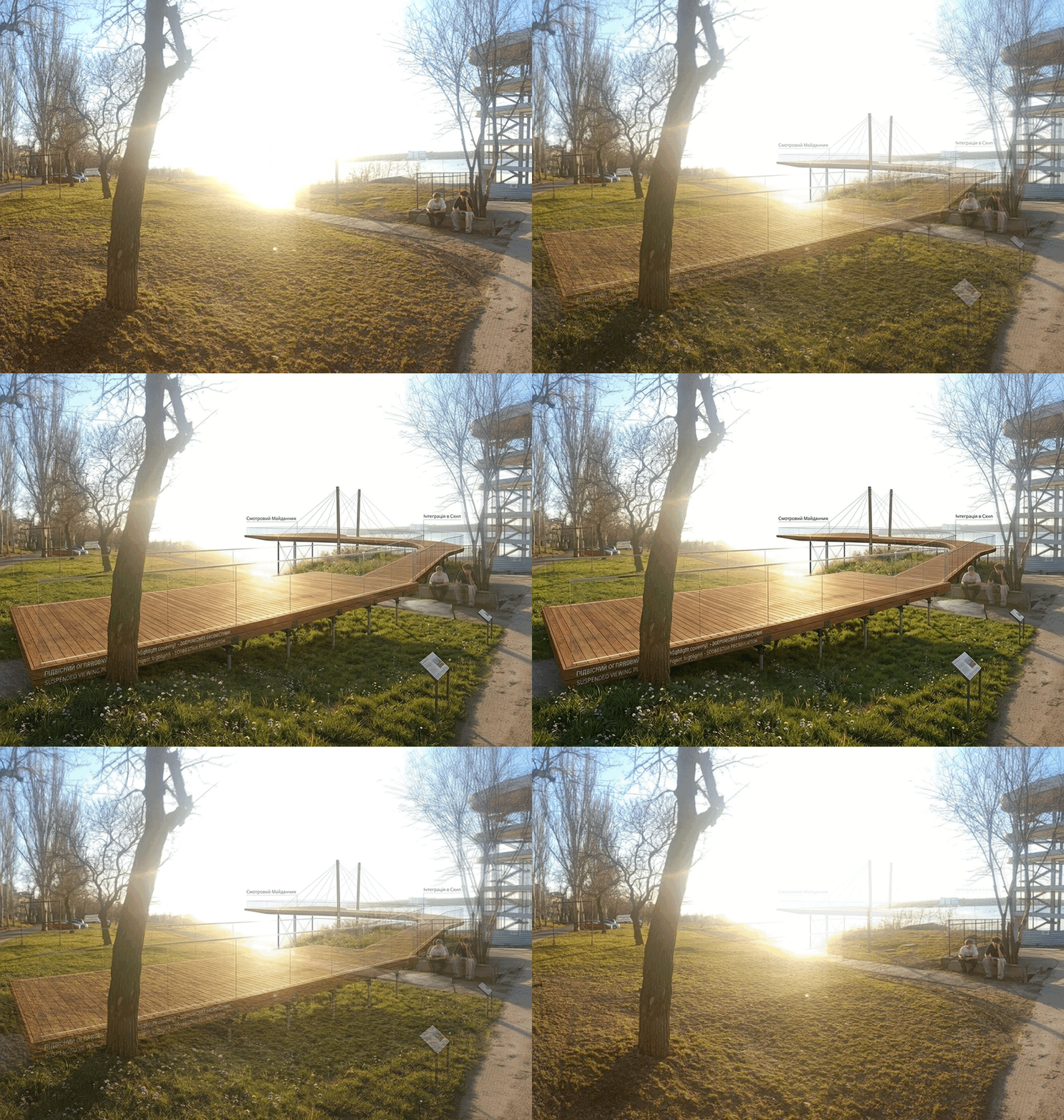
- Introducing seating areas and viewpoints to enhance user experience.
© MWH Scholarship Programme
© MWH Scholarship Programme
Sports facilities area
© MWH Scholarship Programme
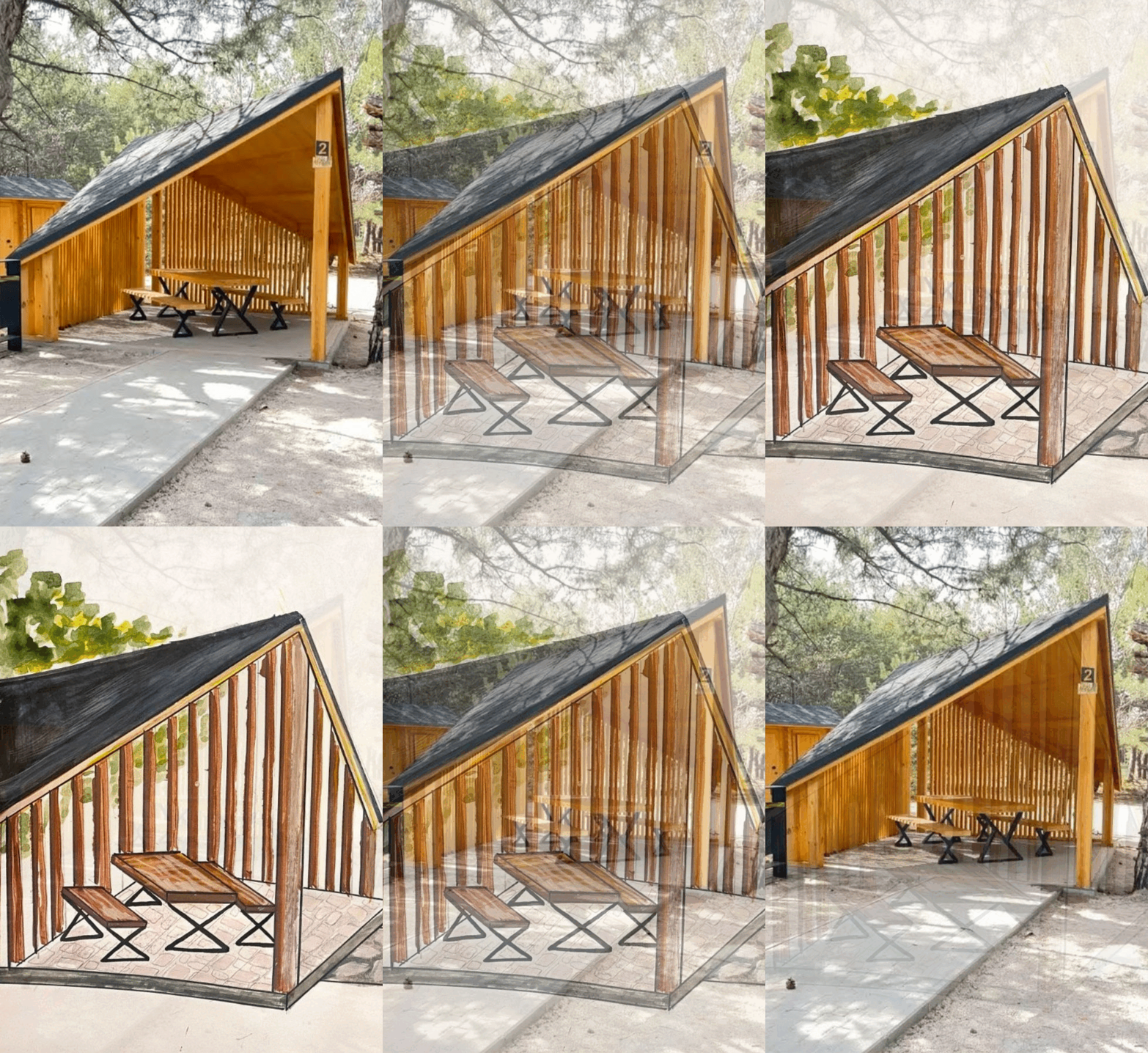
Pergola with ivy, table and benches
Group 2
3 girls and 1 boy · Students from KNUBA (Kyiv National University of Construction and Architecture)
The proposal aims at combining the principles of engineering reinforcement, aesthetic design, and environmental sustainability, integrating the project into the natural landscape.
- Preservation of valuable vegetation species, removal of invasive and hazardous vegetation, and design of new plantings that will most effectively provide biological slope reinforcement while enhancing the park’s aesthetics;
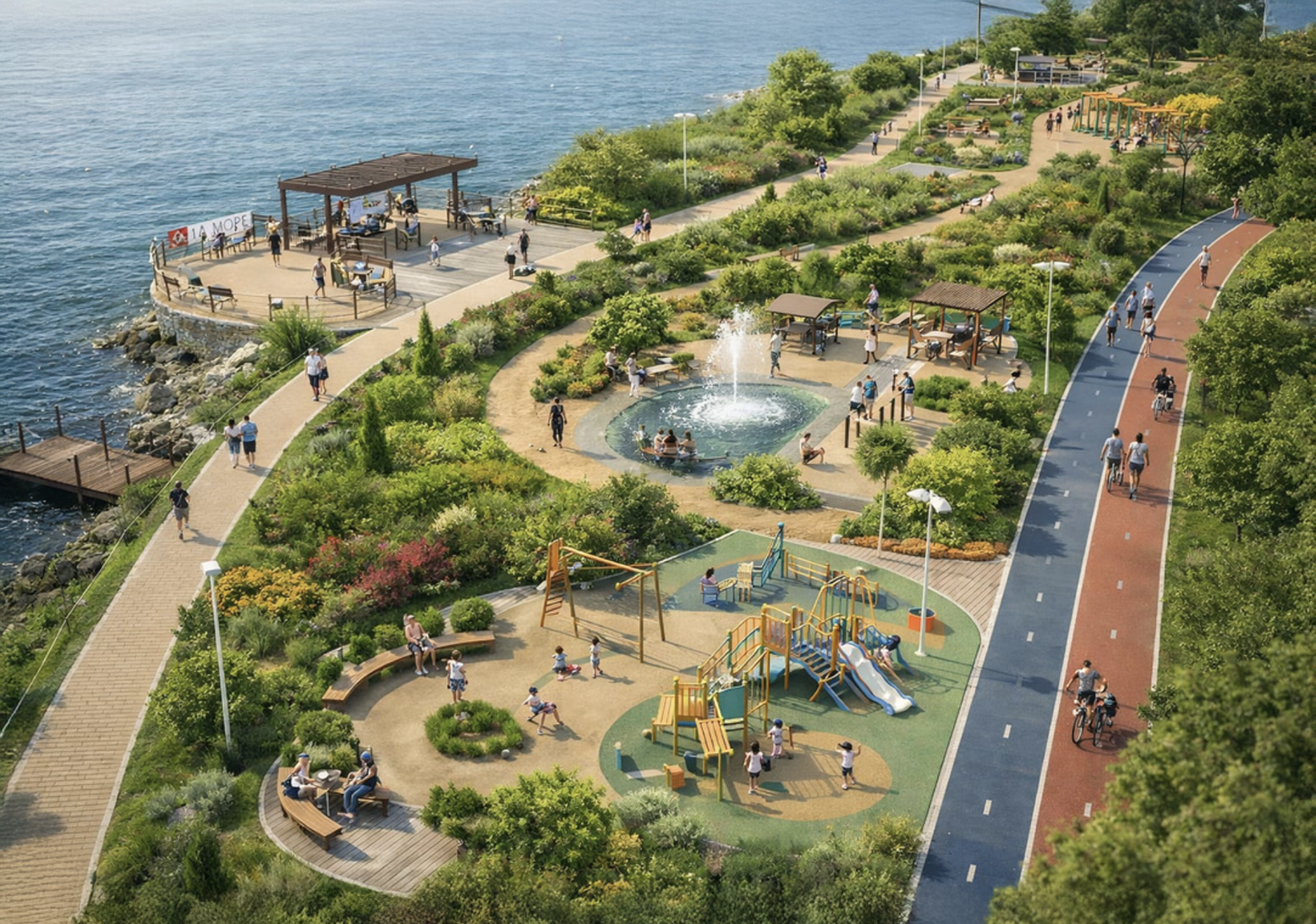
- Creation of a modern recreational waterfront with clear zoning, with a pedestrian route and a bicycle path for active movement at its core;
- Layout that respects the natural topography and ensures smooth transitions.
- Multi-level landscaping, with a focus on comfort and microclimate;
 © MWH Scholarship Programme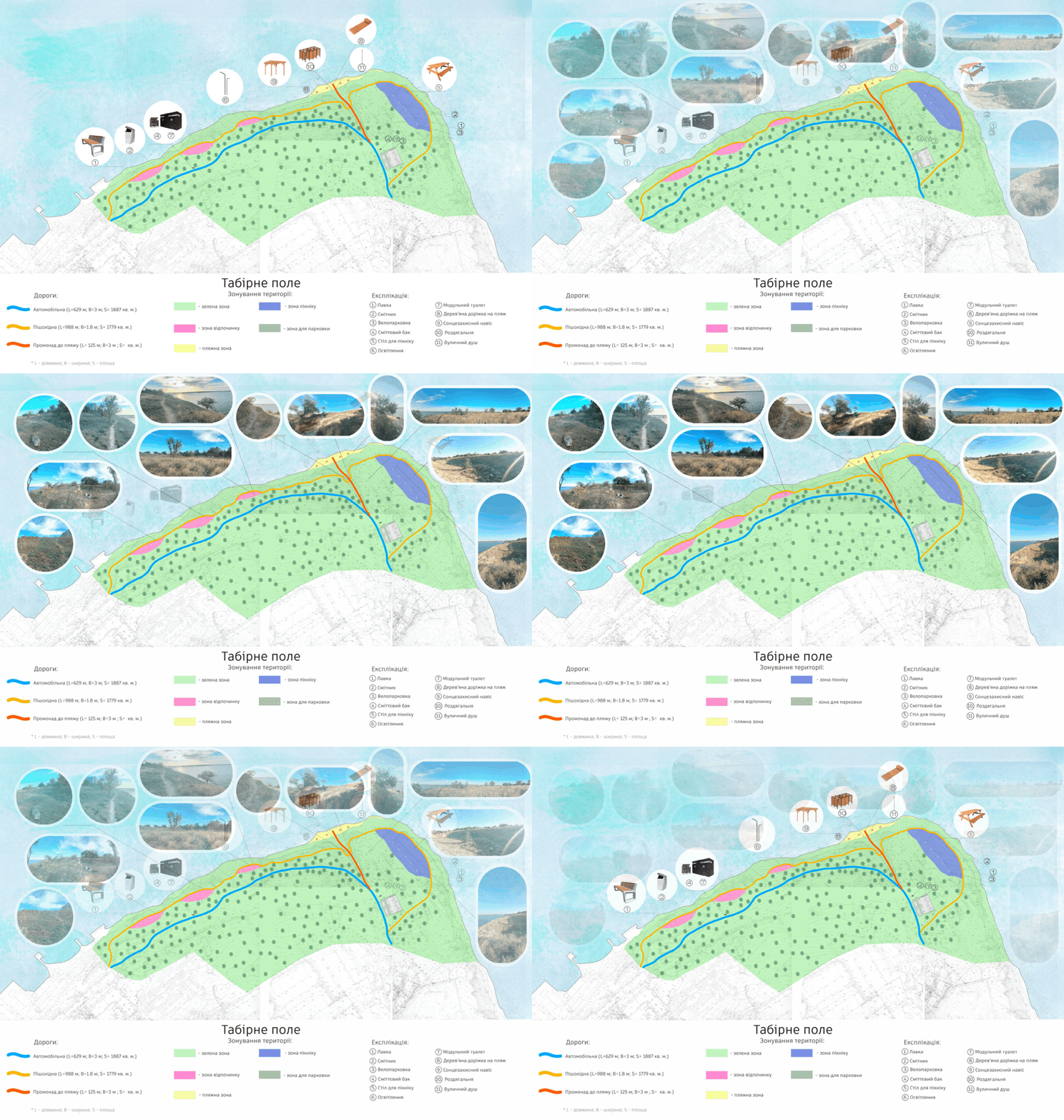
© MWH Scholarship Programme
The landscaping for "Tabirne Pole" proposes a comprehensive sustainable approach that preserves the natural landscape while creating a comfortable recreational space through clear functional zoning into green, beach, picnic, and quiet recreation areas. For safe logistics, vehicular access with a designated parking lot is separated from an extensive network of pedestrian paths, which includes a convenient promenade leading to the water. The proposal envisions modern street furniture, modular restrooms, waste collection systems, bicycle parking, and lighting. Furthermore, the beach and picnic areas are additionally equipped with wooden decking, tables, sunshades (pergolas), changing rooms, and showers, harmoniously integrating essential urban comfort into the wild nature.
© MWH Scholarship Programme
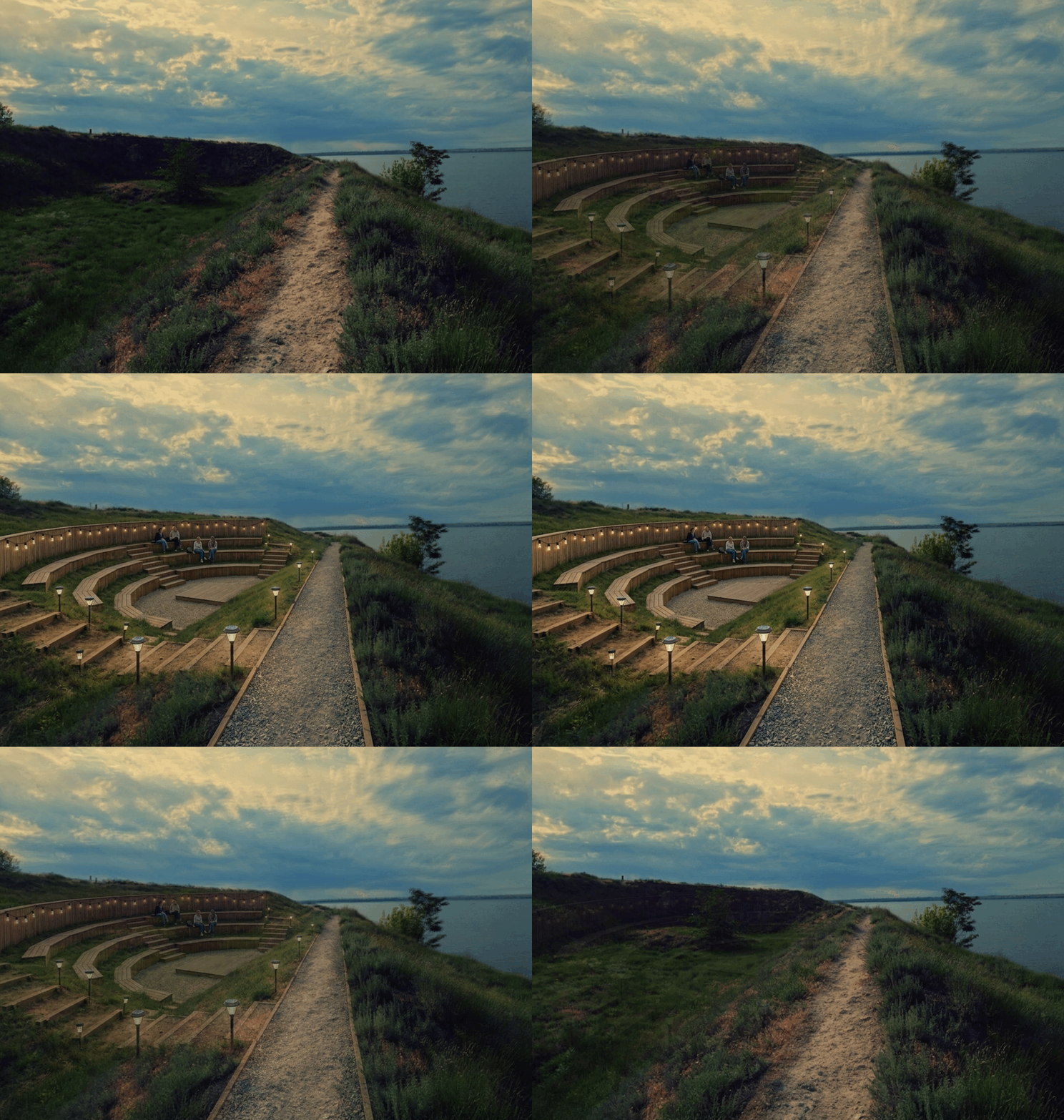
The three-tiered amphitheater is part of a proposal using natural wood, allowing it to organically blend into the green slope without overwhelming the landscape. In this proposal, the geometry of the benches follows the curves of the hill, creating an ergonomic space for relaxation and contemplation of the water horizon.
Group 3
5 girls · Students from KNUBA Mykolaiv Construction Vocational College
The proposal is structured around the transformation of the waterfront into a vibrant urban-natural destination: an inclusive, multifunctional hub integrating mobility, culture, and wellbeing.
- Enhancing the waterfront edge with paths, viewpoints, and continuous cycling infrastructure connecting key areas;
- Introduction of urban furniture, shaded seating and small pavilions to support everyday activities;
- Development of viewing decks and small gathering spaces;
- Upgrade of recreational areas with interactive and open air theatre;
- Introduction of cultural spaces for community activities and gatherings, and flexible open event areas;
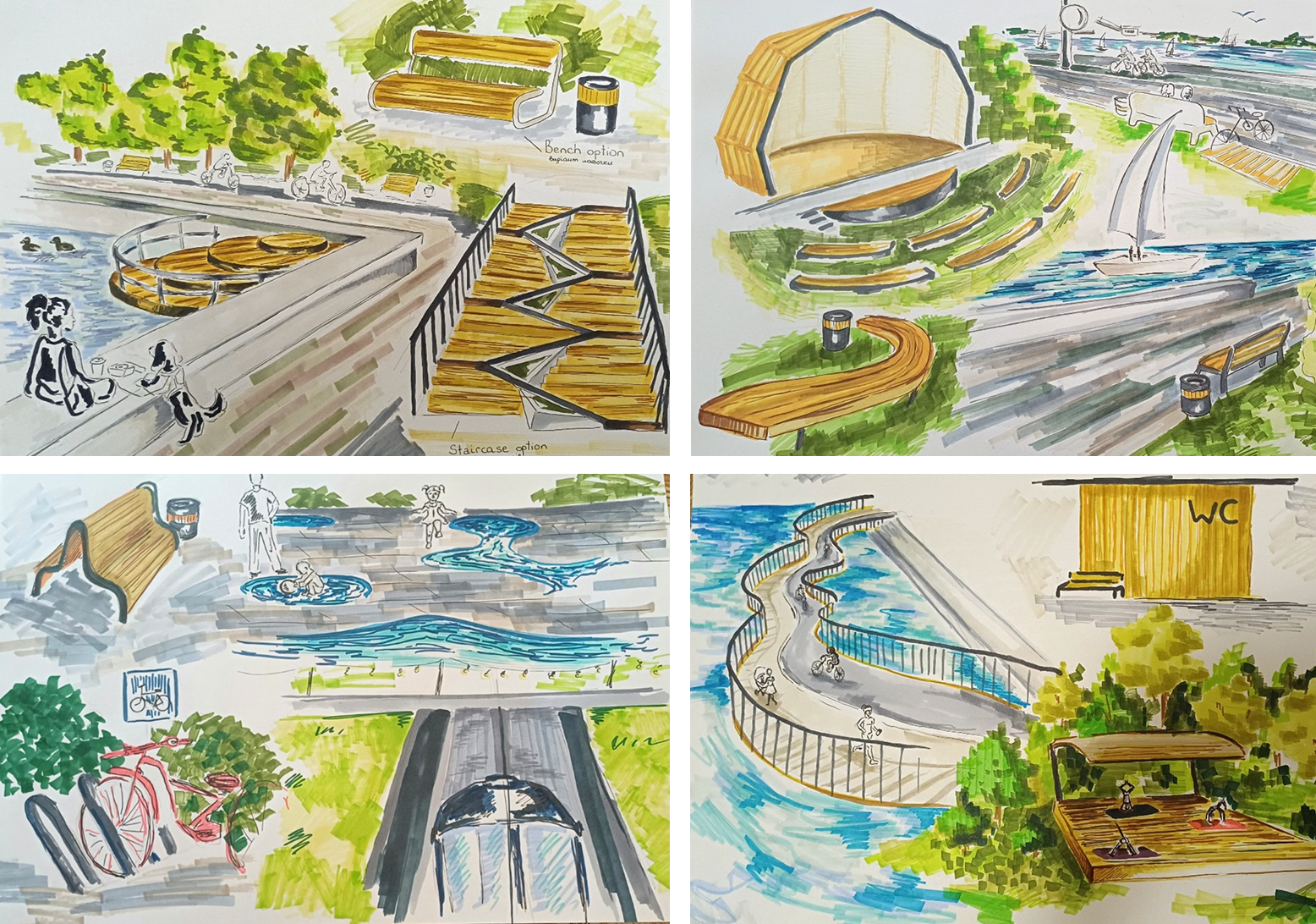
- Creating a covered yoga platform for wellness activities and interactive water features for play and cooling;
- Installation of a modular public toilet with accessible design.
© MWH Scholarship Programme
The proposal includes the construction of a pedestrian and bicycle bridge-esplanade, the creation of a covered yoga platform, and the installation of a modern modular public restroom near the "Dykyi Sad" area. It also proposes a viewing pier-platform on the water, the integration of wooden-clad staircases, and the installation of universally accessible benches.
Additionally, the proposal envisions the creation of an interactive shallow water fountain for active recreation and cooling off, as well as the installation of bike racks, benches, and a funicular to ensure easy access for people with limited mobility. The renovation of the stage and amphitheater, the creation of viewpoints on the Lower Embankment, and the update of street furniture using modern curved designs are also included in this proposal.

© MWH Scholarship Programme
This proposal envisions a cultural space on the former dance area at Flotsky Boulevard, Lower Embankment, including the renovation of the stage, the addition of perimeter benches and new paving, and the creation of an open area for events and relaxation.
Group 4
6 girls · Students from KNUBA Mykolaiv Construction Vocational College
The proposal introduces a sequence of interventions along the waterfront to enhance mobility, recreation, and public use.
- Improved access to pedestrian bridge with upgraded entry and circulation;
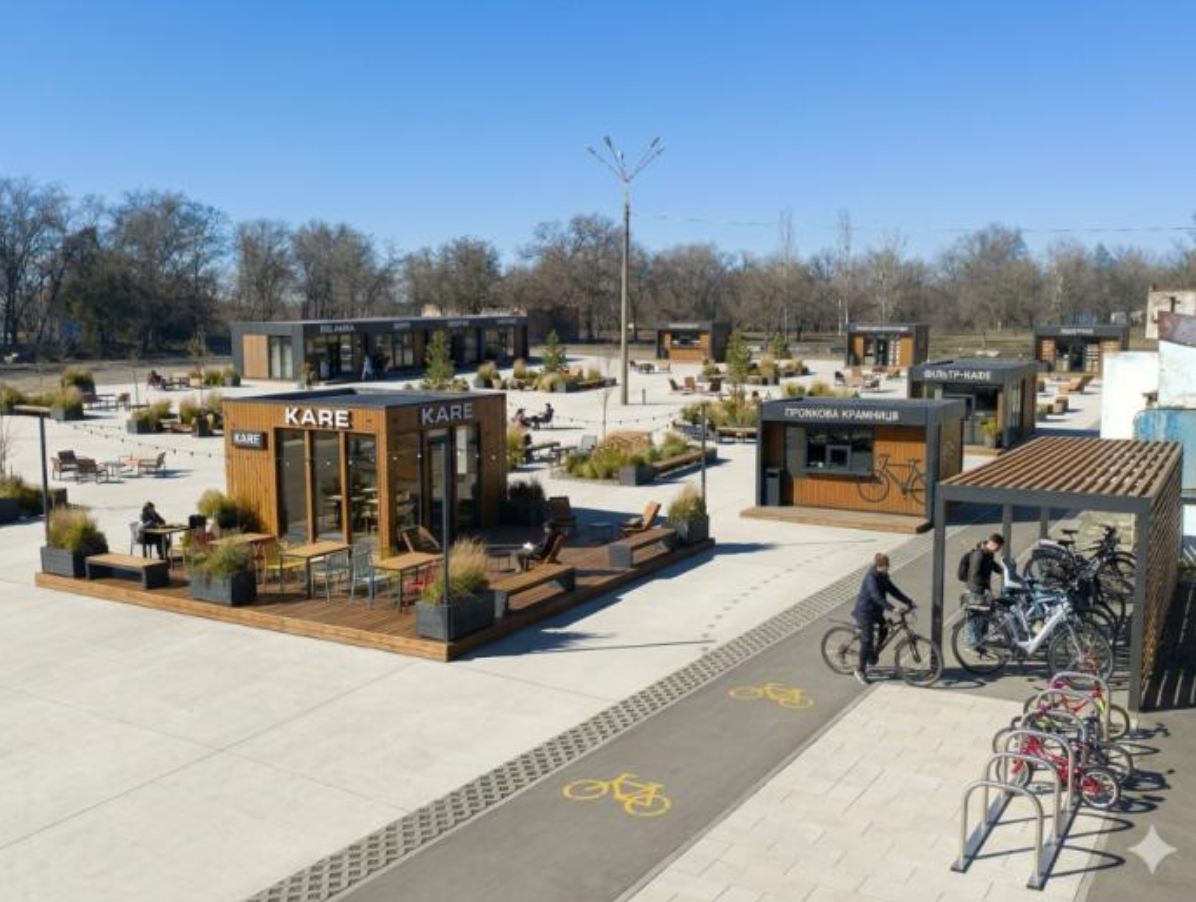
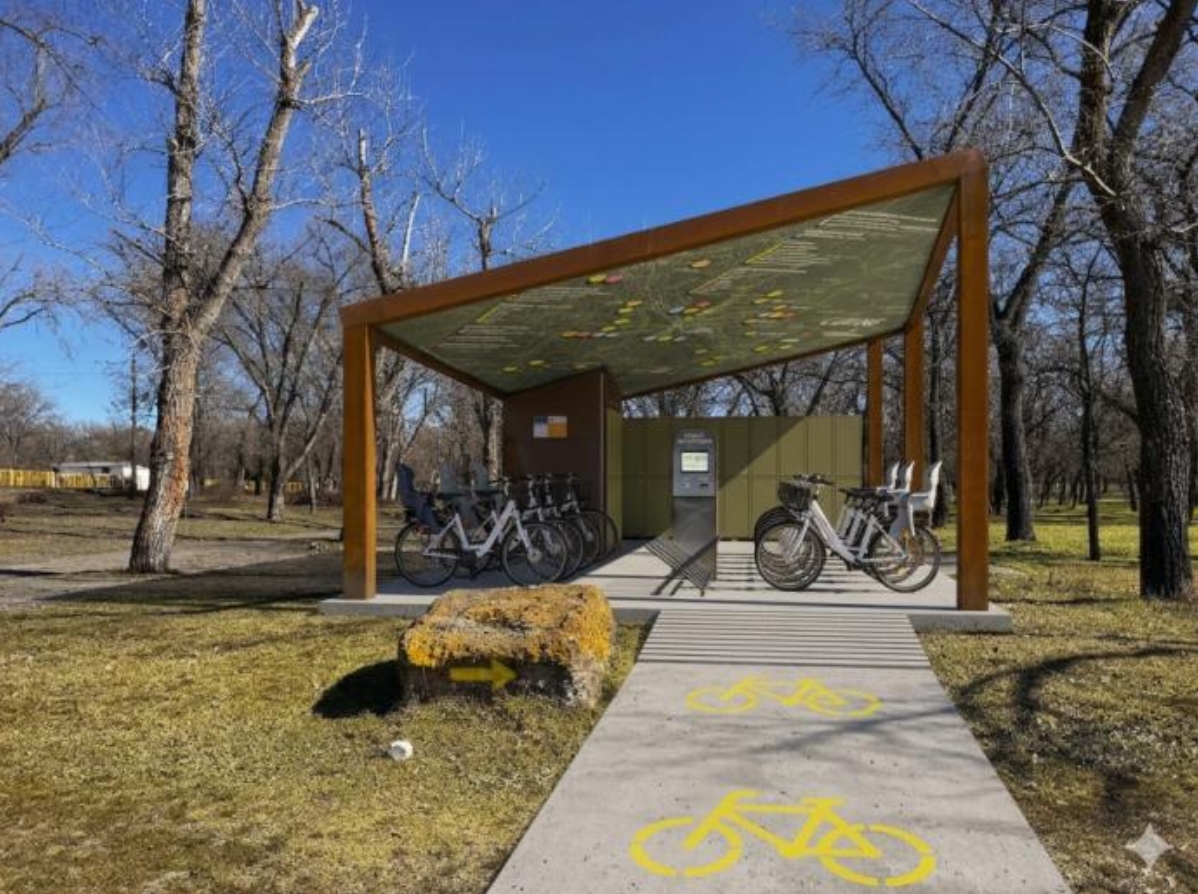
- Bike rental hub to support cycling activity along the route;
- Dog walking area with dedicated equipment and open space;
- Outdoor sports zone with exercise facilities;
- Recreational park corridor integrating cycling and leisure spaces;
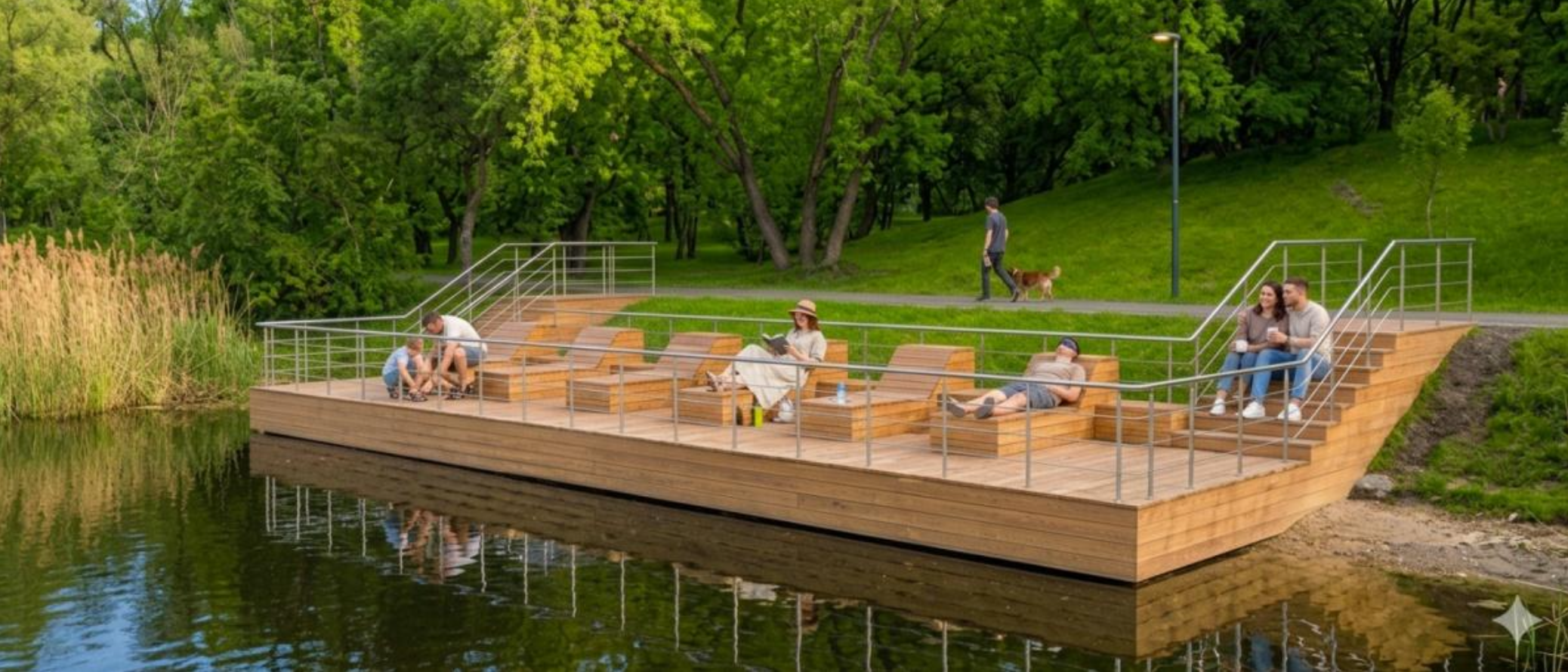
- Waterfront pier platform for relaxation and interaction with the river;
- Café and social hub activating underused areas.
© MWH Scholarship Programme
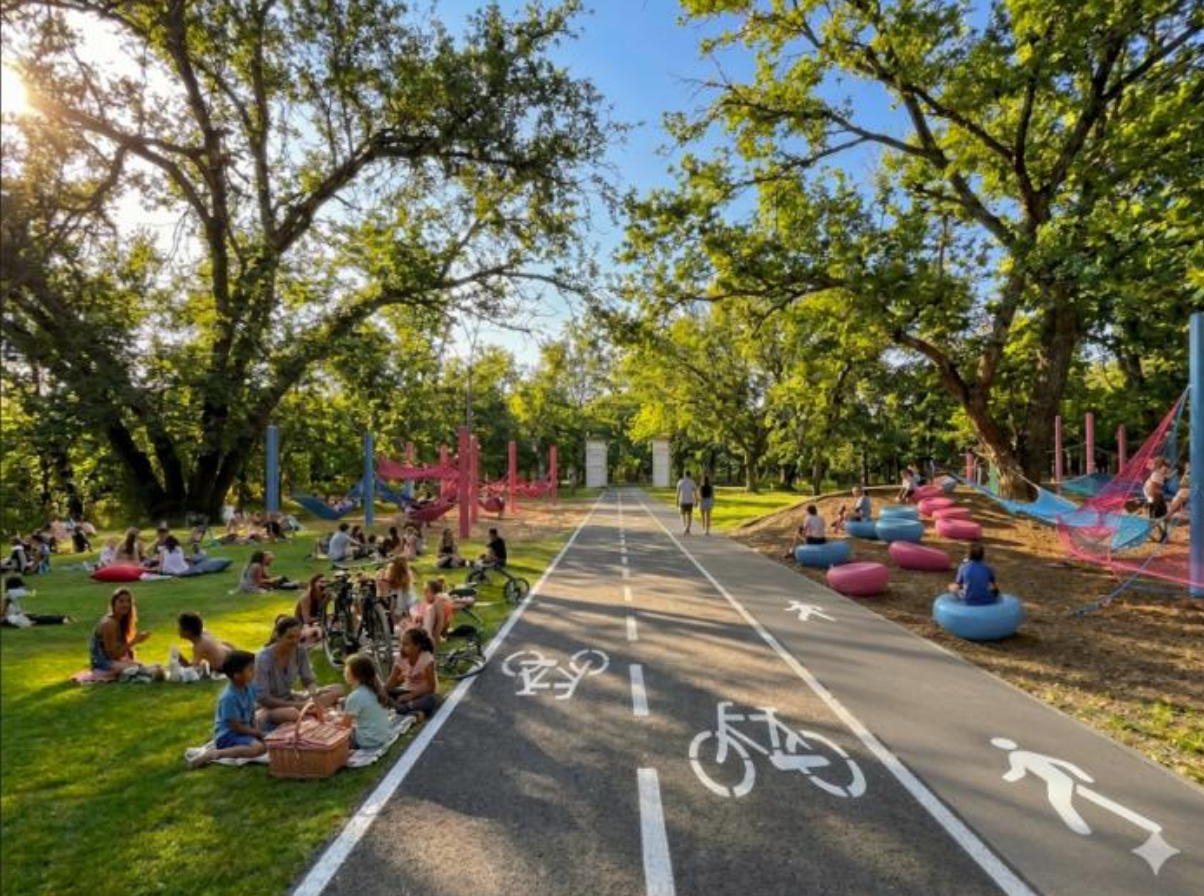
A large area of the park that can be used for a recreation area
© MWH Scholarship Programme
Many people ride bicycles on this route
© MWH Scholarship Programme
A proposal for a replacement of the old pier for more comfortable recreation for people