

Ukraine’s Urban Future at the Centre of WUF13 Discussions
As Ukraine advances from emergency response to long-term recovery, the World Urban Forum (WUF13) in Baku became an important platform for discussing how cities can rebuild stronger, greener, and more inclusive communities. The UN4UkrainianCities Initiative actively contributed to these conversations, sharing experiences and lessons learned from supporting urban recovery efforts across Ukraine.
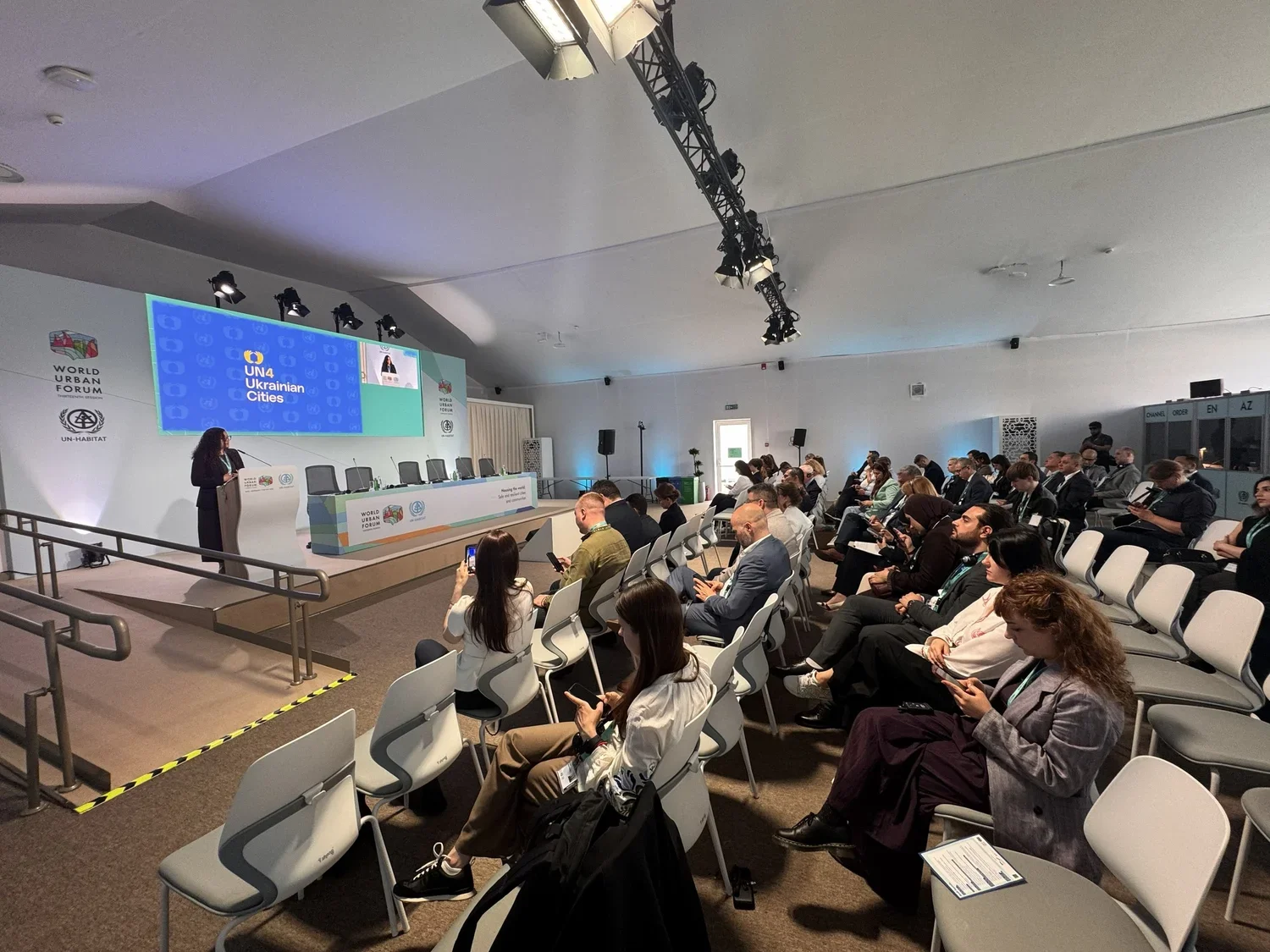
“Policies, Papers, and Bricks: Capacity Building for Crisis Preparedness and Response”
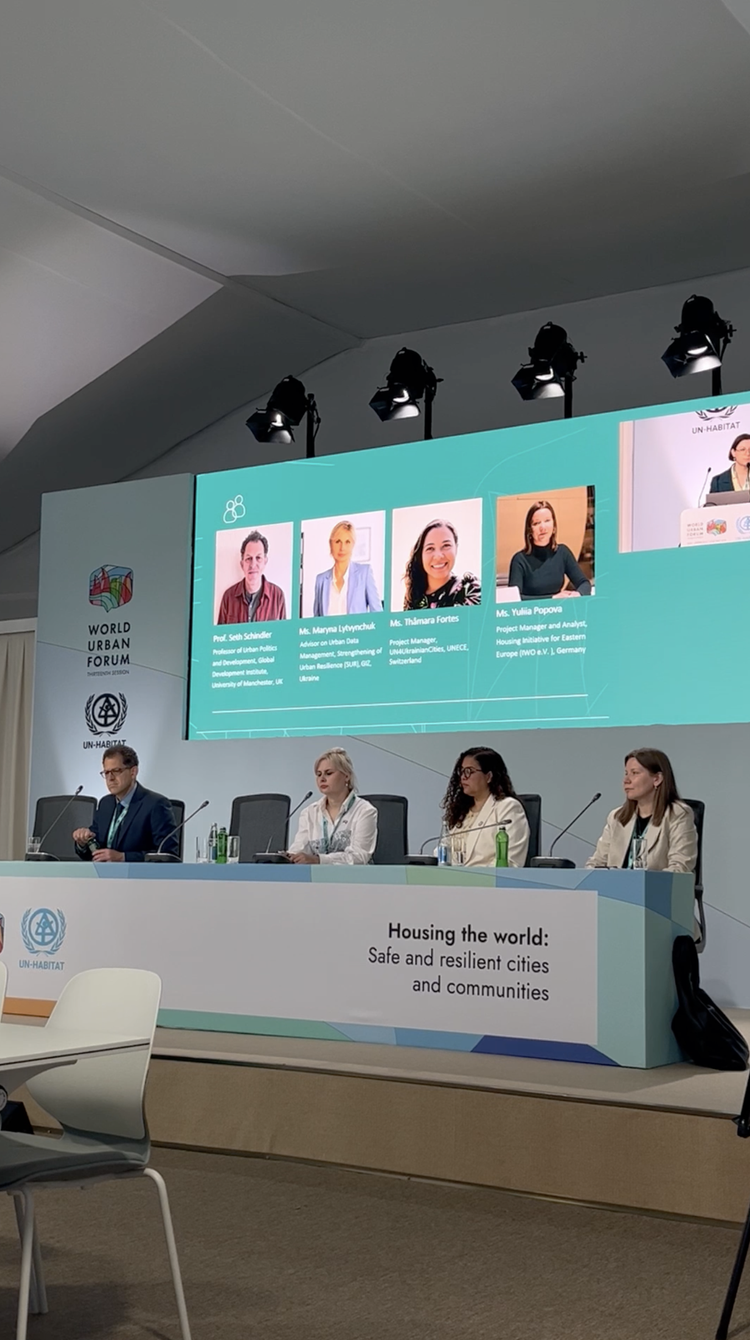
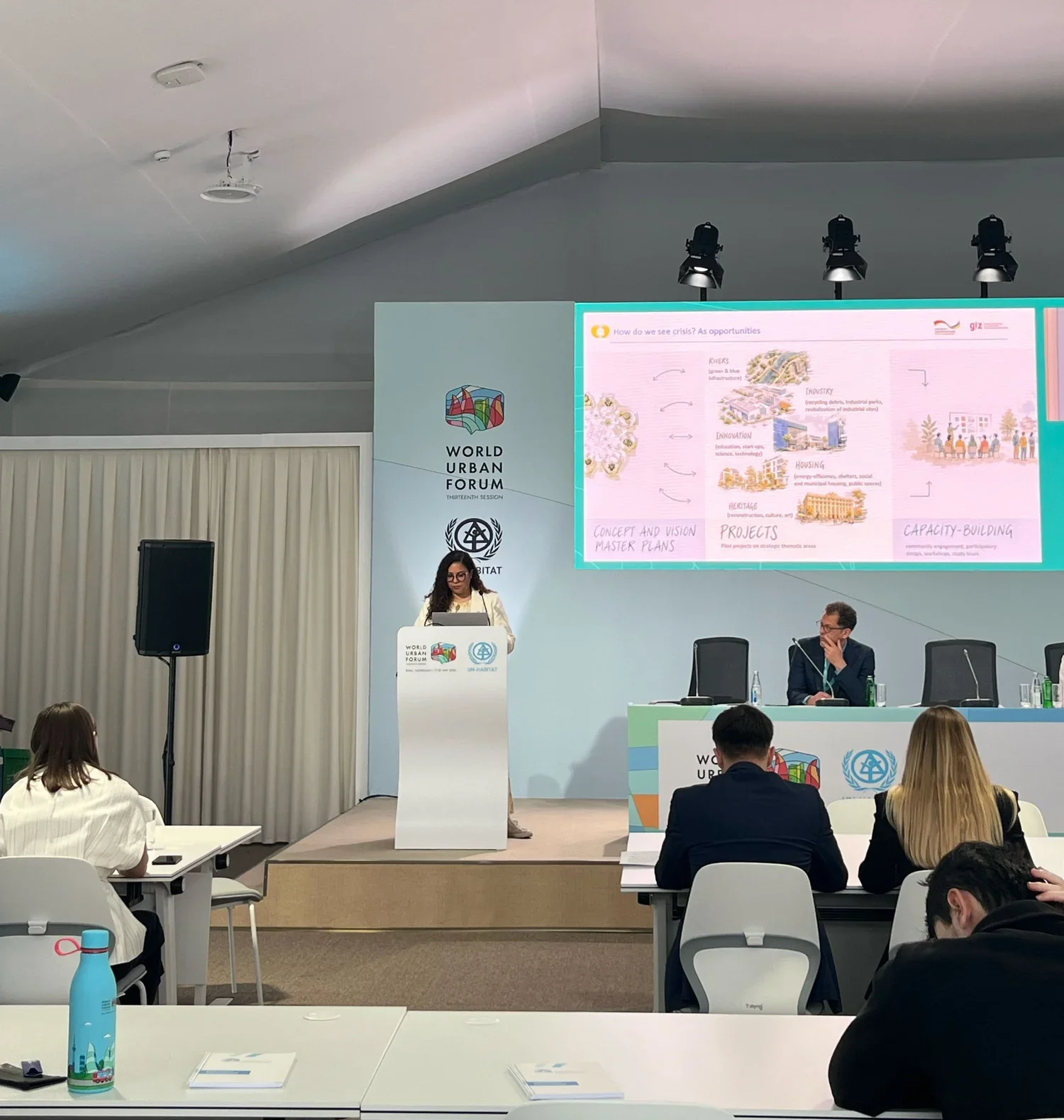
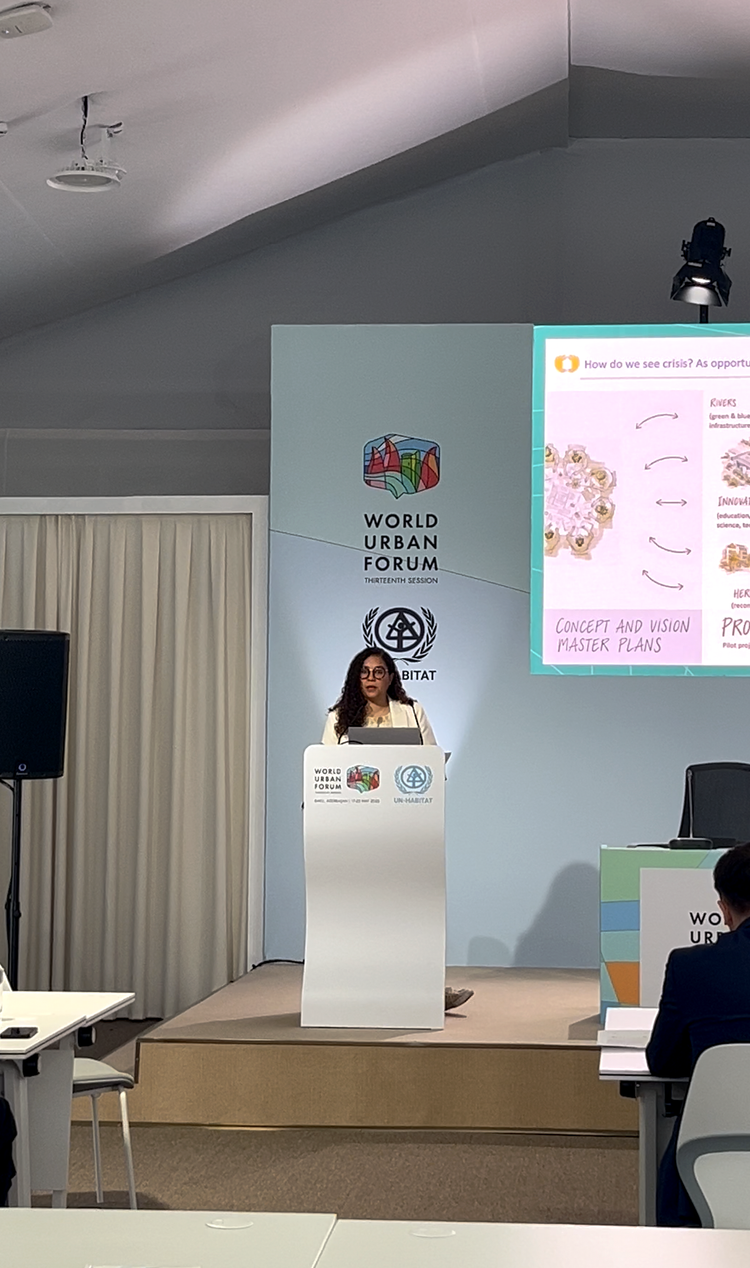
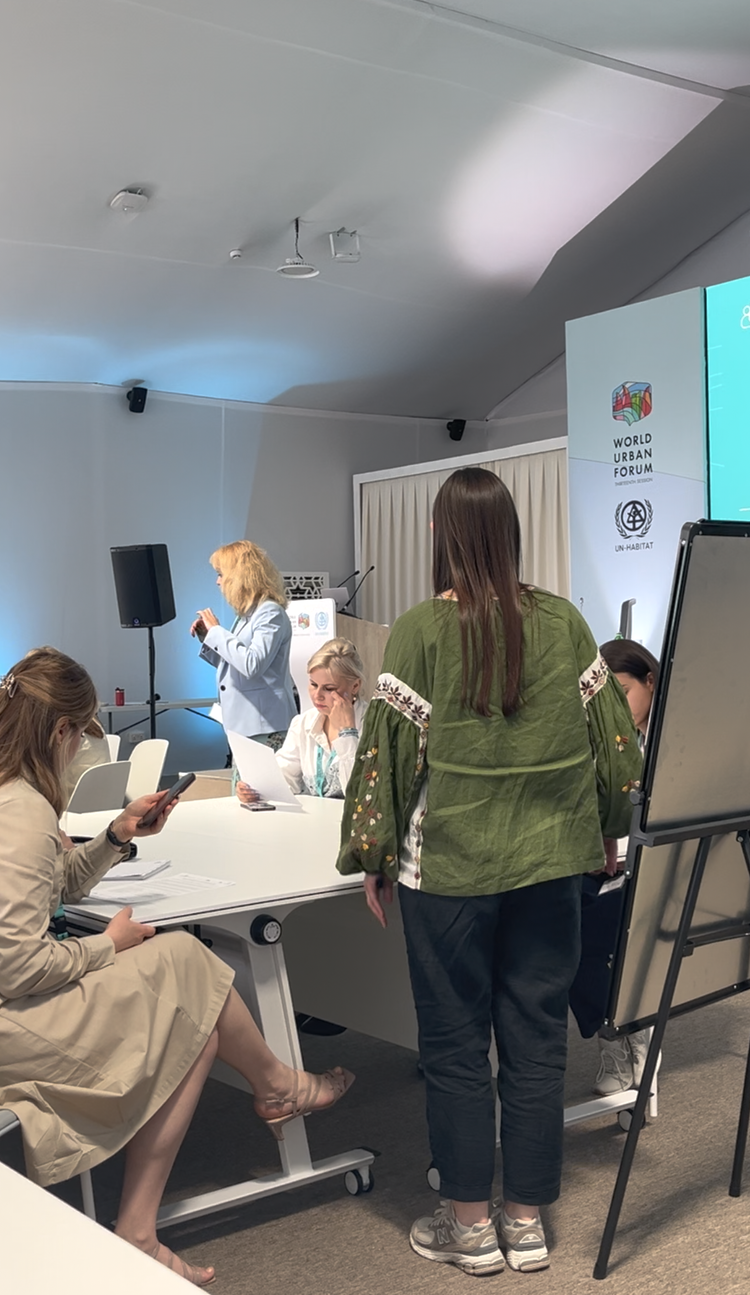
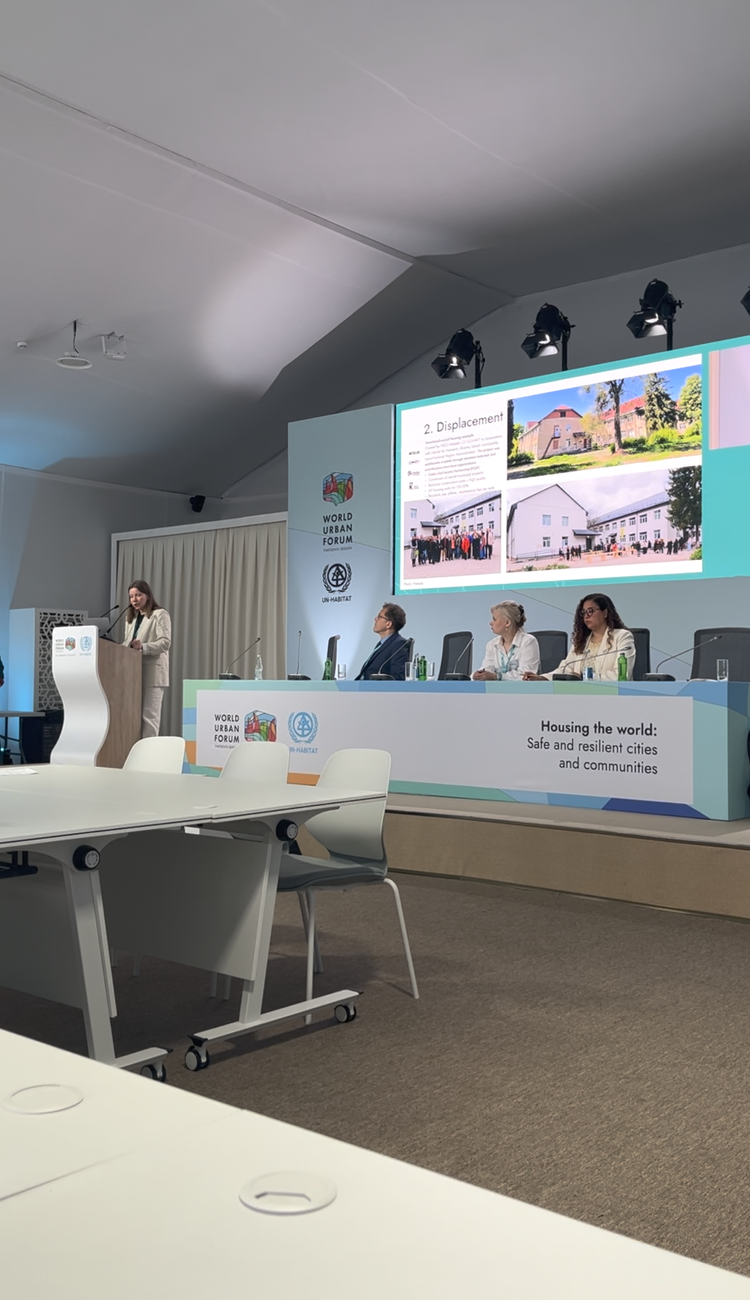
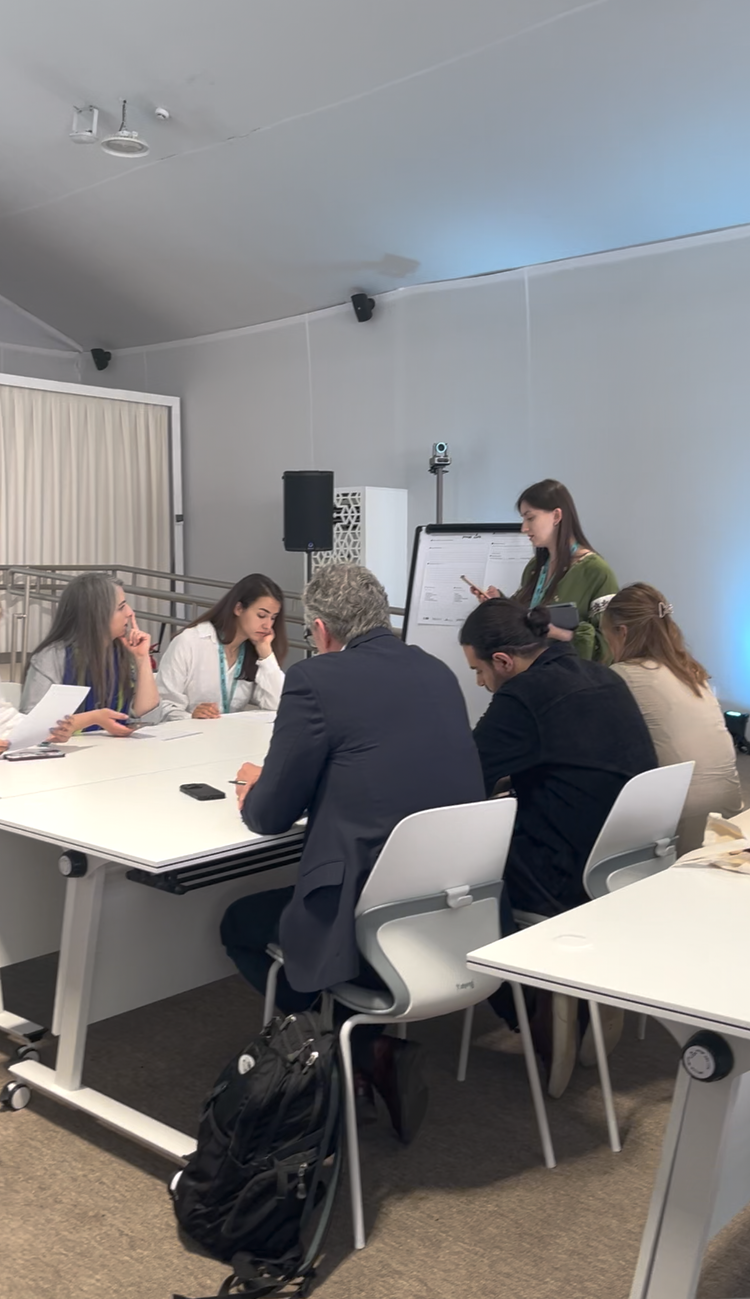
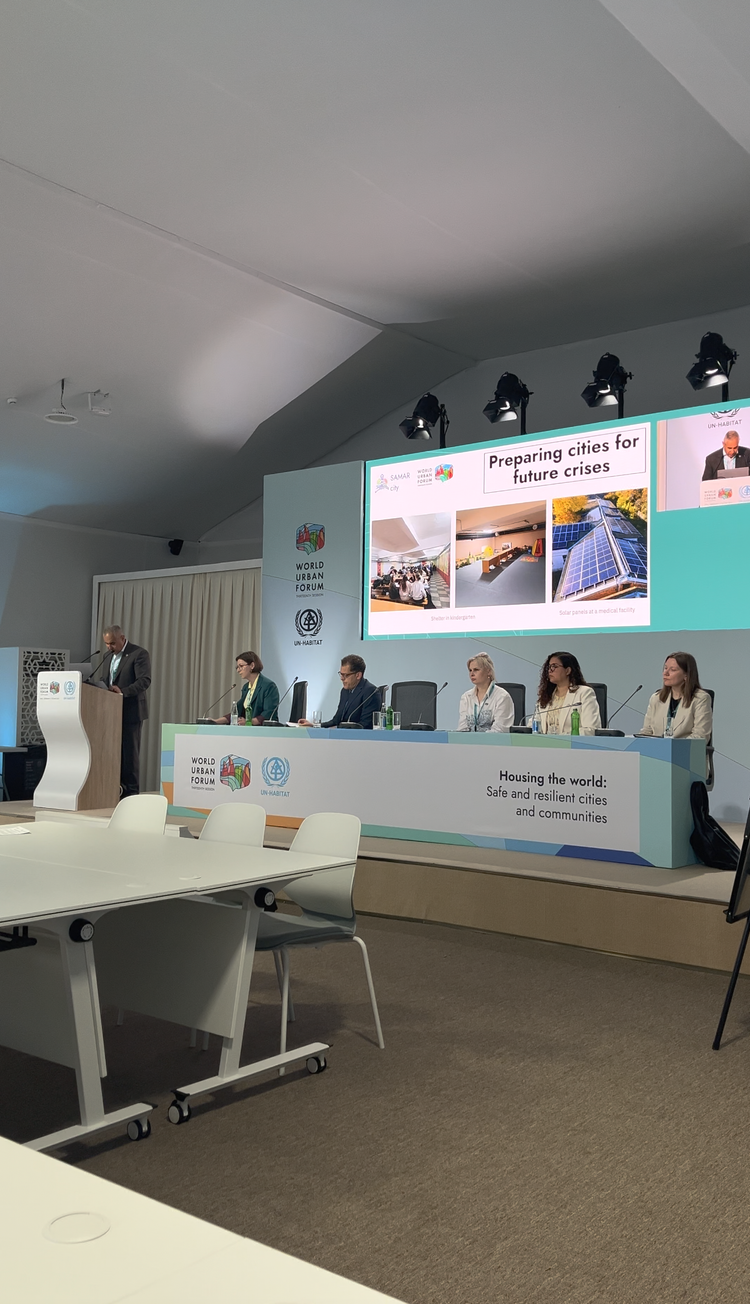
The training event held on 20 May, brought together policymakers, experts, and practitioners to explore practical approaches to strengthening municipal resilience in crisis and uncertain contexts. The session combined expert inputs with a scenario-based simulation exercise, allowing participants to work in facilitated groups acting as municipal teams, each addressing a crisis scenario and developing a municipal “education package” focused on preparedness, response coordination, and local capacity-building tools.
The event featured the Mayor of Samar, Serhii Rieznik, who emphasized that polycrisis conditions have become a reality in Ukraine, illustrating everyday challenges and highlighting responses grounded in coordination and preparedness. Further contributions included insights from Seth Schindler (University of Manchester) on preparing cities for geopolitical challenges, as well as inputs from Maryna Lytvynchuk (GIZ Ukraine) on damage assessment methodologies and post-crisis evaluation tools. Thâmara Fortes, Programme Manager for UN4UkrainianCities, presented the key components and operational tools developed in the context of the project such as the Toolbox, while Yuliia Popova (Housing Initiative for Eastern Europe) addressed housing-related issues, including large-scale damages and displacement.
Kharkiv Photography Exhibition
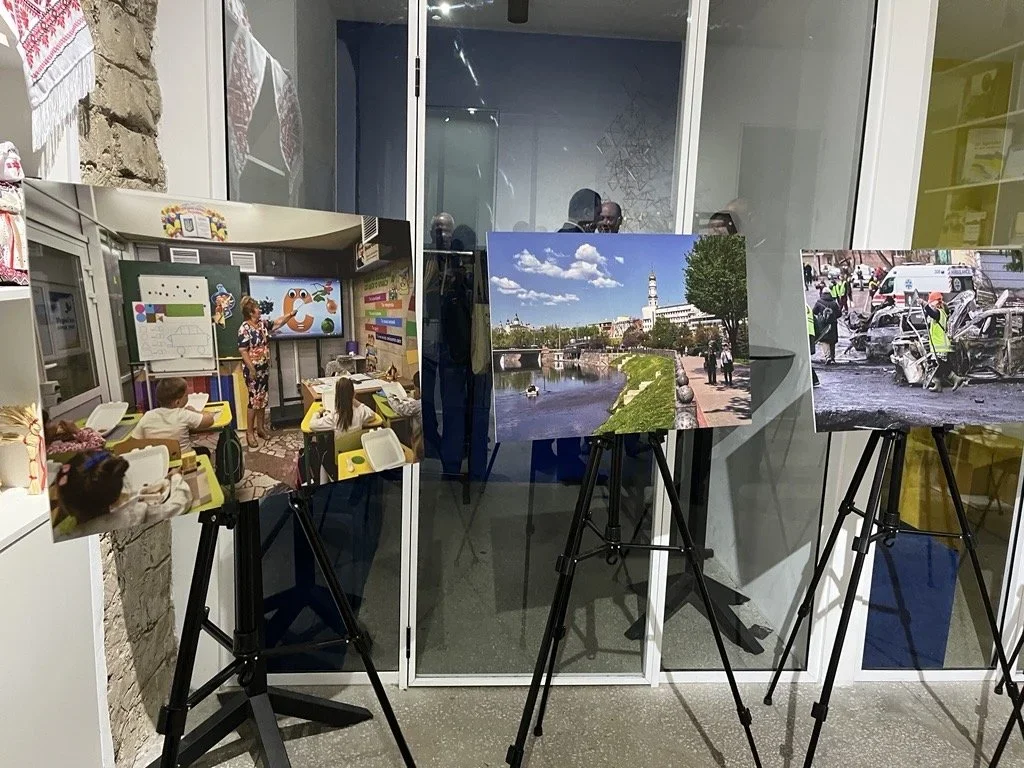
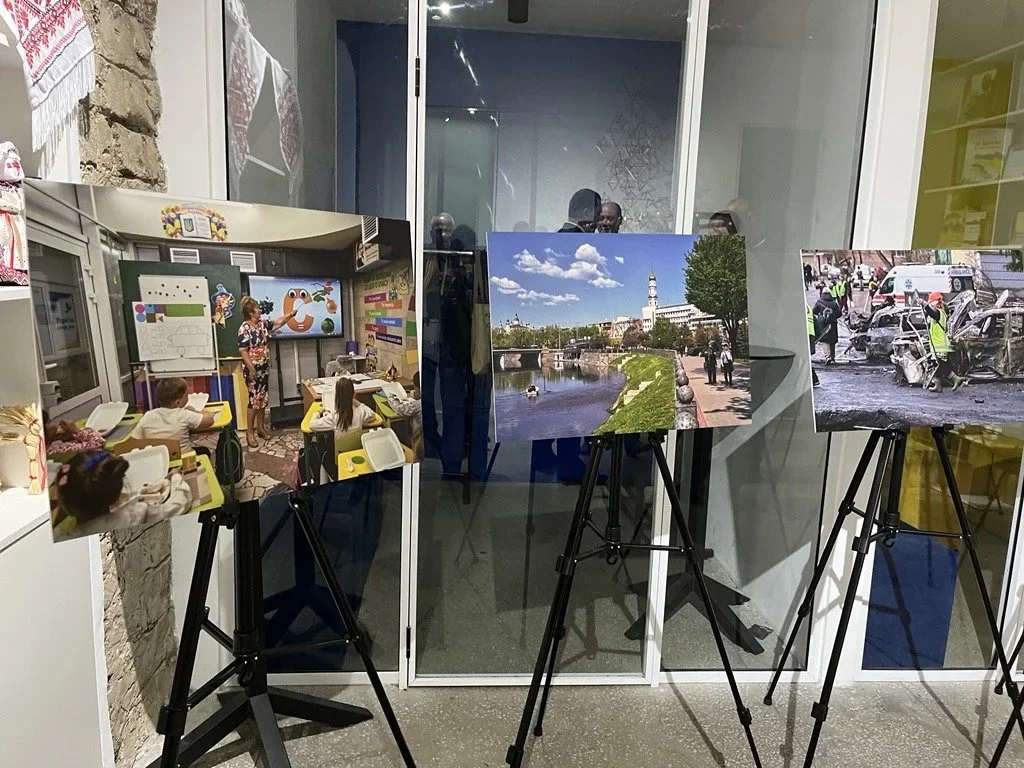
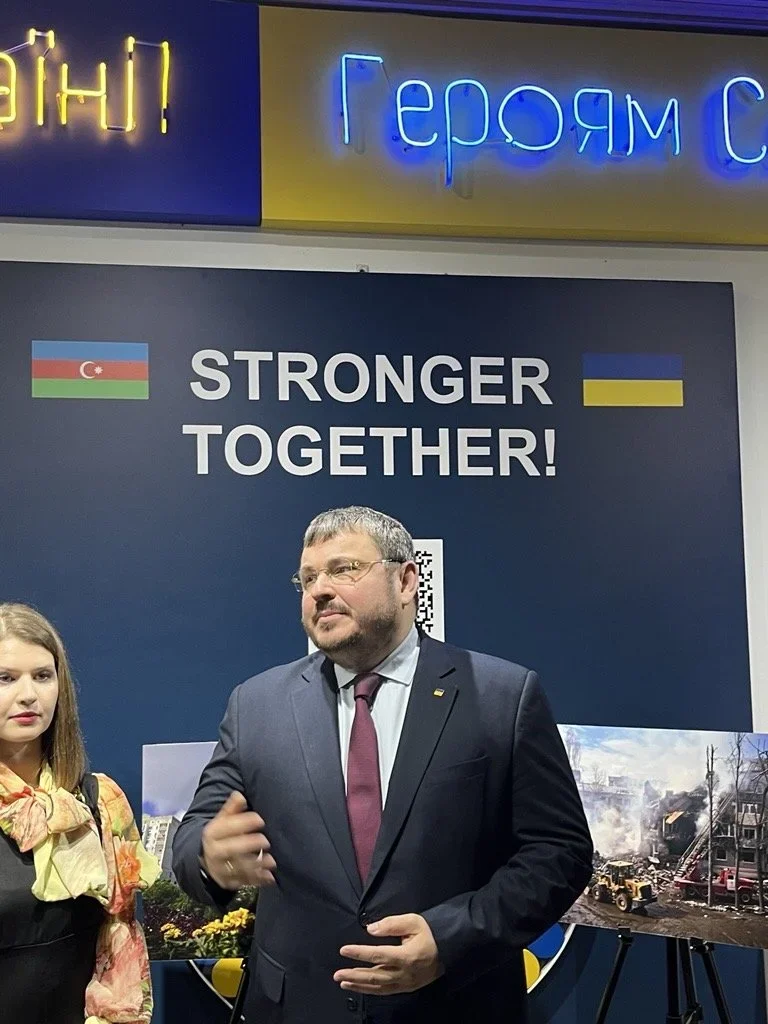
Moreover, an exhibition dedicated to Kharkiv’s resilience was opened at the Ukrainian Center in Baku, Azerbaijan. The photographs showcased document everyday life in Kharkiv, the impact of the war on buildings and urban infrastructure, the work of municipal services, and the restoration of urban infrastructure. Together, they offer an overview of how local communities adapt and continue daily routines despite challenges.
The event was officially opened by the Mayor of Kharkiv, Ihor Terekhov, and the Ambassador of Ukraine to Azerbaijan, Yuriy Husyev, with representatives of the diplomatic corps, international organizations, and members of the Milli Majlis of the Republic of Azerbaijan.
During the event, speakers addressed the challenges faced by Ukrainian cities, with particular attention to Kharkiv's experience and the role of recovery efforts. Mayor Ihor Terekhov highlighted Azerbaijan's and other partner countries' support for Ukraine, emphasizing the importance of such initiatives in demonstrating the resilience of the Ukrainian people.
The exhibition reaffirms the critical need for recovery and urban resilience, highlighting the essential role of ongoing projects and initiatives in supporting reconstruction and ensuring the future strength of affected urban communities.

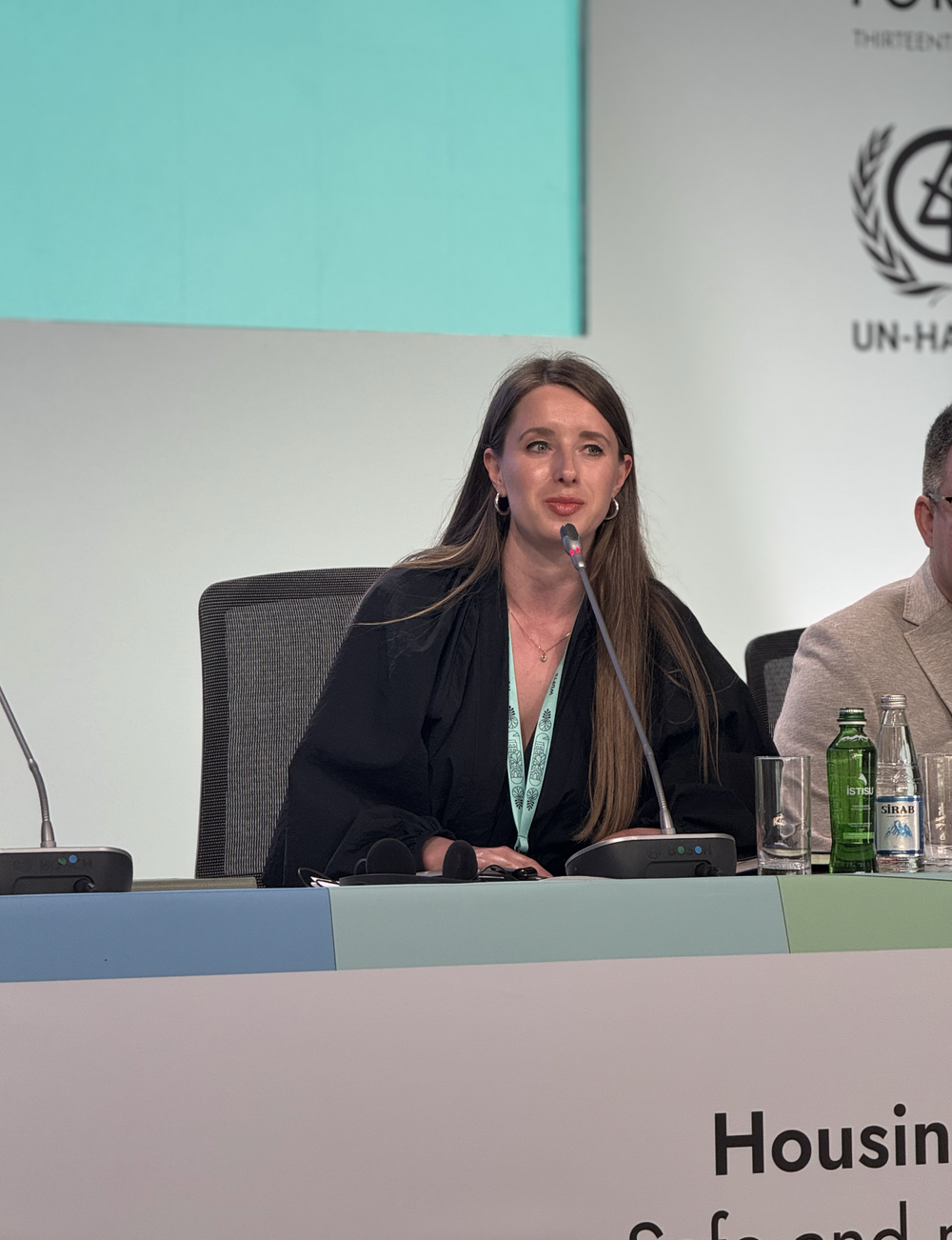
Dialogue 3: “Housing at the center of crisis recovery and reconstruction”
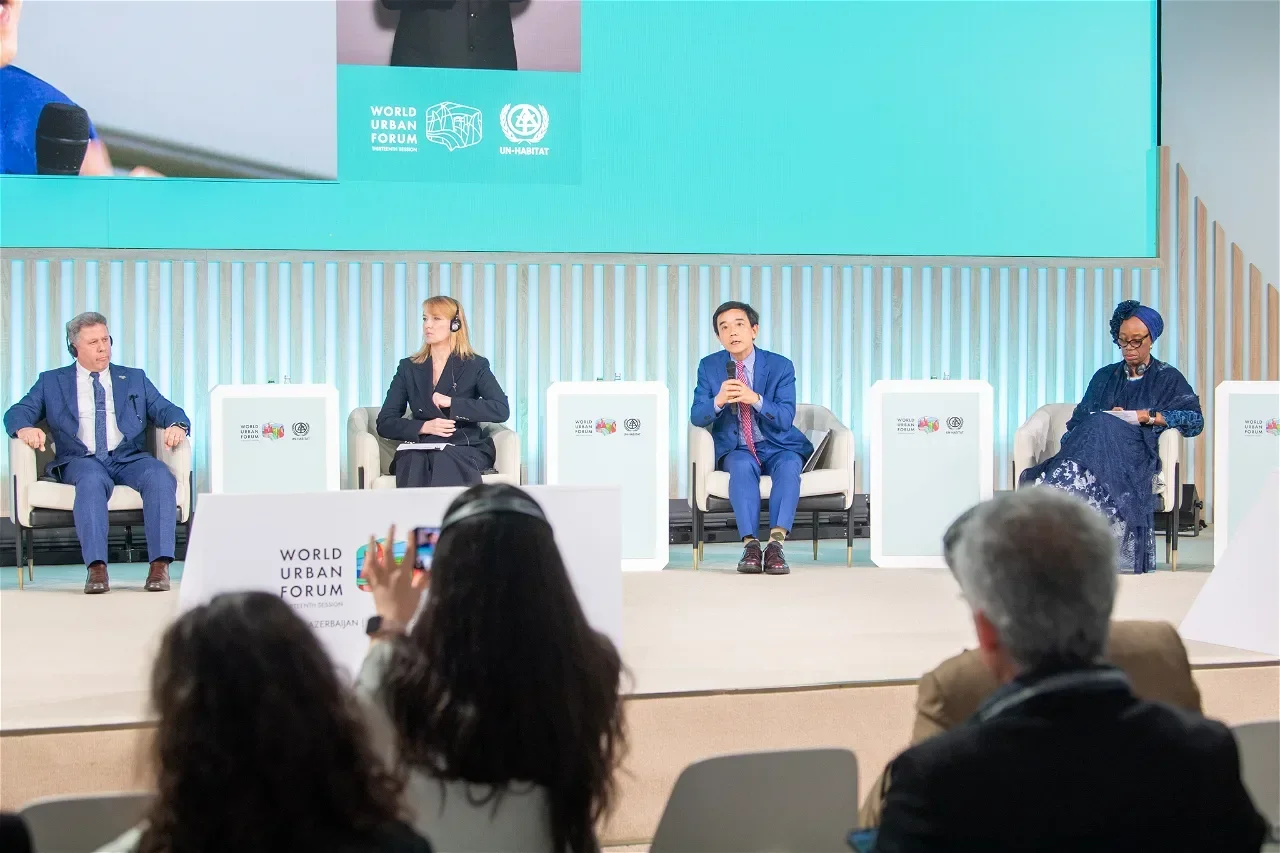
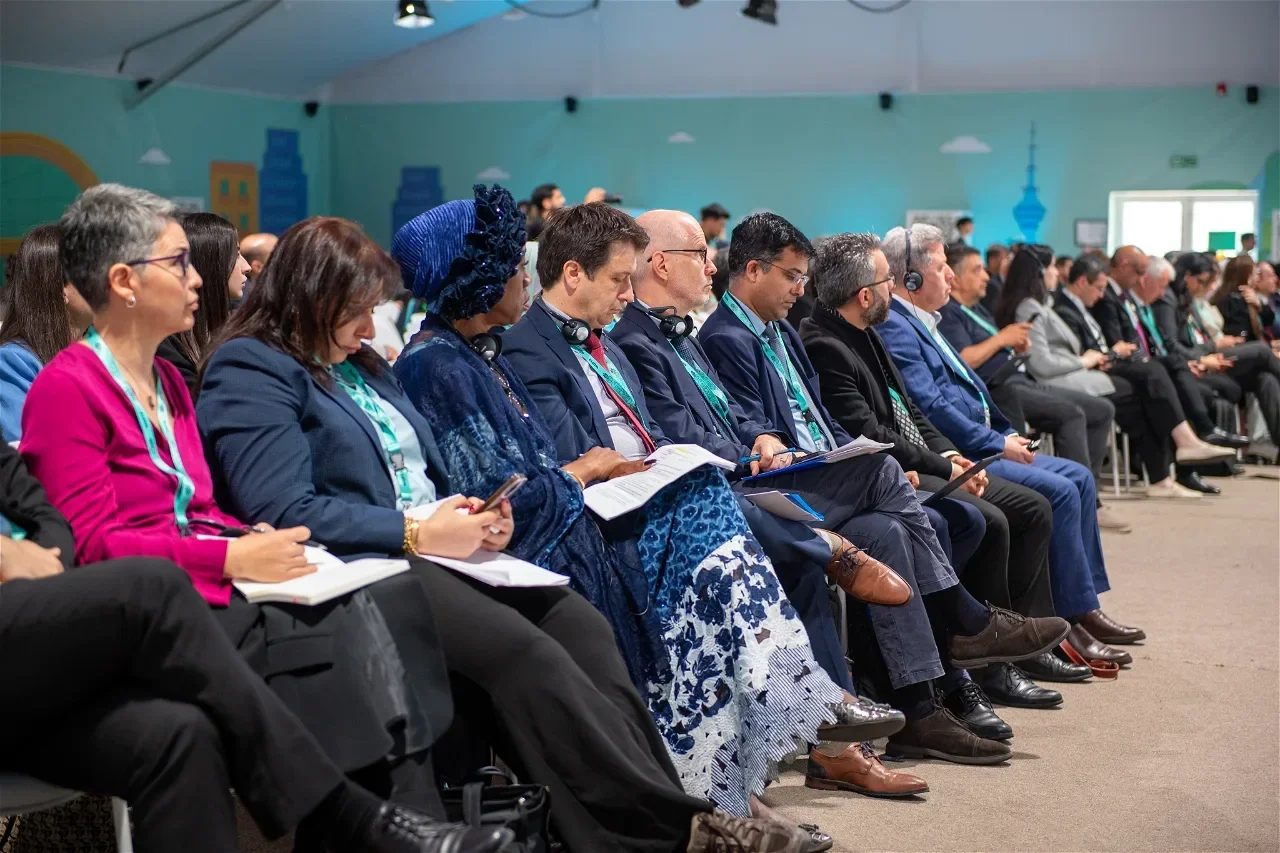
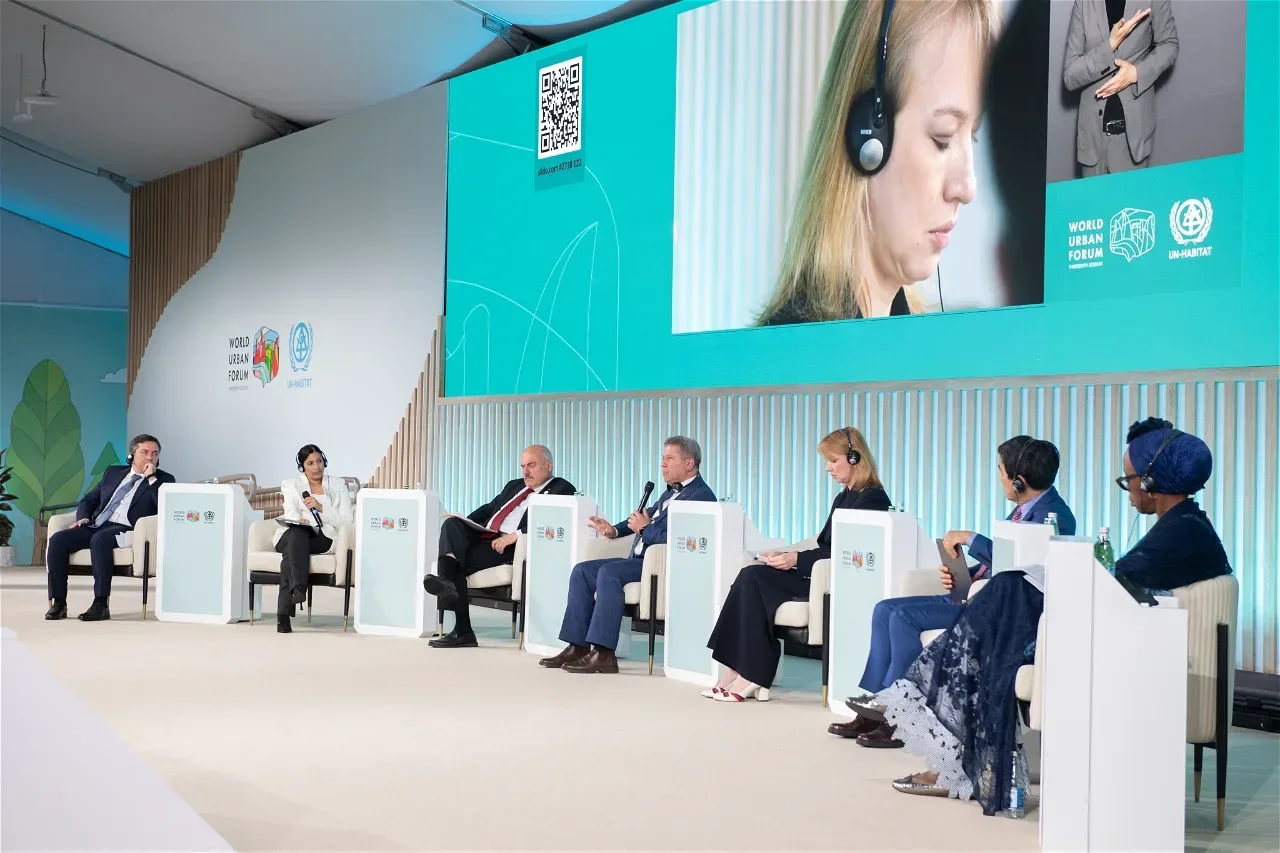
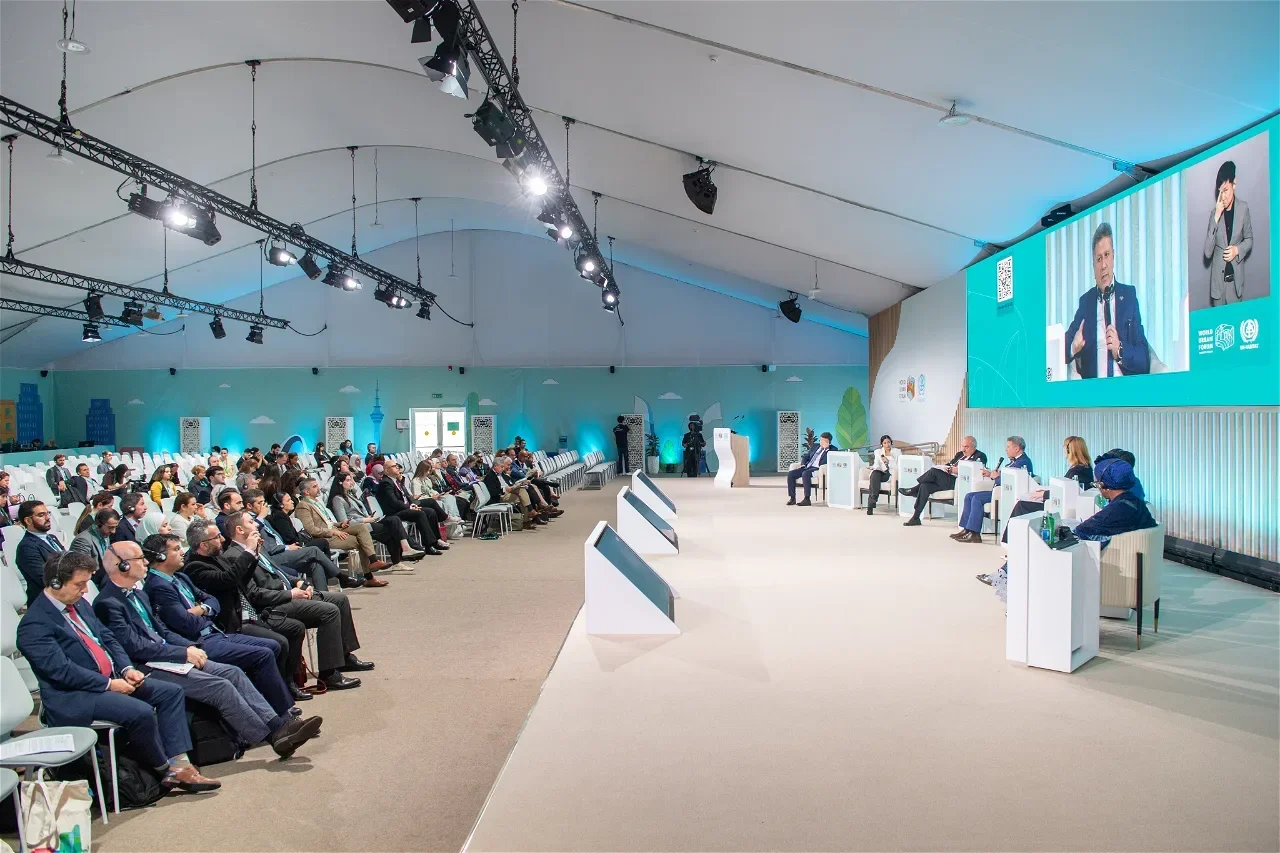
Moreover, the WUF Secretariat and UN-Habitat organized high-level dialogues, one of them being Dialogue 3: “Housing at the center of crisis recovery and reconstruction”, held on 21 May, focusing on how crises affect safety, dignity, livelihoods, and social life and stressing the need for housing to stand at the center of crisis response, recovery, and reconstruction.
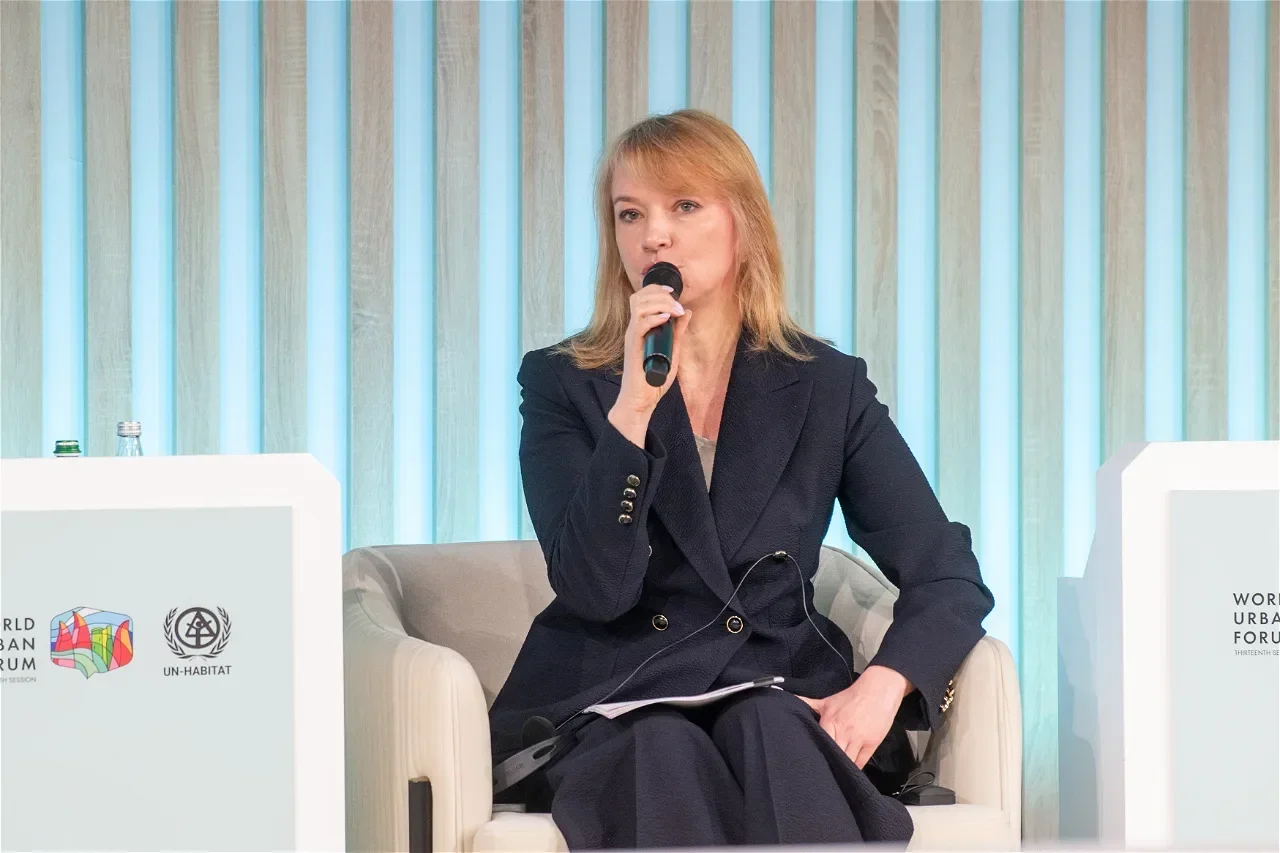
During the dialogue, Ms. Olena Shuliak (Member of Parliament of Ukraine, Chairperson of the Verkhovna Rada Committee on the Organization of State Power, Local Self-Government, Regional Development and Urban Planning) stressed the importance of fostering the recovery and reconstruction processes for Ukraine without postponing.
“We need it here and now, not waiting for a peace deal or any other agreement and arrangements.”
Moreover, she showcased some concrete measures implemented at the national level to support housing and accommodation in Ukraine, including downpayment and compensation mechanisms. She also underscored the progress in Ukraine’s housing policy reform, highlighting the adoption of the Law “On the Fundamental Principles of Housing Policy” as a key milestone, alongside ongoing work on social housing and housing stock management legislation.
© UN-Habitat/WUF
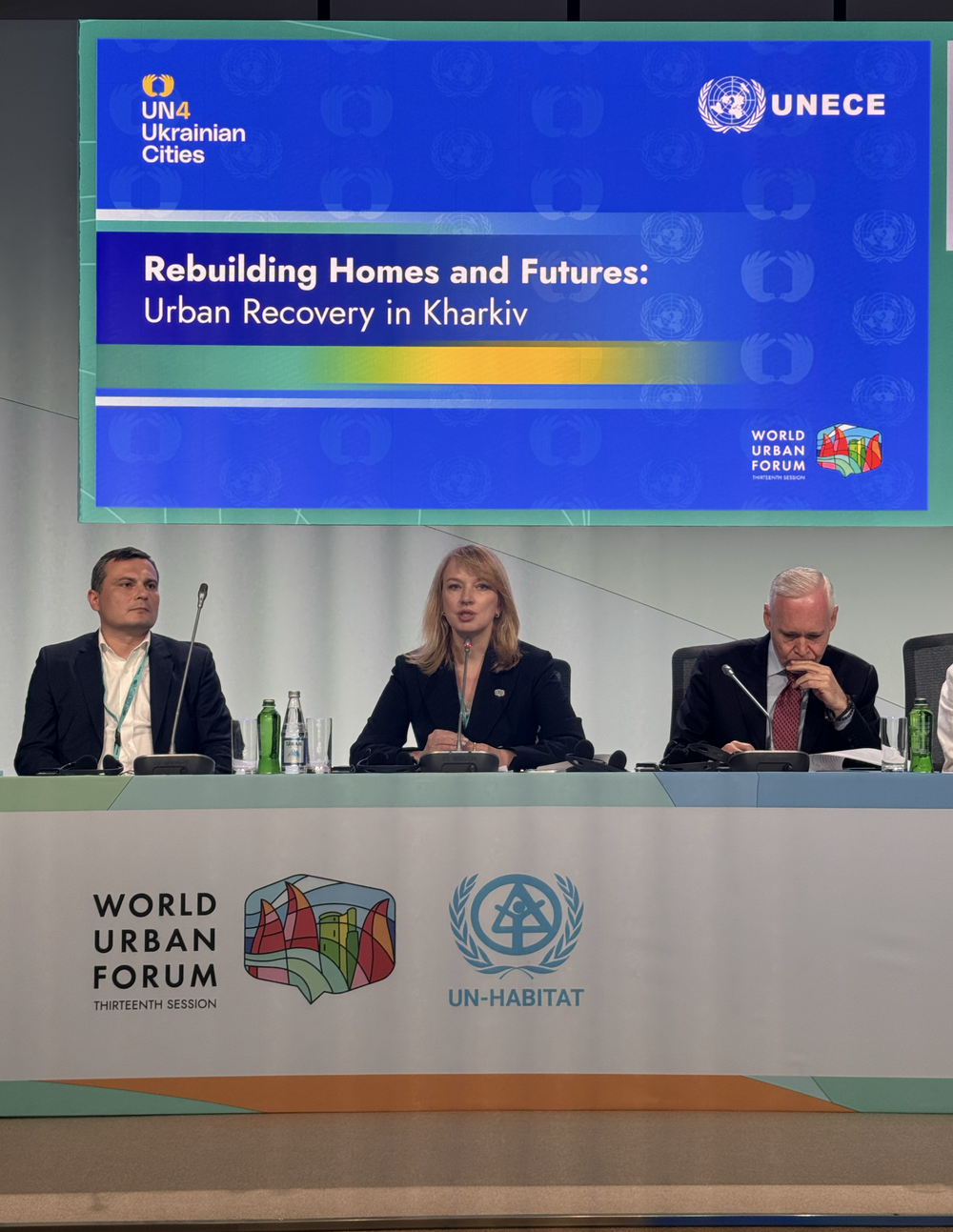
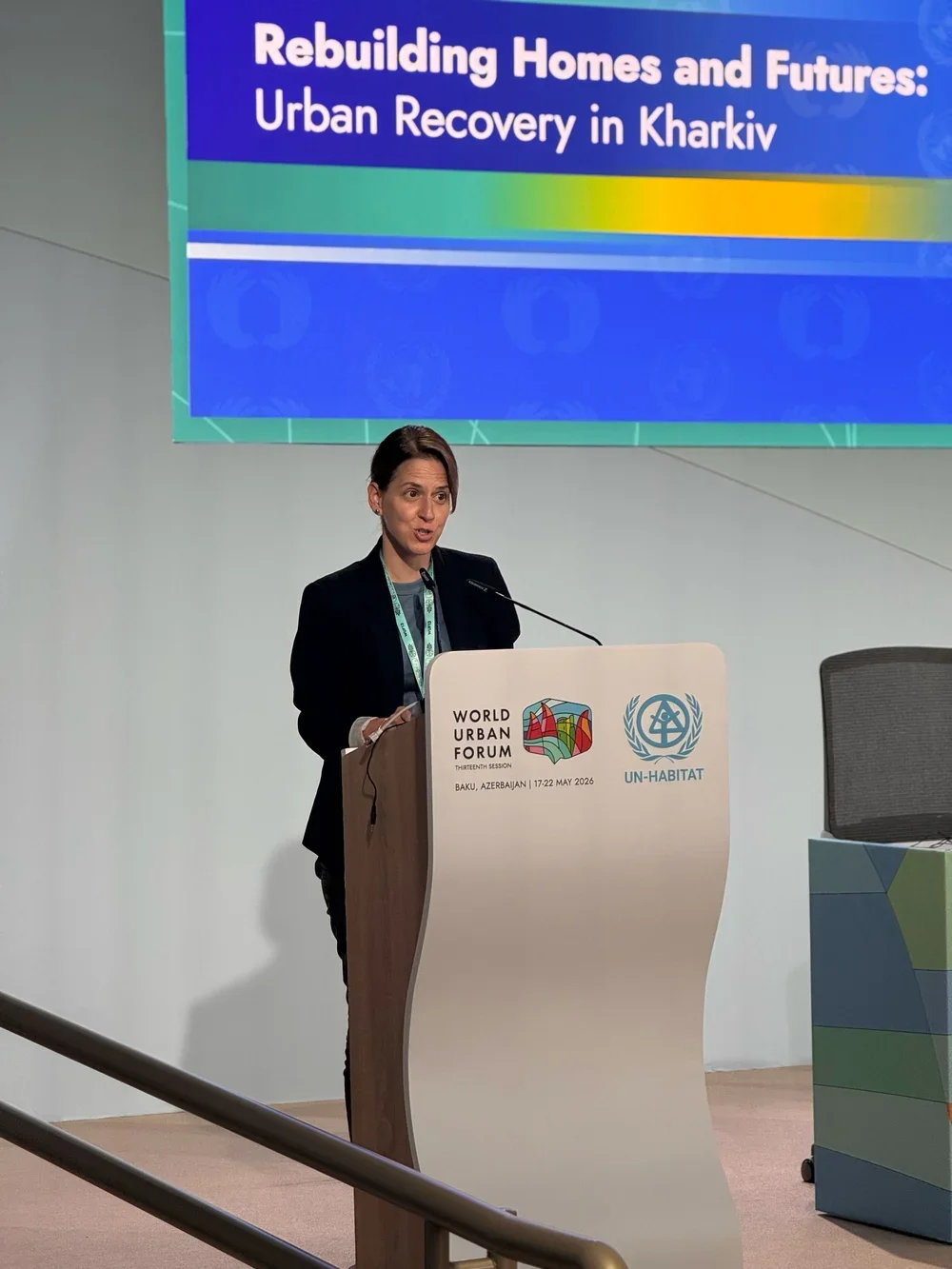
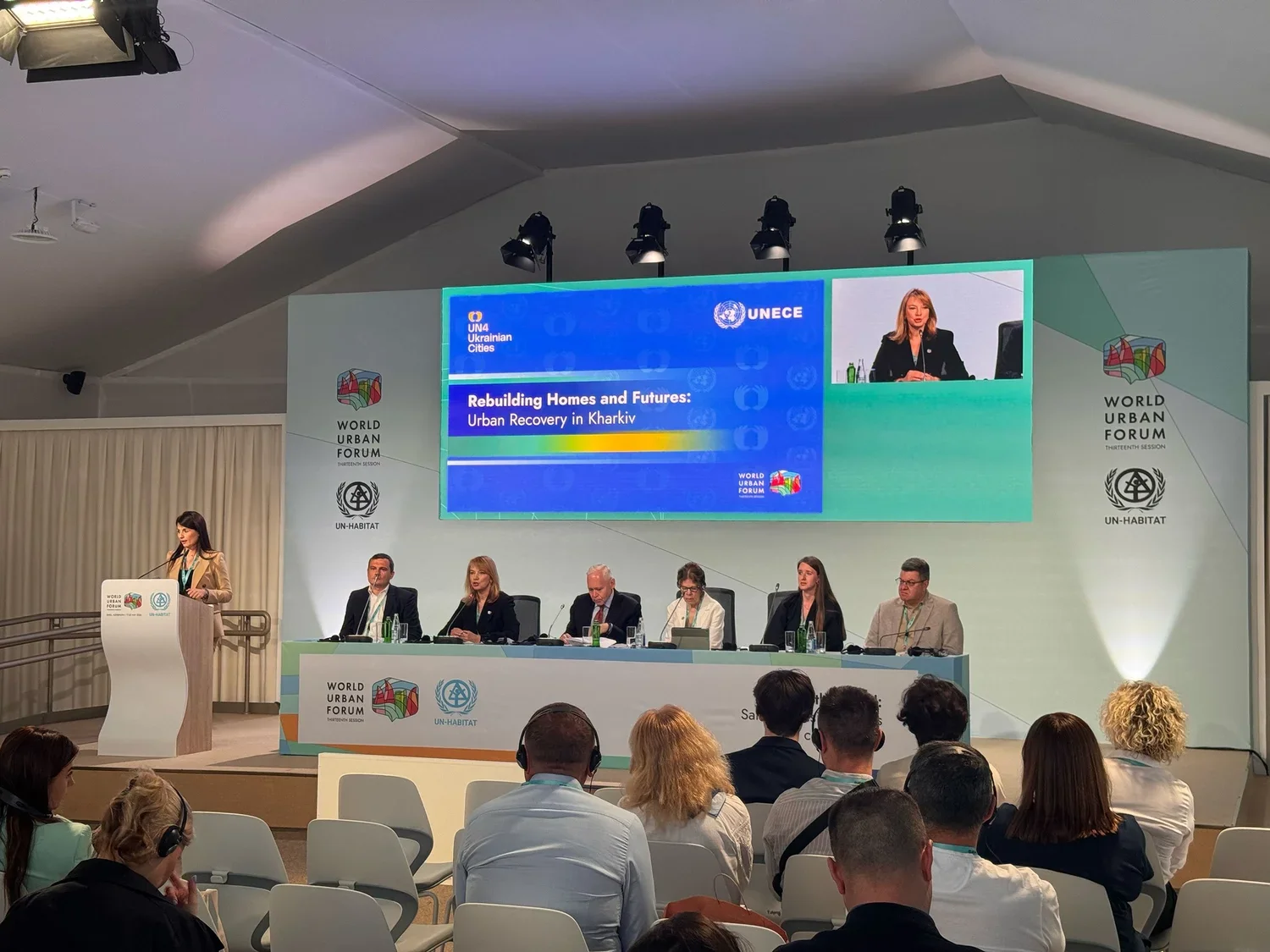
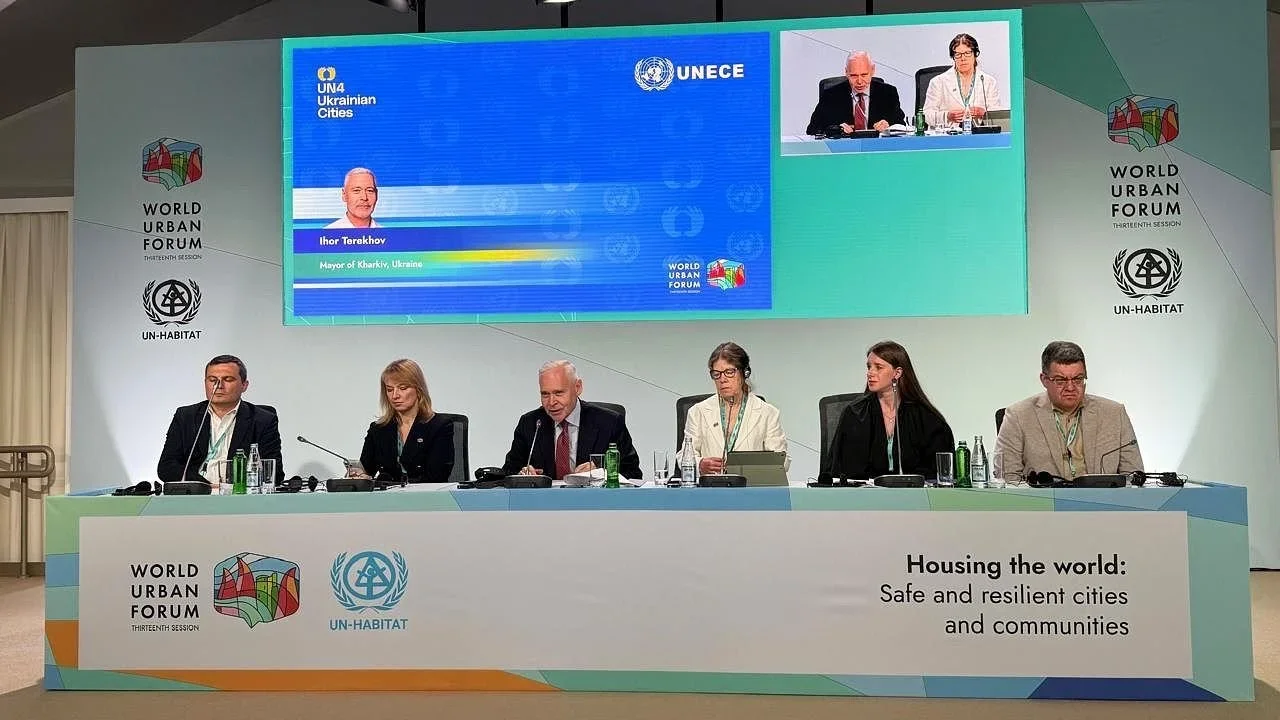
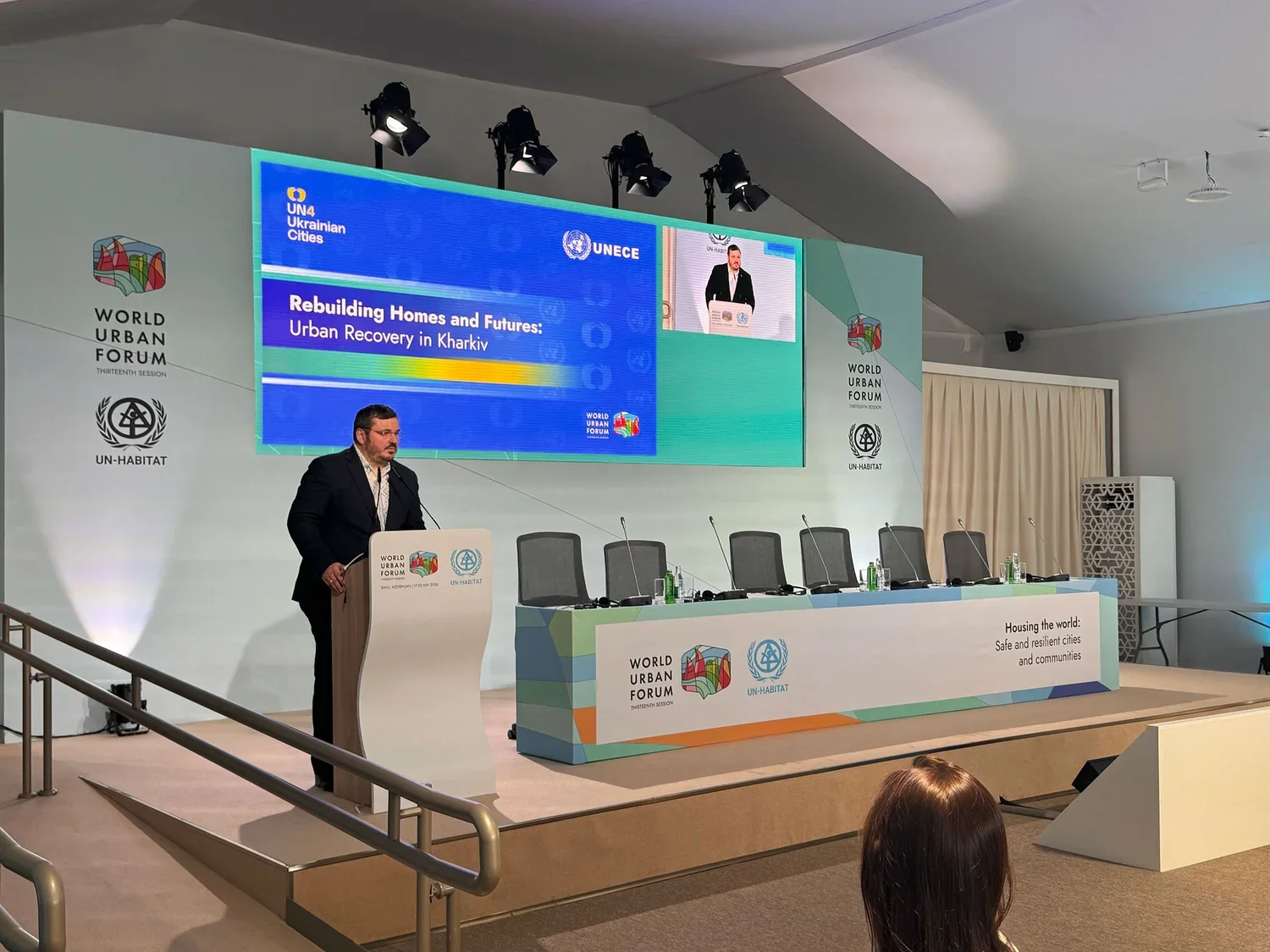
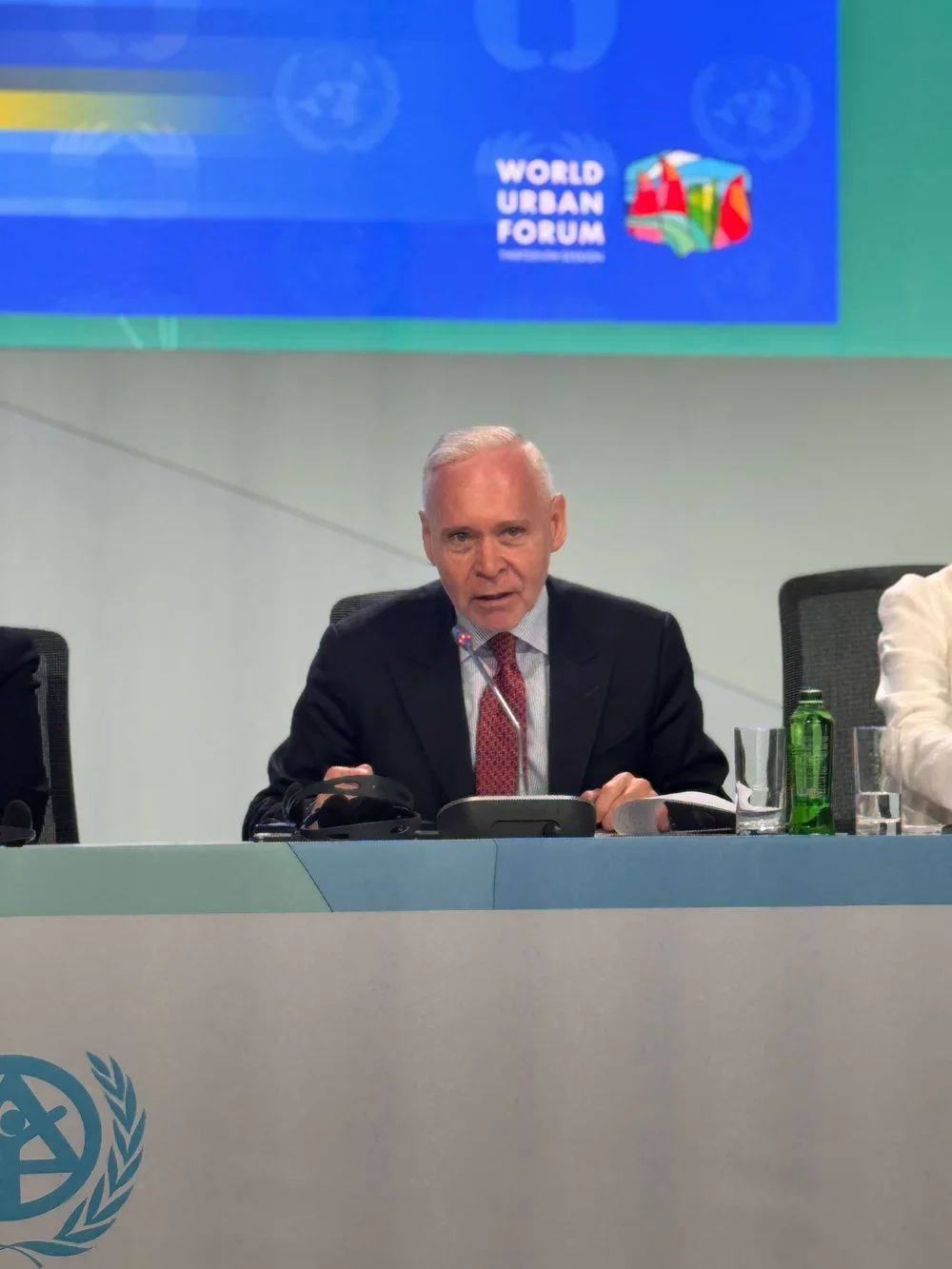
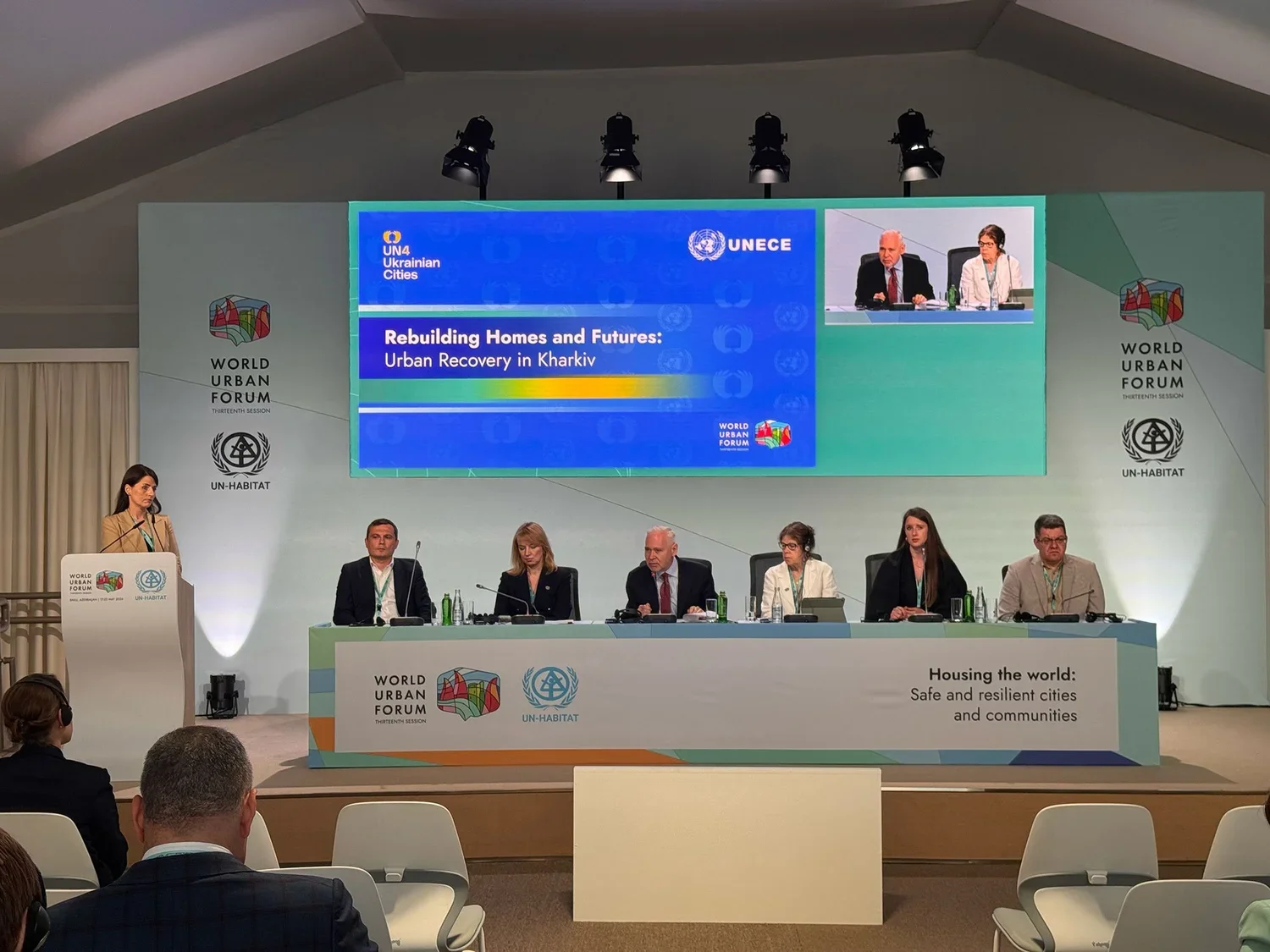
“Rebuilding Homes and Futures: Urban Recovery in Kharkiv”, a UN4UkrainianCities Networking Event
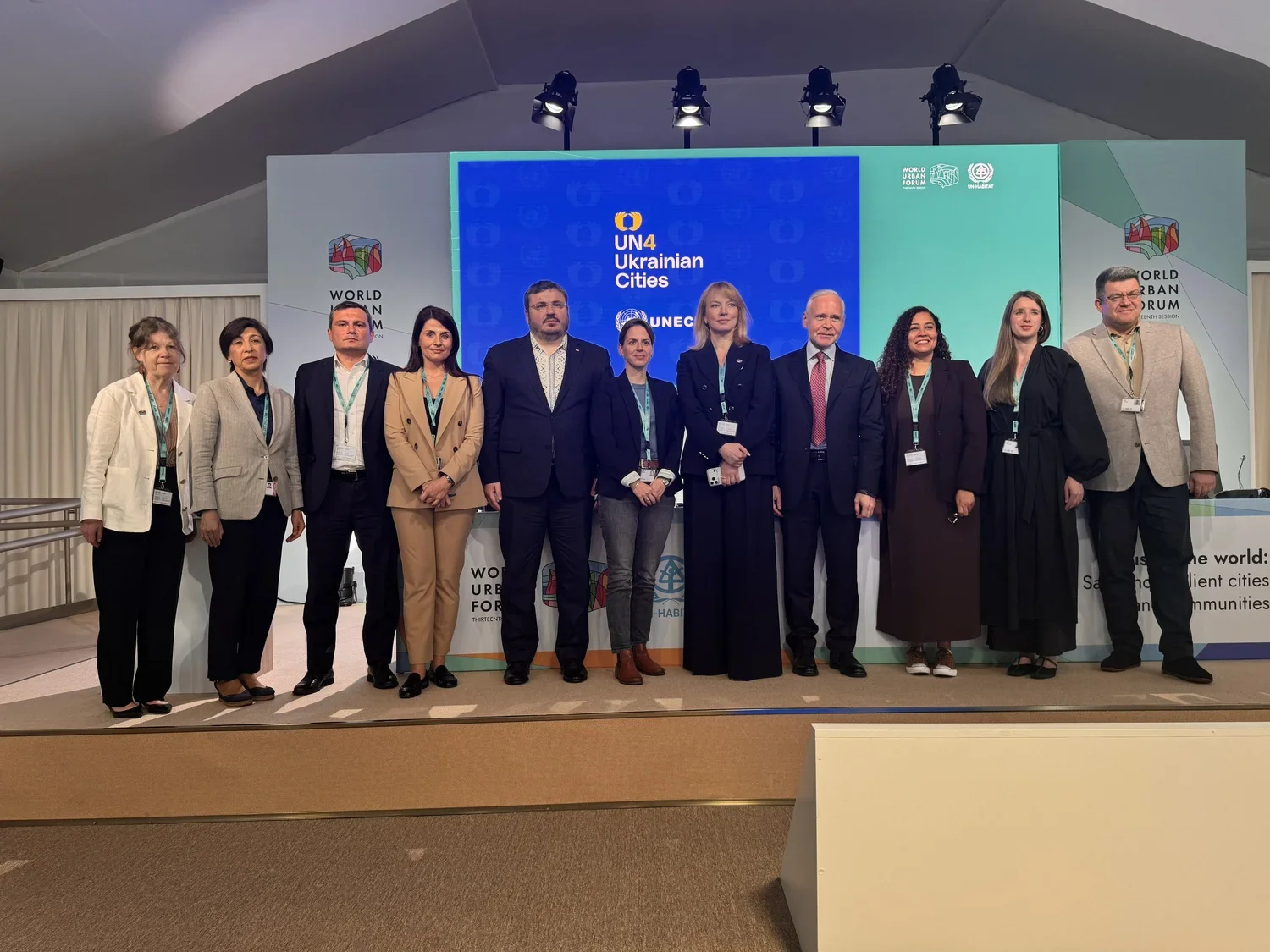
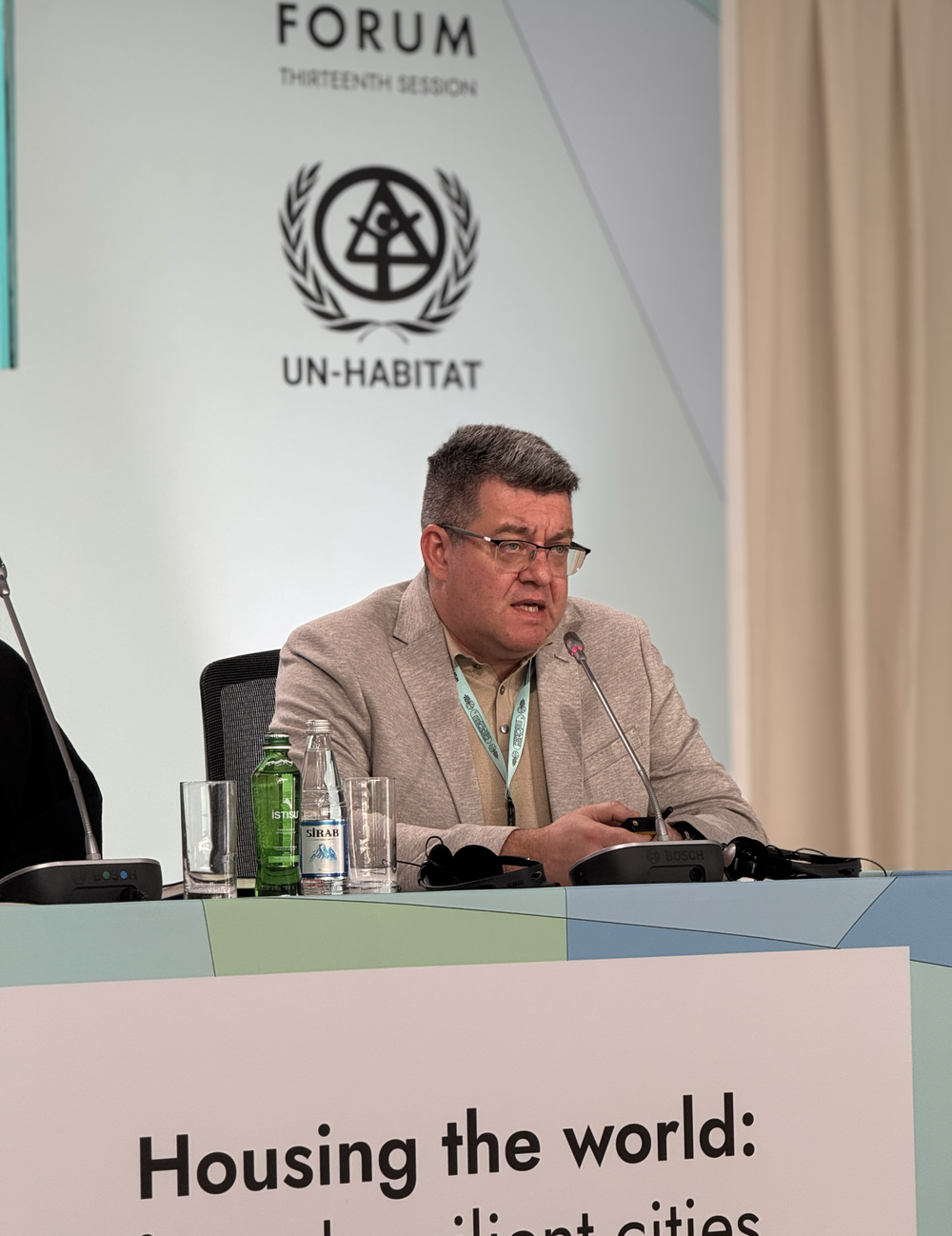
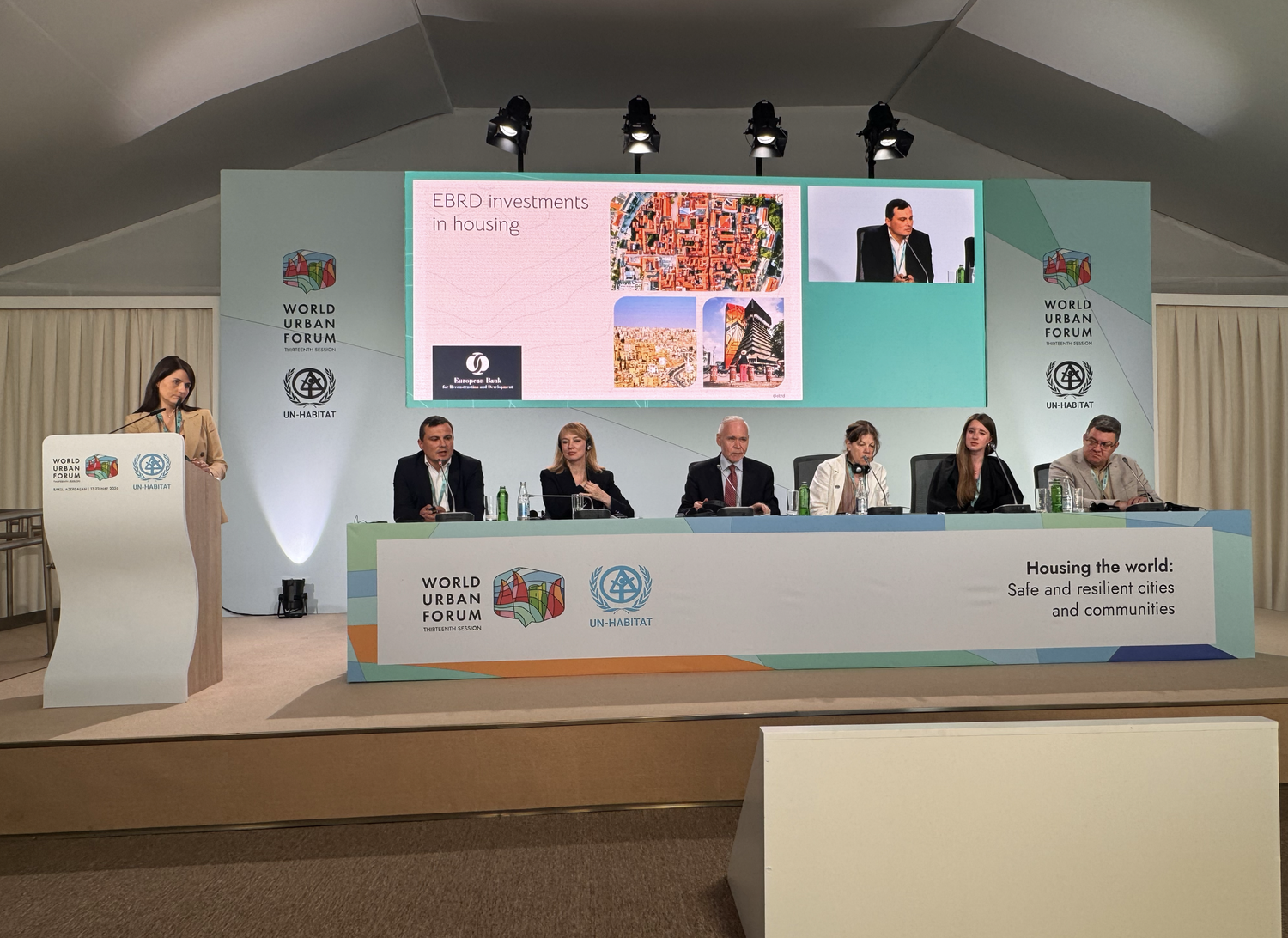
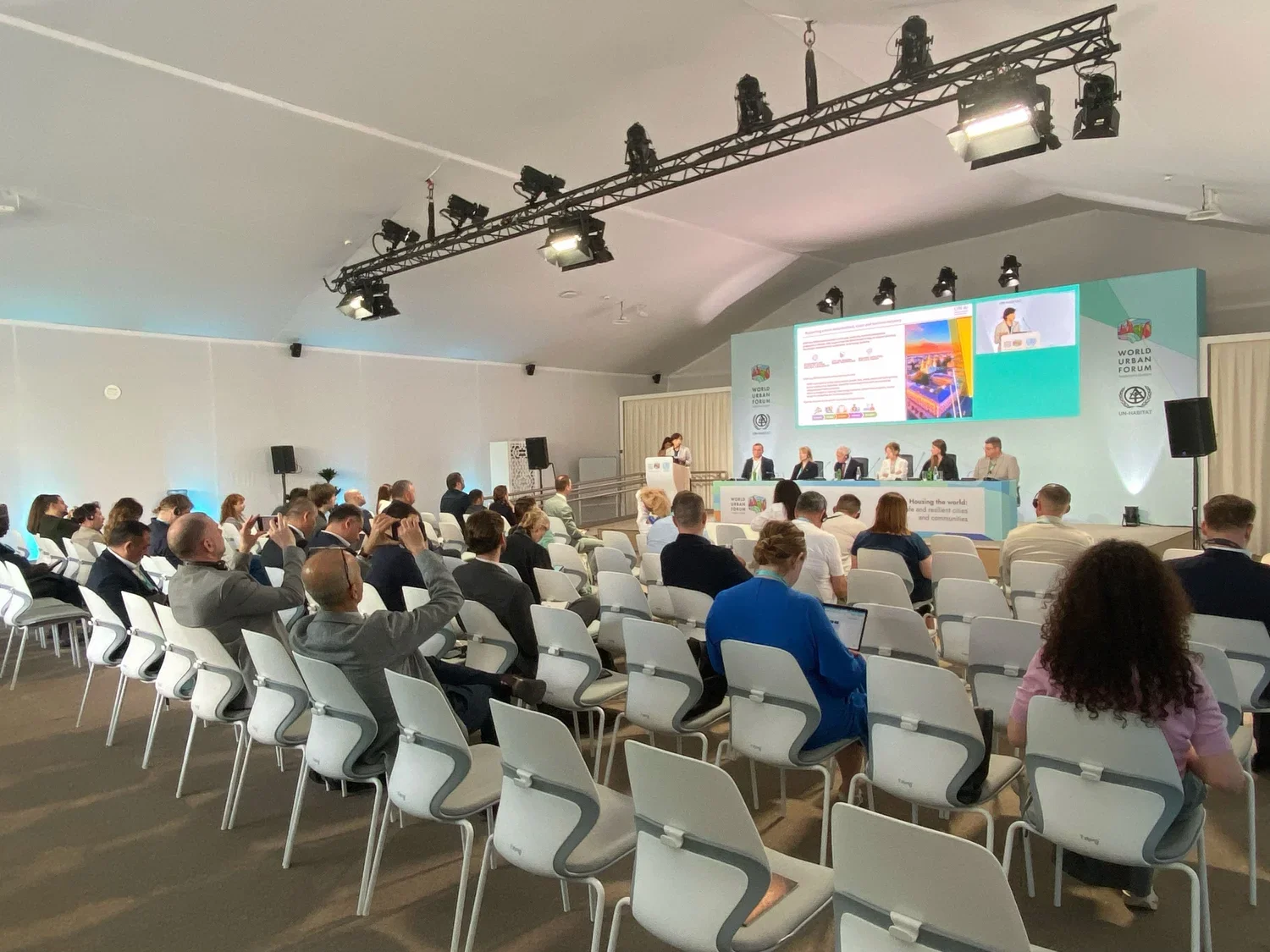
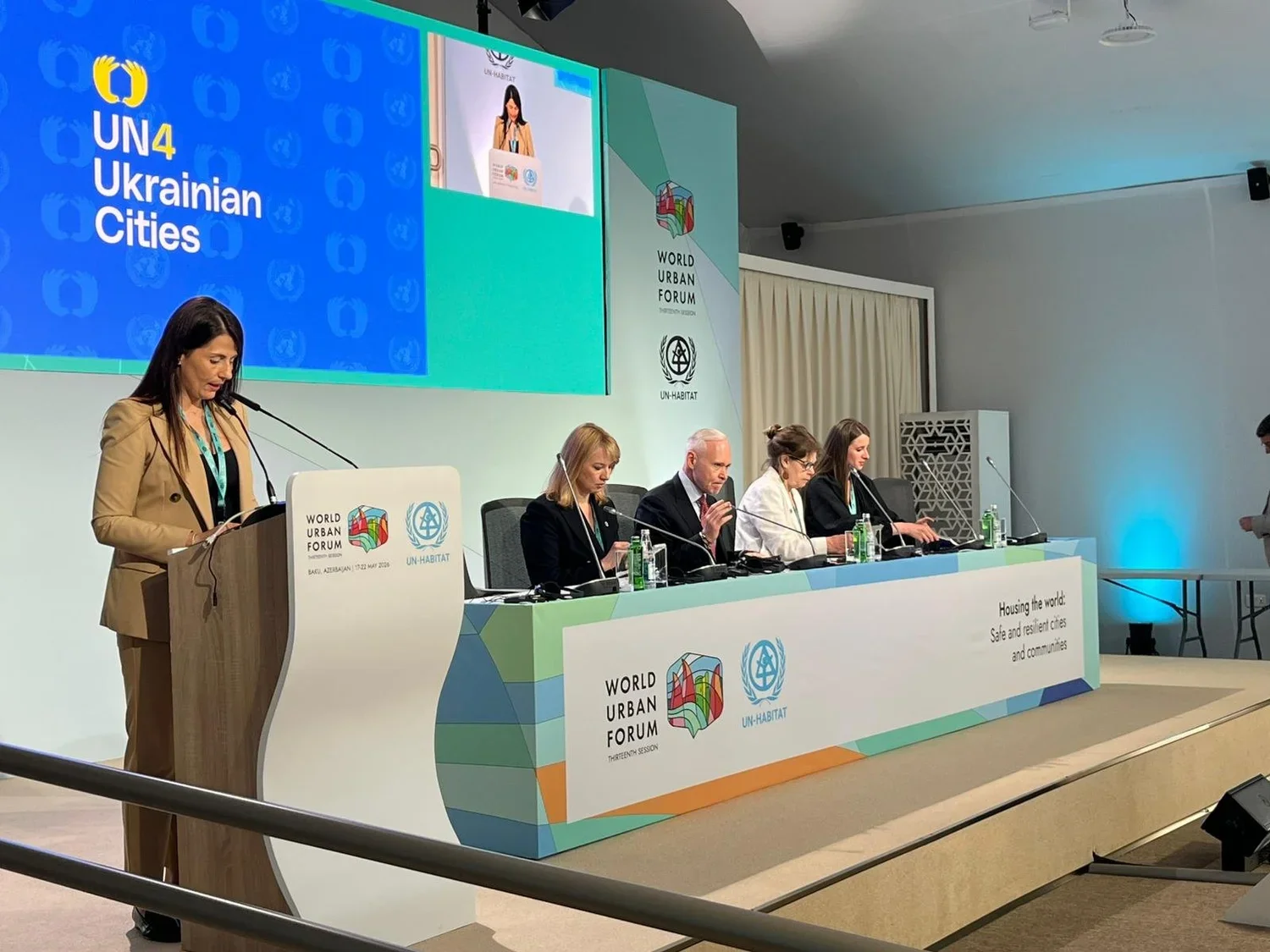
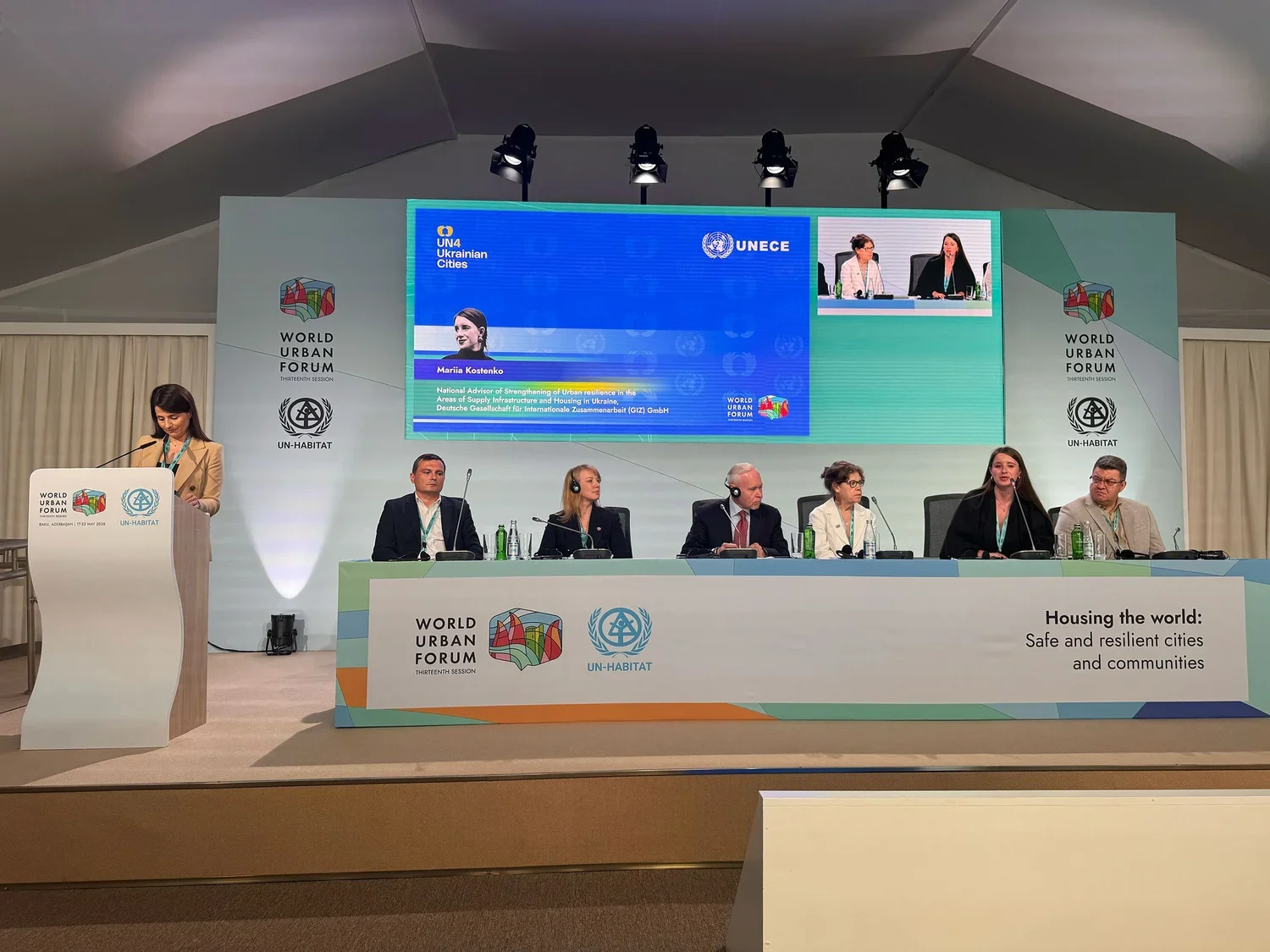
Finally, on 21 May, the UN4UkrainianCities networking event gathered policymakers, international organizations, financial institutions, and international experts to discuss progress in housing and urban recovery in Ukraine.
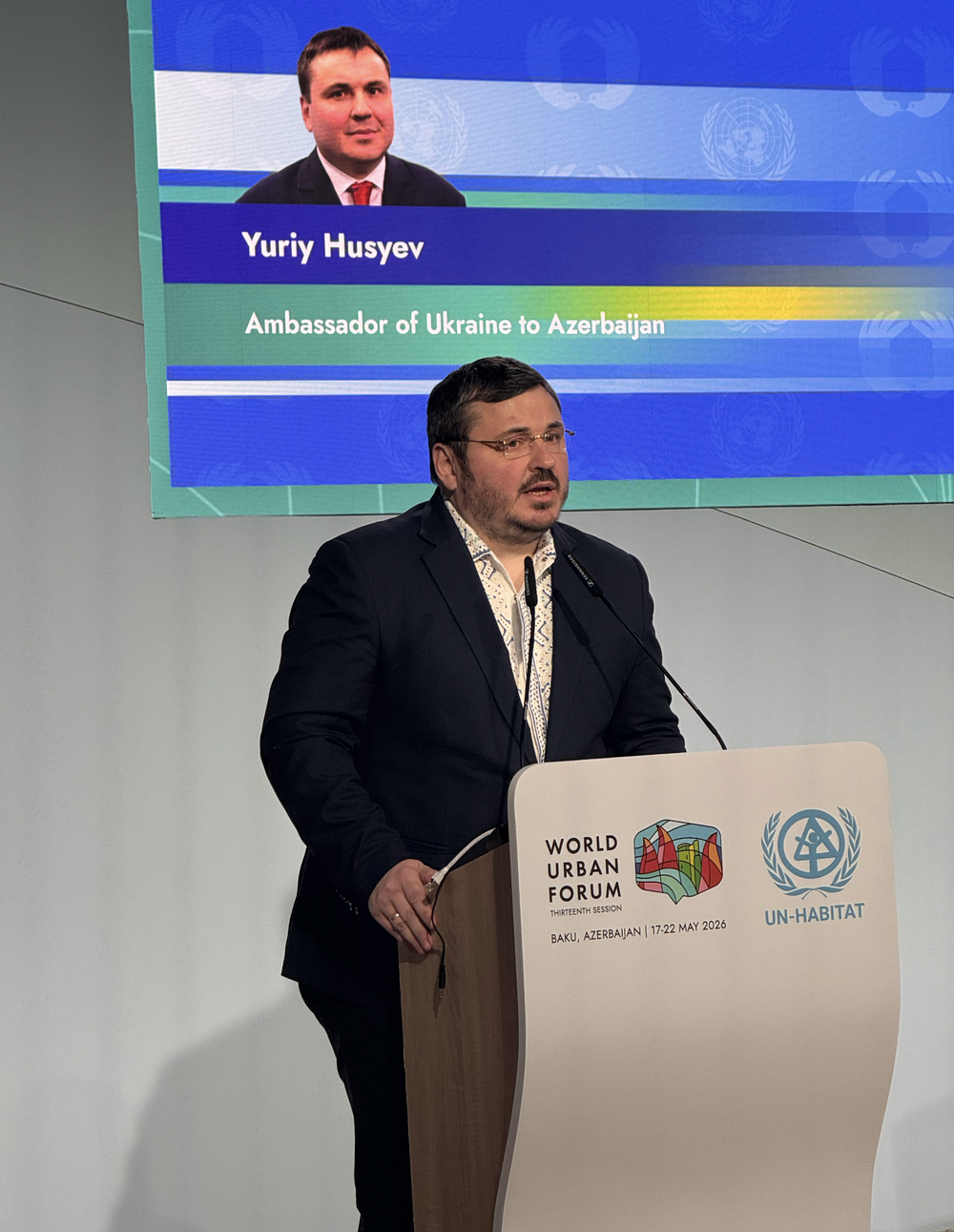
The event opened with remarks from representatives of the donor community, the Government of Ukraine and the United Nations, setting the stage for a discussion on urban recovery and housing reconstruction in Ukraine. Ms. Yeliz Bercht, Head of Division G33 (BMZ), reaffirmed Germany's continued commitment to supporting Ukraine's recovery and reconstruction efforts. She highlighted BMZ's support to the UN4UkrainianCities initiative, including the Kharkiv Housing Pilot Project, and expressed her admiration for the resilience and dedication demonstrated by Ukrainian national and local authorities in continuing to plan and implement recovery activities under extremely challenging circumstances. H.E. Mr. Yuriy Husyev, Ambassador of Ukraine to Azerbaijan, emphasized the strength and determination of the Ukrainian people, highlighting Kharkiv as a symbol of resilience and underscoring the critical importance of sustained international solidarity and support to ensure a successful recovery process. Representing UNECE, Ms. Thâmara Fortes, Programme Manager of the UN4UkrainianCities, provided an overview of the project's achievements and ongoing activities, with particular emphasis on its housing and urban recovery components. She highlighted the initiative's work in supporting both local recovery efforts in cities such as Kharkiv and Mykolaiv and national-level housing policy reforms, demonstrating how strategic planning, technical assistance and international partnerships can contribute to building more resilient, inclusive and sustainable Ukrainian cities.
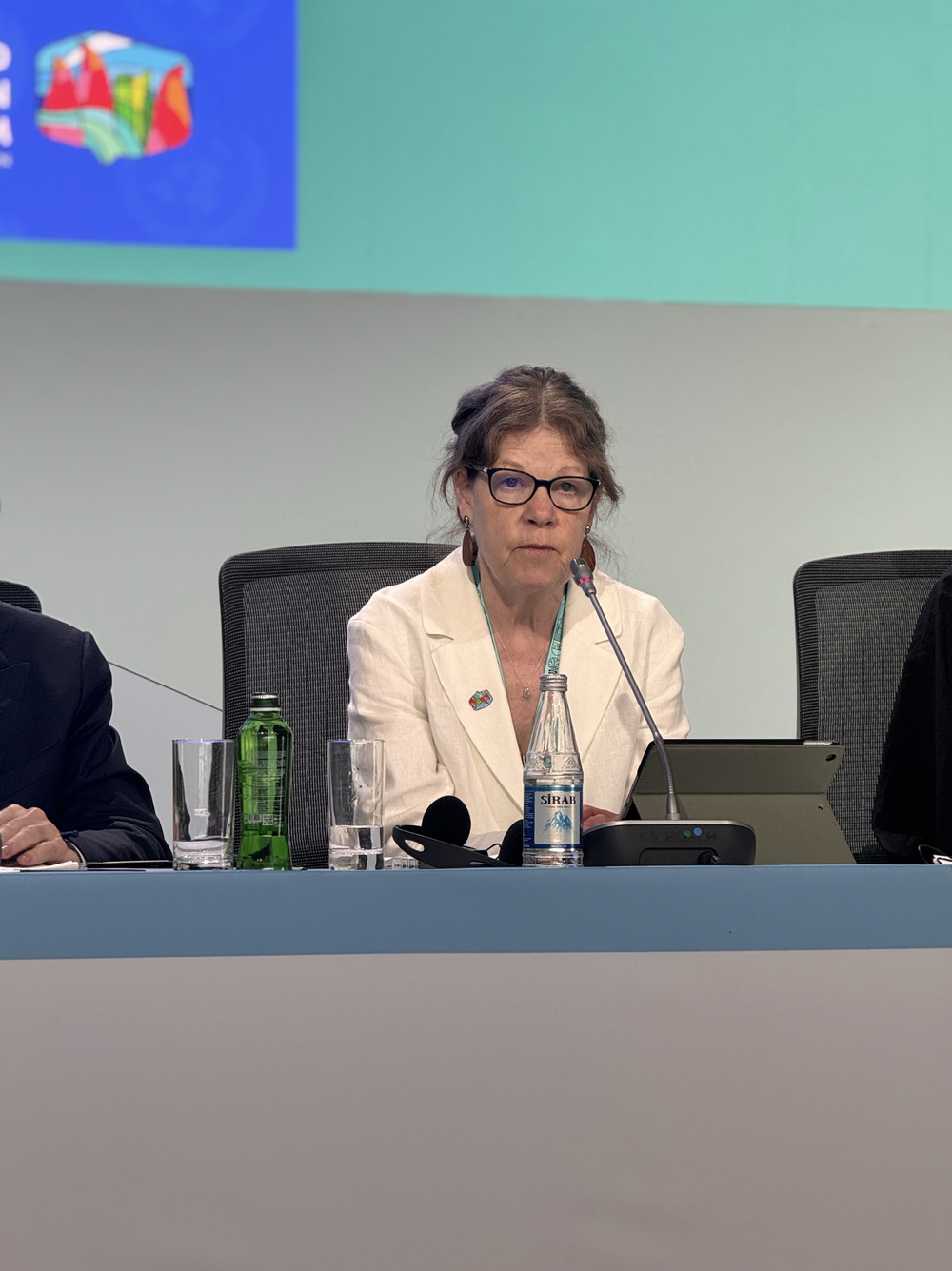
This introduction set the tone for a rich discussion on multi-level governance and integrated approaches to urban recovery. The first panel, “From Policy to Practice: Leading Recovery in Ukraine,” explored the development and implementation of housing and reconstruction policies across different levels of government. Ms. Olena Shuliak, Member of Parliament of Ukraine, highlighted the critical role of legislative frameworks in enabling recovery efforts, presenting recent developments in Ukraine’s housing policy and outlining the challenges and opportunities associated with ensuring the right to housing. Providing a local government perspective, Mr. Ihor Terekhov, Mayor of Kharkiv, shared the realities of rebuilding a city heavily affected by the war, including ongoing efforts in North Saltivka, where the UN4UkrainianCities initiative is supporting a Housing Pilot Projectto transform architecture design concepts into implementable solutions. Ms. Lin O’Grady, Associate Director and Deputy Head of the EBRD, emphasized the importance of tailoring recovery investments to the specific needs of cities, highlighting the EBRD’s support to the housing sector through financing mechanisms for governments and municipalities, as well as efforts to mobilize private sector participation. Together, the speakers underscored the importance of aligning policy, financing and local implementation to deliver sustainable and inclusive urban recovery.
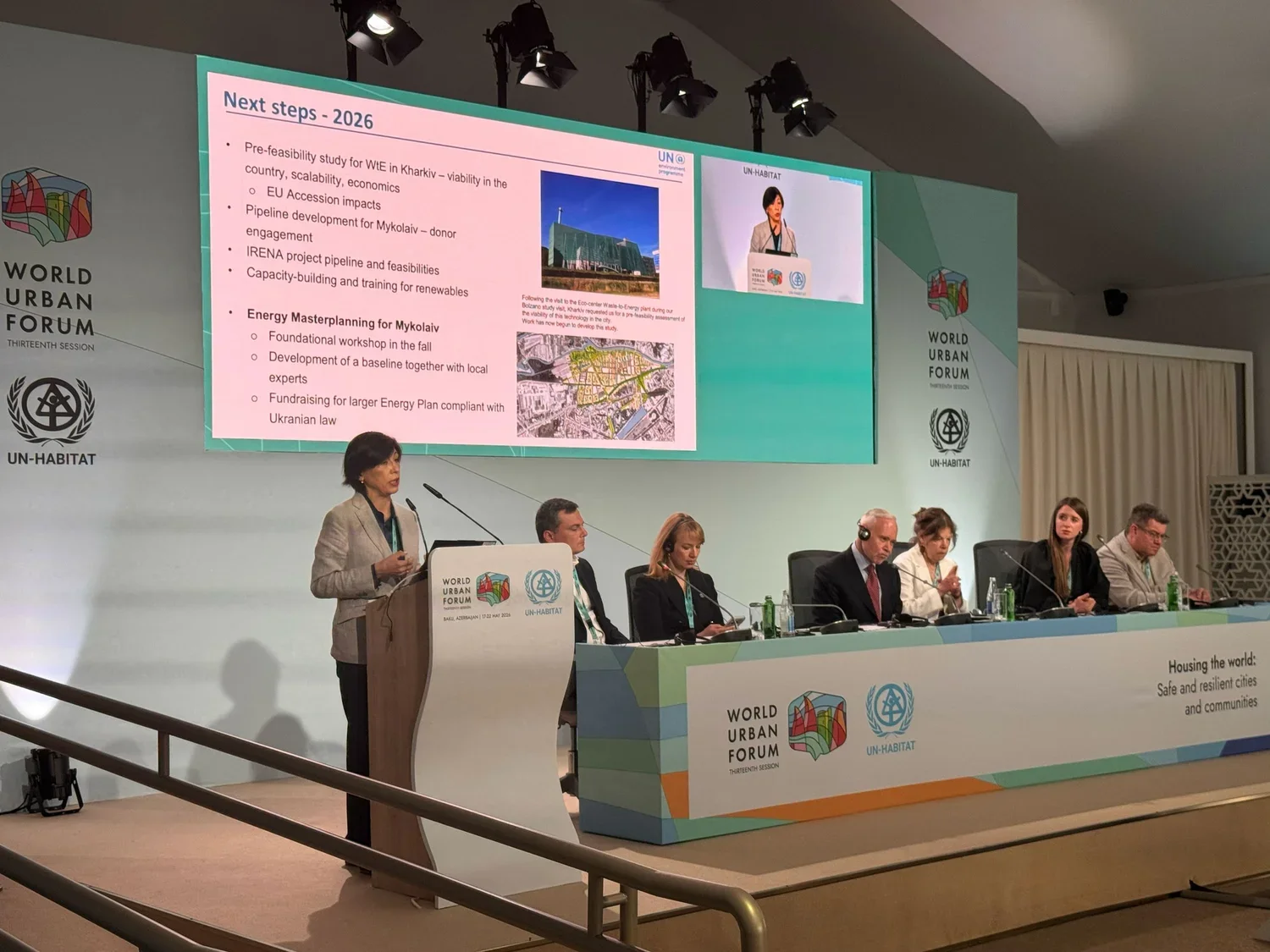
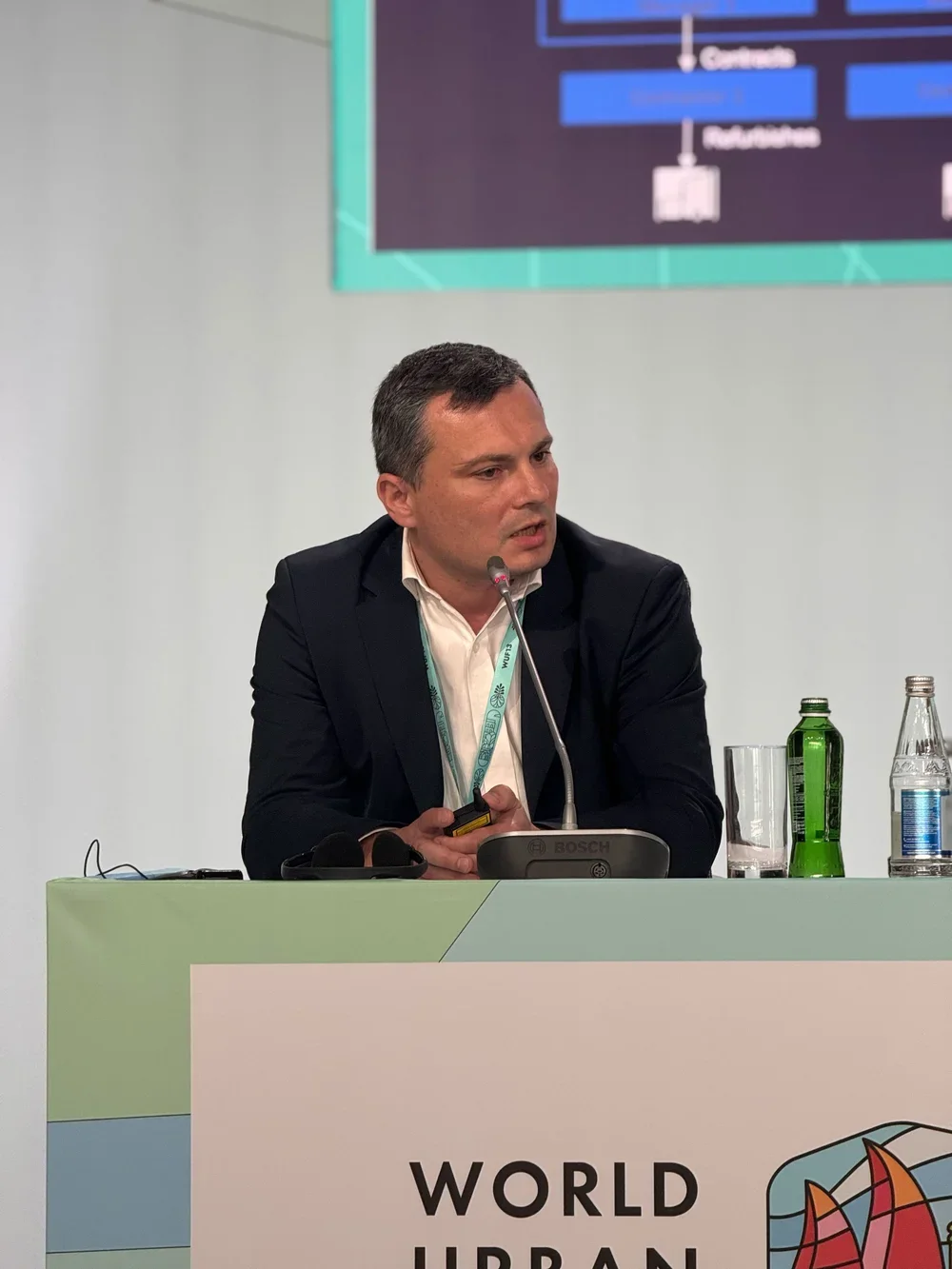
The panel titled “From Planning to Implementation: Partnerships and Financing for Housing and Urban Recovery” focused on the transition from strategic planning to operational implementation, particularly through partnerships and financing mechanisms. Ms. Mariia Kostenko, National Advisor at GIZ, highlighted Germany’s support to Ukraine’s housing sector and emphasized the importance of systematic data collection at both national and municipal levels, supported by digital tools, urban cadastres and risk assessment methodologies to guide recovery investments. Bringing an academic and technical perspective, Prof. Glib Vatulia, Vice Rector of O.M. Beketov National University of Urban Economy in Kharkiv, presented progress on the North Saltivka Housing Pilot Project, showcasing the proposed designs and the ongoing geotechnical and engineering-geodetic surveys that will inform the development of detailed technical documentation. Mr. Oleksandr Nikolaienko, Principal Specialist on Social Housing at the EBRD, highlighted the Bank’s growing engagement in the housing sector, presenting examples from the Hansen Humanitarian Mission in Ukraine alongside international case studies from Mongolia and Lithuania, offering practical lessons for the Ukrainian context. Complementing these perspectives, Ms. Gulnara Roll, Chief of the Sectoral Transition Section at UNEP, presented a joint UNEP-IRENA technical assistance programme supported by the Government of Italy, which is helping Ukrainian cities and institutions develop investment-ready energy projects.
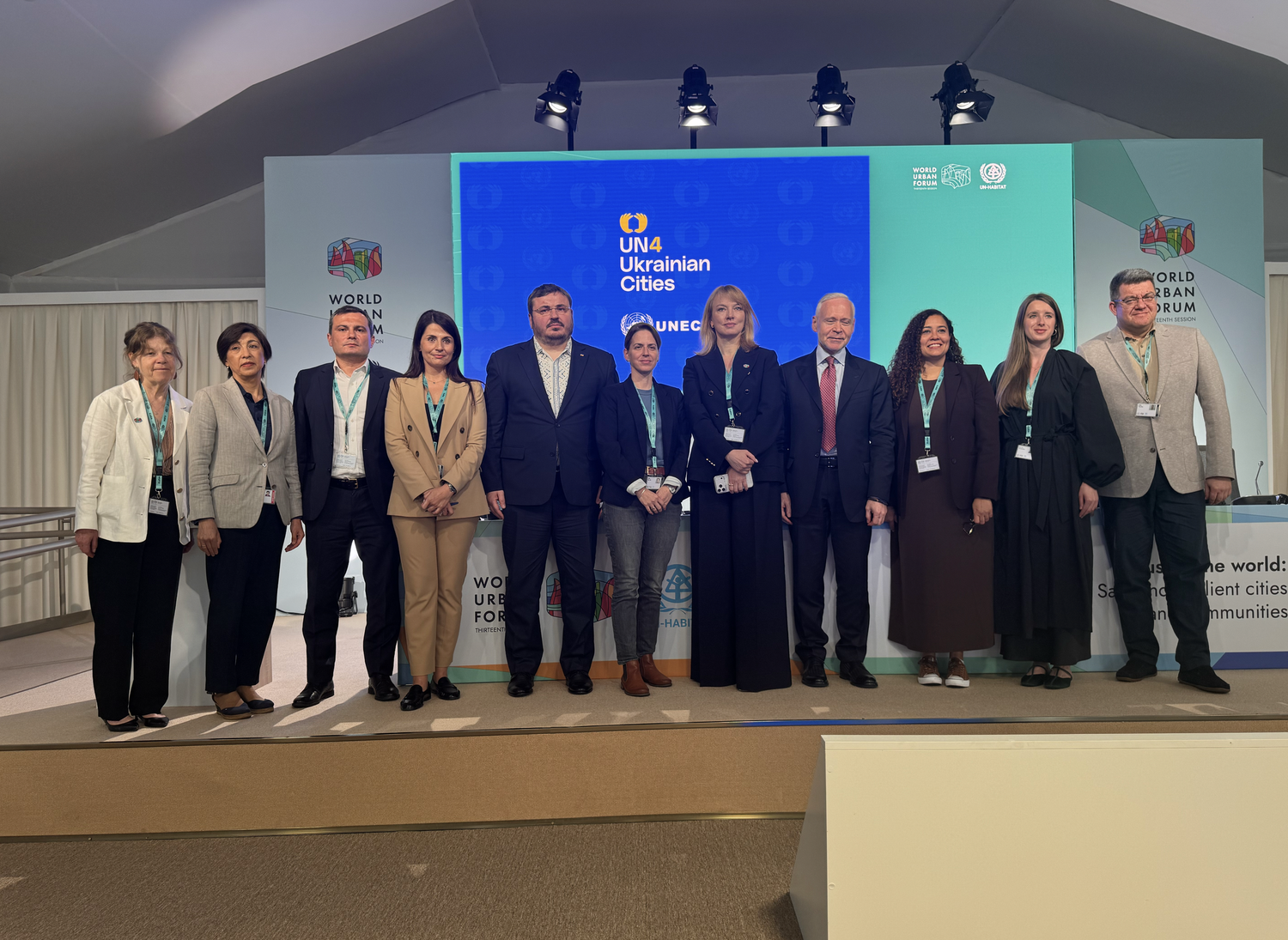
These discussions underscored that the path to successful reconstruction lies in dynamic collaboration among governments, municipalities, development partners, and financial institutions. The events allowed the sharing of experiences, technical know-how, and diverse policy insights, showcasing the vital importance of international cooperation, forward-thinking urban planning, and inclusive housing solutions to support Ukrainian cities and communities.